What is UPI? Full Form, Meaning, How it Works, Features & Benefits
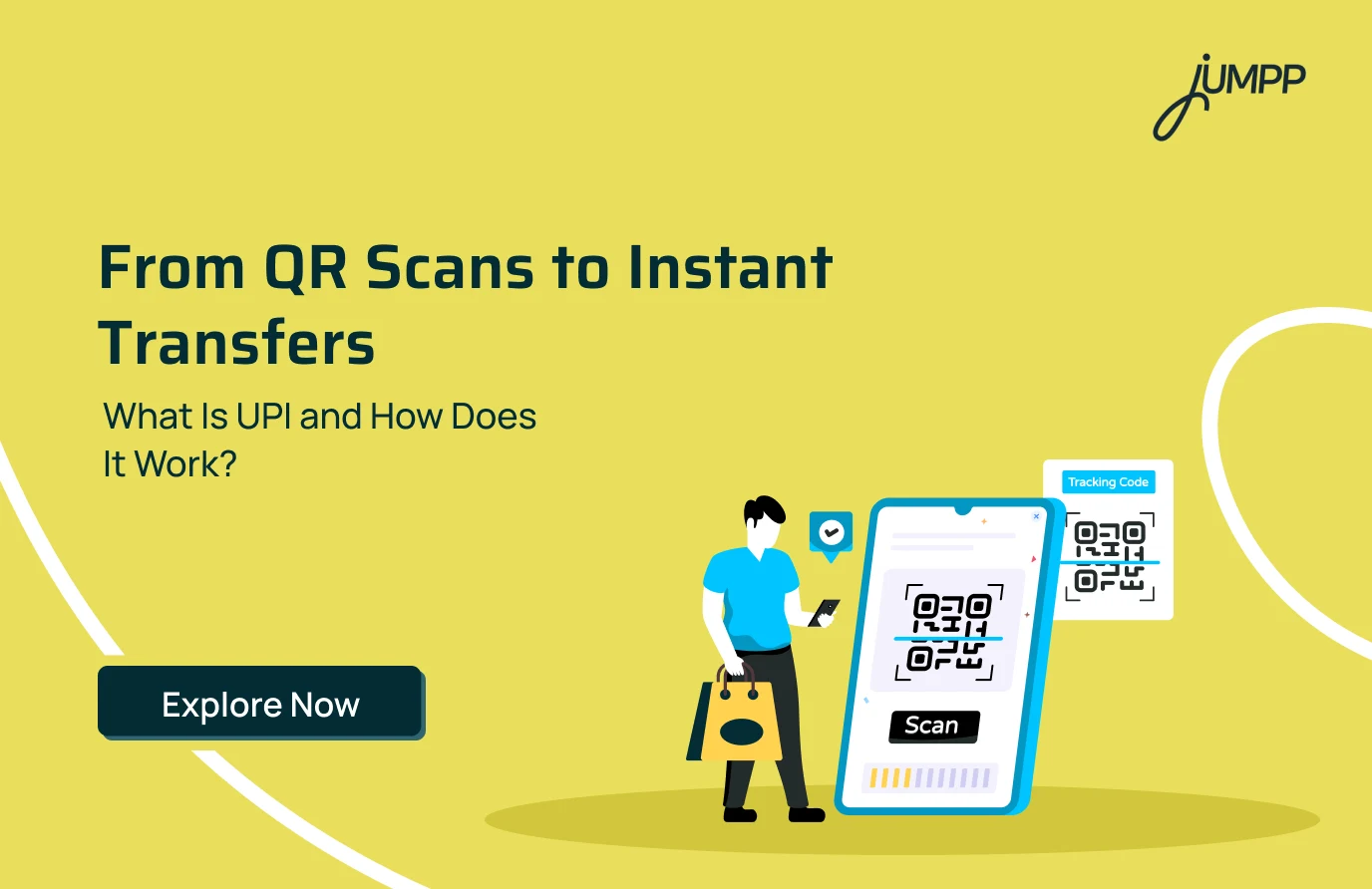
UPI has transformed the way people make digital payments in India. Whether you are paying at a local shop, transferring money to friends, or shopping online, UPI payments allow transactions to be completed within seconds.
But what is UPI, what is the UPI full form, and how does it work?
This guide explains the UPI meaning, how it works, its key features, benefits, and how you can start using it.
What Is UPI Payment?
UPI’s full form is Unified Payments Interface.
It is a digital payment infrastructure that allows users to link multiple bank accounts to a single mobile application and transfer money instantly.
Did You Know?
UPI has grown from a pilot payment system into the world’s largest real-time payment network in just 10 years.
Here is a quick look at its remarkable journey:
| Milestone | UPI in Numbers |
| Launch date | 11 April 2016 |
| Banks at launch | 21 |
| Banks live on UPI today | 703+ |
| Annual transactions (FY 2025-26) | 24,162 crore |
| Annual transaction value | ₹314 lakh crore |
| Growth in transaction volume over 10 years | Nearly 12,000 times |
| Daily average transactions | 66 crore |
| Share of India’s digital payments | 85% |
| Share of global real-time payment transactions | 49% |
| Countries where UPI is accepted | 8 |
Data as of FY 2025-26 (Source: NPCI/PIB, released on 30 April 2026)
Who Invented UPI in India?
The UPI system was developed by the National Payments Corporation of India (NPCI) under the regulatory oversight of the Reserve Bank of India (RBI).
When Was UPI Launched in India?
UPI was launched by NPCI as a pilot in April 2016 and was later made available to the public through participating banks.
The adoption and growth of UPI increased rapidly after demonetisation in late 2016.
Why Was UPI Introduced in India?
The Unified Payments Interface (UPI) was developed by the National Payments Corporation as a single, interoperable payment system that allowed users to send and receive money using a Virtual Payment Address (VPA), mobile number, or QR code.
It supports both:
- Person-to-Person (P2P) transactions
- Person-to-Merchant (P2M) transactions
Unlike traditional bank transfers, UPI enables direct account-to-account payments in real time and operates 24 hours a day, 365 days a year.
History and Evolution of UPI in India
The Unified Payments Interface (UPI) has evolved from a pilot payment system into one of India’s most widely used real-time digital payment platforms.
Here are some of the key milestones in UPI’s history –
| Year | Milestone |
| 2012 | RBI proposed a vision for an interoperable and paperless digital payment system. |
| 2016 | NPCI launched UPI as a pilot with 21 participating banks. |
| Late 2016 | UPI adoption increased rapidly following demonetisation and the growing shift towards digital payments. |
| 2018 | UPI 2.0 was introduced with features such as overdraft accounts, one-time mandates, and signed invoices. |
| 2020 | UPI usage surged as contactless QR code payments became more common during the COVID-19 pandemic. |
| 2022 | NPCI launched UPI Lite to support faster low-value transactions. |
| 2023-2024 | New features such as UPI Lite X, credit lines on UPI, and UPI Circle were introduced, while international acceptance continued to expand. |
| Present | In just ten years, UPI transaction volume increased from 2 crore transactions in FY 2016-17 to more than 24,162 crore transactions in FY 2025-26, while the total transaction value rose from ₹0.07 lakh crore to ₹314 lakh crore, highlighting the rapid adoption of digital payments across India. |
What Is a UPI ID?
A UPI ID, also known as a Virtual Payment Address (VPA), is a unique identifier linked to your bank account, such as name@okicici or mobilenumber@upi. It allows users to send and receive money without sharing their bank account number or IFSC code.
What is a UPI Payment?
A UPI payment is an instant digital transaction that allows money to move directly from one bank account to another through a mobile application.
A UPI payment can be made by:
- Entering a Virtual Payment Address (VPA)
(Instead of remembering bank account numbers and IFSC codes, users can send money using a simple identifier called a Virtual Payment Address (VPA), such as:
rahul@okicici
or
amit@ybl
- Using a mobile number
- Scanning a QR code
- Selecting a saved beneficiary
The transaction is authorised using a secure UPI PIN, ensuring that sensitive banking details remain protected.
The UPI System in India
The UPI system in India connects participating banks through NPCI’s central payment infrastructure and allows users to transfer money using a UPI ID instead of bank account details.
India’s UPI ecosystem is built and managed by the National Payments Corporation of India (NPCI) under the regulatory oversight of the Reserve Bank of India (RBI).
The system is based on three important pillars:
- Central Infrastructure: NPCI manages the national payment switch that processes and routes UPI transactions.
- Interoperability: Users can link bank accounts from more than 300 participating banks through a single UPI-enabled application.
- Virtual Payment Address (VPA): Instead of sharing account numbers and IFSC codes, users can make payments using a simple digital identifier.
The interoperability of UPI is one of the primary reasons for its widespread adoption across India.
How Does UPI Work?
UPI works on an account-to-account transfer mechanism that enables instant movement of funds between banks.
The system uses the Immediate Payment Service (IMPS) infrastructure to process transactions in real time.
The transaction flow works as follows:
- The sender opens a UPI application.
- The recipient’s UPI ID is entered or their QR code is scanned.
- The payment amount is entered.
- The sender authorises the transaction using a UPI PIN.
- The request is sent to NPCI’s payment switch.
- NPCI validates and routes the transaction.
- The sender’s bank account is debited.
- The recipient’s bank account is credited instantly.
- Both parties receive payment confirmation notifications.
In most cases, the entire process takes only a few seconds.
How to Use UPI for the First Time
Using UPI for the first time is simple.
Follow these steps to set up your account and start making digital payments.
Step 1: Download a UPI-enabled application
Install a UPI-enabled app or your bank’s official mobile banking application.
Step 2: Verify your mobile number
Open the application and verify the mobile number linked to your bank account. The app sends an SMS to confirm your registered number.
Step 3: Link your bank account
Select your bank from the list. The application automatically retrieves the bank account associated with your verified mobile number.
Step 4: Create your UPI ID
Choose or create a unique UPI ID (also called a Virtual Payment Address or VPA), such as yourname@bank. This ID can be used to send and receive money without sharing your bank account number.
Step 5: Set your UPI PIN
Verify your debit card details and create a secure UPI PIN. This PIN is required to authorise every UPI payment.
Step 6: Start using UPI
Once the setup is complete, you can:
- Send money
- Receive money
- Scan and pay using QR codes
- Pay utility bills
- Recharge your mobile or DTH services
- Check your bank account balance
This is how UPI works in India. After completing the one-time setup, you can make instant bank-to-bank payments securely using your UPI ID, mobile number, QR code, or linked bank account.
Not sure which money transfer option suits different situations? Explore IMPS vs NEFT vs RTGS and understand when each transaction mode is typically used.
UPI Transaction Process: Examples
Here are some common examples of how UPI transactions work in everyday situations.
Example 1: Sending Money to a Friend
Rahul wants to send ₹500 to his friend Amit for lunch.
- Rahul opens his UPI-enabled application.
- He enters Amit’s UPI ID (for example, amit@ybl) or selects Amit’s registered mobile number.
- Rahul enters ₹500 and taps Pay.
- He enters his UPI PIN to authorise the transaction.
- Within seconds, ₹500 is debited from Rahul’s bank account and credited to Amit’s account.
- Both Rahul and Amit receive instant transaction confirmation.
Example 2: Paying a Merchant Using a QR Code
Priya purchases groceries worth ₹850 from a local supermarket.
- She opens her preferred UPI application.
- She scans the merchant’s UPI QR code.
- The merchant’s payment details are displayed automatically.
- Priya enters ₹850, if required, and taps Pay.
- She enters her UPI PIN to complete the payment.
- The amount is transferred instantly to the merchant’s bank account, and both parties receive payment confirmation.
Example 3: Paying Utility Bills
Ankit wants to pay his monthly electricity bill using UPI.
- He opens his UPI-enabled application.
- He selects the Bill Payments option and chooses the electricity provider.
- After entering or verifying the consumer number, the bill amount is displayed.
- Ankit taps Pay and enters his UPI PIN.
- The payment is processed instantly, and he receives a confirmation receipt within the application.
Curious about how digital payments fit into the broader banking ecosystem? Explore Evolution of Banking in India and see how technology has transformed the way Indians manage money.
What are the Features of UPI
UPI offers several features that make digital payments fast and convenient.
- Instant fund transfers: Money moves directly between bank accounts within seconds.
- 24/7 availability: Transactions can be performed any time, including weekends and public holidays.
- Single-click authentication: Payments can be authorised using a secure UPI PIN.
- Multiple bank account linking: Users can access multiple bank accounts through one application.
- QR code payments: Merchants and individuals can receive payments through QR codes.
- Collect requests: Users can request money from other UPI users directly through the application.
- Interoperability: Payments can be made across participating banks and UPI applications.
- No pre-loaded wallet requirement: Funds move directly between bank accounts without requiring money to be stored in a separate wallet.
Want to understand another widely used digital payment system? Explore What is IMPS and learn how instant bank transfers work in India.
What are the Benefits of UPI
The rapid growth of UPI in India can be attributed to several advantages.
- Convenience: Payments can be completed within seconds using a smartphone.
- Improved accessibility: Transactions can be performed anywhere and at any time.
- Enhanced security: Sensitive bank account information remains protected through UPI IDs and PIN authentication.
- Reduced dependency on cash: UPI has simplified cashless transactions for individuals and businesses.
- Cost-effective transactions: Most person-to-person and standard merchant transactions do not attract charges for retail users.
- Wider acceptance: UPI is accepted across retail stores, e-commerce platforms, utility providers, and service establishments.
Is UPI Safe?
Yes, UPI is considered a secure digital payment system because it uses multiple security measures, including UPI PIN authentication, two-factor authentication, and NPCI’s regulated payment infrastructure.
UPI transactions are protected through the following security features:
- UPI PIN: Every payment must be authorised using a confidential UPI PIN, which is known only to the account holder.
- Two-factor authentication: UPI transactions require verification through the registered mobile number and the UPI PIN, adding an extra layer of security.
- NPCI security standards: The National Payments Corporation of India (NPCI) operates the UPI network with security protocols designed to protect digital transactions.
- Bank-level encryption: Payment information is securely transmitted between banks through encrypted channels.
Tips to Prevent UPI Fraud
- You should never share your UPI PIN, OTP, or banking credentials with anyone.
- It is important to verify the recipient’s UPI ID or QR code before making a payment.
- Download UPI applications only from official app stores.
- Report suspicious transactions to your bank or payment service provider immediately.
While UPI provides a secure payment framework, users should remain cautious of phishing scams, fake QR codes, and fraudulent payment requests.
Manage More Than Just Payments with jUMPP
UPI has simplified how people send and receive money, but managing finances often goes beyond making payments.
With UPI on jUMPP, users can send money, receive payments, scan QR codes, and view account balances through secure and seamless UPI transactions.
In addition, jUMPP brings together other financial tools in one place, including:
- Zero-balance savings account with YES Bank for convenient everyday banking.
- Account aggregation to view balances across linked bank accounts in one dashboard.
- Digital gold investments to invest in gold seamlessly.
- Mutual fund investing to build long-term wealth through diversified investments.
- Bill payments and recharges for managing routine expenses from one app.
- jAI-powered spending insights that automatically track expenses and help create budgets.
By combining payments and financial management on a single platform, jUMPP aims to make everyday money management simpler, smarter, and more organised.
Looking for a secure and seamless UPI experience? Download jUMPP, one of the most popular UPI apps in India, and manage payments, banking, budgeting, and investments in one place.
FAQs
UPI (Unified Payments Interface) is an instant payment system that enables users to send and receive money directly between bank accounts using a UPI ID, mobile number, or QR code. It is commonly used for bill payments, online shopping, recharges, and money transfers.
No. Google Pay is a UPI-enabled application, whereas UPI is the underlying payment system developed by the National Payments Corporation of India (NPCI). Apps such as Google Pay, PhonePe, and Paytm use UPI to process transactions.
Download a UPI-enabled app, verify your mobile number linked to your bank account, select your bank, and create a UPI PIN using your debit card details. The app will automatically generate or allow you to create a UPI ID.
A UPI ID, also called a Virtual Payment Address (VPA), may look like: rahul@okicici, amit@ybl or mobilenumber@upi.
More than 300 banks in India support UPI, including major banks such as State Bank of India, HDFC Bank, ICICI Bank, and Axis Bank through various UPI-enabled applications.
UPI is designed with security features such as UPI PIN authentication and encrypted transactions. However, users should avoid sharing their UPI PIN, OTPs, or clicking suspicious links to minimise fraud risks.
No. Regular bank-to-bank UPI transactions are free for customers. Certain interchange fees may apply only to specific wallet-based merchant transactions, and these charges are generally borne by merchants rather than customers.
Neither is universally better. UPI is ideal for instant bank-to-bank payments and everyday transactions, while credit cards may be more suitable for larger purchases, reward programmes, and short-term credit needs.
The Unified Payments Interface (UPI) was launched by the National Payments Corporation of India (NPCI) in April 2016 under the regulatory oversight of the Reserve Bank of India (RBI). Initially introduced as a pilot with 21 participating banks, UPI was developed to enable instant bank-to-bank digital payments through a single, interoperable payment system
Source: https://www.pib.gov.in/