Participating vs Non-Participating Insurance: Which Is Better?
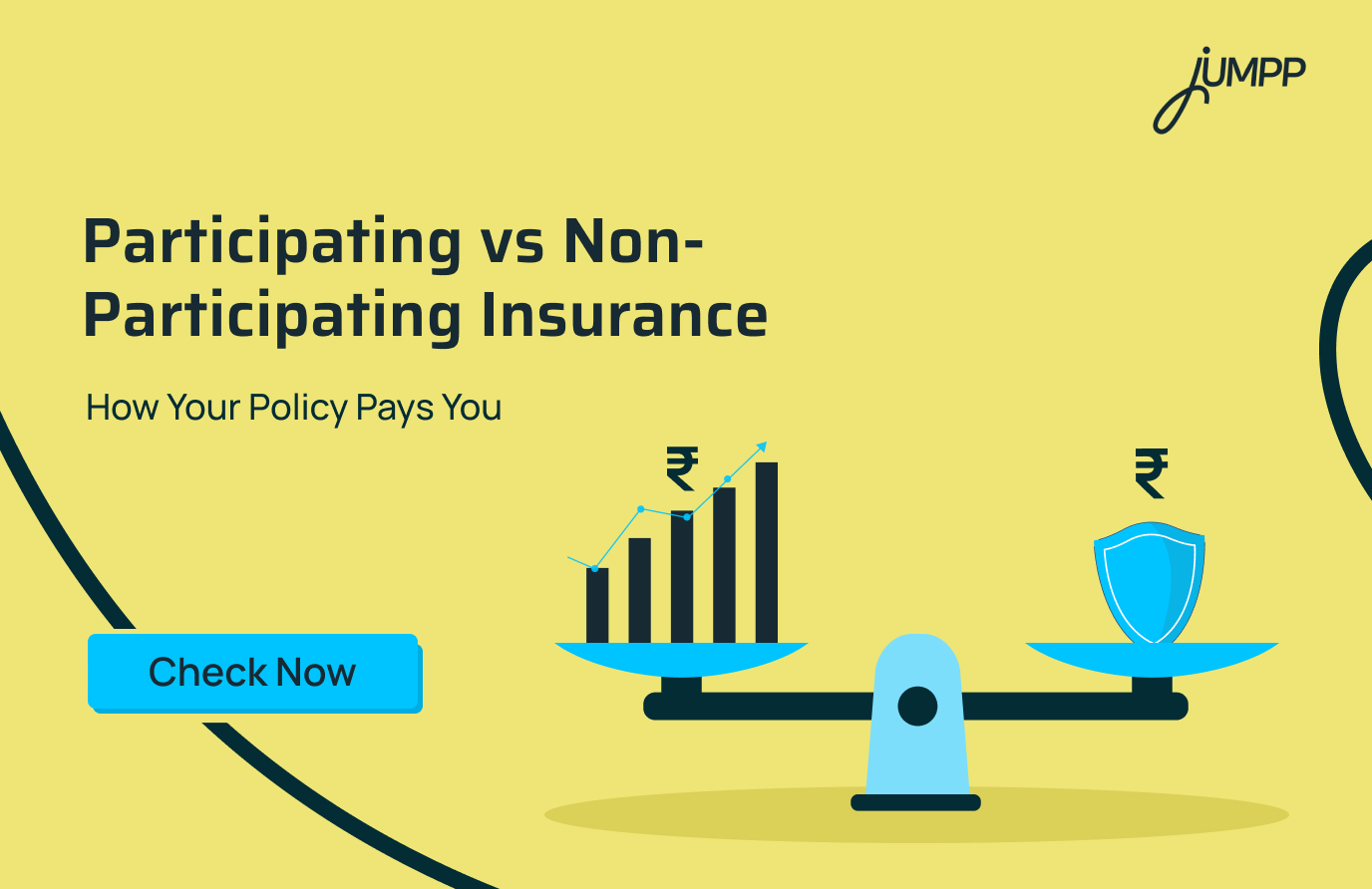
Not all life insurance policies work in the same way once you look beyond the basic coverage. Some policies can give you a share of the insurer’s profits, while others stick to benefits decided when you buy the policy.
This difference can affect your policy’s returns, certainty and long-term value. In this blog, understand the distinction between participating and non-participating insurance.
What is a Participating Insurance Plan?
A participating insurance plan is a life insurance policy that allows the policyholder to participate in the profits of the insurance company. When the insurer’s participating fund generates a surplus, a portion of it may be distributed to eligible policyholders through bonuses.
How Participating Insurance Policies Work
Participating insurance policies combine life insurance benefits with the opportunity to receive bonuses from the insurer’s participating fund. These bonuses depend on the insurer’s surplus and are not guaranteed.
- Premium Pooling
The premiums from participating policyholders are managed in a participating fund by the insurer. The fund supports the insurer’s obligations to policyholders and is managed according to the applicable policy and regulatory framework.
Read in detail about premiums in insurance.
- Profit Assessment
The insurer assesses the performance of the participating fund, including factors such as investment performance, claims experience and other relevant factors.
- Bonus Declaration
When a surplus is available, the insurer may declare bonuses for eligible participating policyholders. The nature and amount of bonuses depend on the insurer’s performance and the policy terms.
- Potential for Additional Benefits
The final benefits from a participating policy can be higher than the guaranteed amount when bonuses are declared and accumulated, subject to the terms of the policy.
Participating Insurance Benefits
Participating insurance offers life cover along with the potential to earn additional benefits through bonuses. These bonuses depend on the insurer’s surplus and may vary over time.
- Potential for Higher Payouts
A participating policy can provide additional benefits through bonuses declared by the insurer, which can increase the overall payout over the policy term.
- Participation in Insurer’s Profits
The policyholder gets an opportunity to participate in the surplus generated by the participating fund, subject to the policy terms.
- Long-Term Financial Planning
Participating policies can combine life insurance protection with potential bonuses, making them suitable for people looking for a long-term insurance and savings-oriented structure.
Know how to do financial planning with your first salary.
- Potential Maturity Upside
If bonuses are declared and accumulate over time, the maturity benefit may be higher than the guaranteed benefit specified under the policy.
What is a Non-Participating Insurance Plan?
A non-participating insurance plan is a life insurance policy where the policyholder does not participate in the insurer’s profits. The benefits are determined according to the terms and conditions of the policy and do not include a share of the insurer’s participating surplus.
How Non-Participating Insurance Policies Work
Non-participating insurance policies provide fixed benefits based on the terms of the policy. They do not share in the insurer’s profits or offer bonuses linked to the insurer’s financial performance.
- Fixed Policy Structure
The policy specifies the benefits, premiums and other applicable terms. The policyholder does not receive a share of the insurer’s participating profits.
- Guaranteed Benefits
Where the policy provides guaranteed benefits, the applicable amount and conditions are stated in the policy documents. This gives the policyholder greater clarity about the benefits payable under the contract.
- No Profit-Sharing
Unlike a participating policy, a non-participating policy does not distribute participating fund surpluses to the policyholder through bonuses.
- Greater Benefit Predictability
Since the policy does not depend on the declaration of participating bonuses, the benefits can be easier to understand and plan around, depending on the product structure.
Non-Participating Insurance Benefits
Non-participating insurance policies offer fixed and predictable benefits as defined in the policy terms. Since the benefits are not linked to the insurer’s profits, policyholders know the applicable payouts in advance
- Greater Certainty
Where benefits are guaranteed, you can know the applicable payout based on the policy terms without relying on future bonus declarations.
- Simpler Financial Planning
A defined benefit structure can make it easier to plan for specific long-term financial needs.
- No Dependence on Participating Bonuses
The policyholder does not have to depend on the insurer declaring bonuses to receive the benefits guaranteed under the policy.
- Suitable for Defined Financial Goals
Non-participating plans can be considered when predictable benefits are more important than participation in the insurer’s surplus.
Participating and Non-Participating Insurance: How Do They Differ
The main difference between participating and non-participating insurance is whether the policyholder participates in the insurer’s surplus through bonuses.
| Feature | Participating Insurance | Non-Participating Insurance |
| Profit Sharing | Policyholders may receive bonuses from participating surplus | No participation in insurer’s participating surplus |
| Benefits | Guaranteed benefits plus applicable bonuses, as per policy terms | Benefits are based on the policy terms and applicable guarantees |
| Bonus | May be declared depending on the insurer’s performance | No participating bonus |
| Payout Predictability | Can vary because bonuses may differ | Generally more predictable where benefits are guaranteed |
| Long-Term Purpose | Can combine protection with savings and potential bonuses | Can suit those seeking defined benefits and greater certainty |
| Returns | May include additional benefits through declared bonuses | Does not depend on participating bonuses |
Which Insurance Policy Is Better: Participating or Non-Participating?
There is no single answer to which insurance policy is better, participating or non-participating. The better option depends on whether you value potential additional benefits through bonuses or greater certainty around defined benefits.
- Choose a Participating Policy If You Want Potential Bonus Benefits
A participating policy may suit you if you are comfortable with benefits that can include bonuses declared by the insurer and want the possibility of additional benefits over the policy term.
- Choose a Non-Participating Policy If You Prefer Predictability
A non-participating policy may be more suitable if you prefer a clearly defined benefit structure and do not want your policy benefits to depend on participating bonus declarations.
- Consider Participating Insurance for Long-Term Savings-Oriented Goals
If you want life insurance protection combined with the possibility of additional benefits through bonuses, a participating policy may align better with your objectives.
- Consider Non-Participating Insurance for Defined Financial Planning
If your priority is knowing the benefits available under the policy and planning around those defined amounts, a non-participating policy may offer greater clarity.
Planning to exit your life insurance policy before maturity? Understanding the surrender value in insurance can help you assess how much you may receive if you discontinue the policy early. Learn how surrender value is calculated, what factors affect it and what to consider before surrendering your policy.
Conclusion.
Participating policies can offer potential additional benefits over time, whereas non-participating policies can provide greater predictability where benefits are guaranteed.
The right choice depends on your financial goals, preferred level of certainty and the specific terms of the policy. Comparing guaranteed and non-guaranteed benefits before buying can help you make a more informed decision.
FAQs
Neither is universally better. Participating policies offer the potential for bonuses, while non-participating policies focus on defined benefits and greater certainty.
Participating policies do not guarantee bonus returns. The additional bonuses depend on the insurer’s financial performance, while the guaranteed benefits are based on the policy terms.
Bonuses are generally calculated based on the insurer’s surplus and may be declared as a fixed amount per ₹1,000 of sum assured or as a percentage of the sum assured.
Non-participating plans can offer greater predictability because their benefits do not depend on participating bonuses. Participating plans may provide higher potential benefits but can have variable bonus payouts.
A participating policy may suit people looking for long-term life insurance with the potential for additional bonuses. It may also suit those who are comfortable with variable returns.
The main risk is that bonuses are not guaranteed and can vary based on the insurer’s financial performance. This means the final payout may differ from the amount initially expected.
Non-participating policies can offer fixed or guaranteed benefits, depending on the policy. The applicable maturity, death or other benefits are specified in the policy terms.
Eligible policyholders can receive a share of the surplus generated by the insurer’s participating fund through declared bonuses. The amount depends on the insurer’s performance and applicable policy terms.
You generally cannot change the participating or non-participating structure of an existing policy. Depending on the insurer and policy terms, you may need to surrender the existing policy and purchase a new one.