Pay As You Drive Insurance vs Regular Insurance: Which One Saves You More?
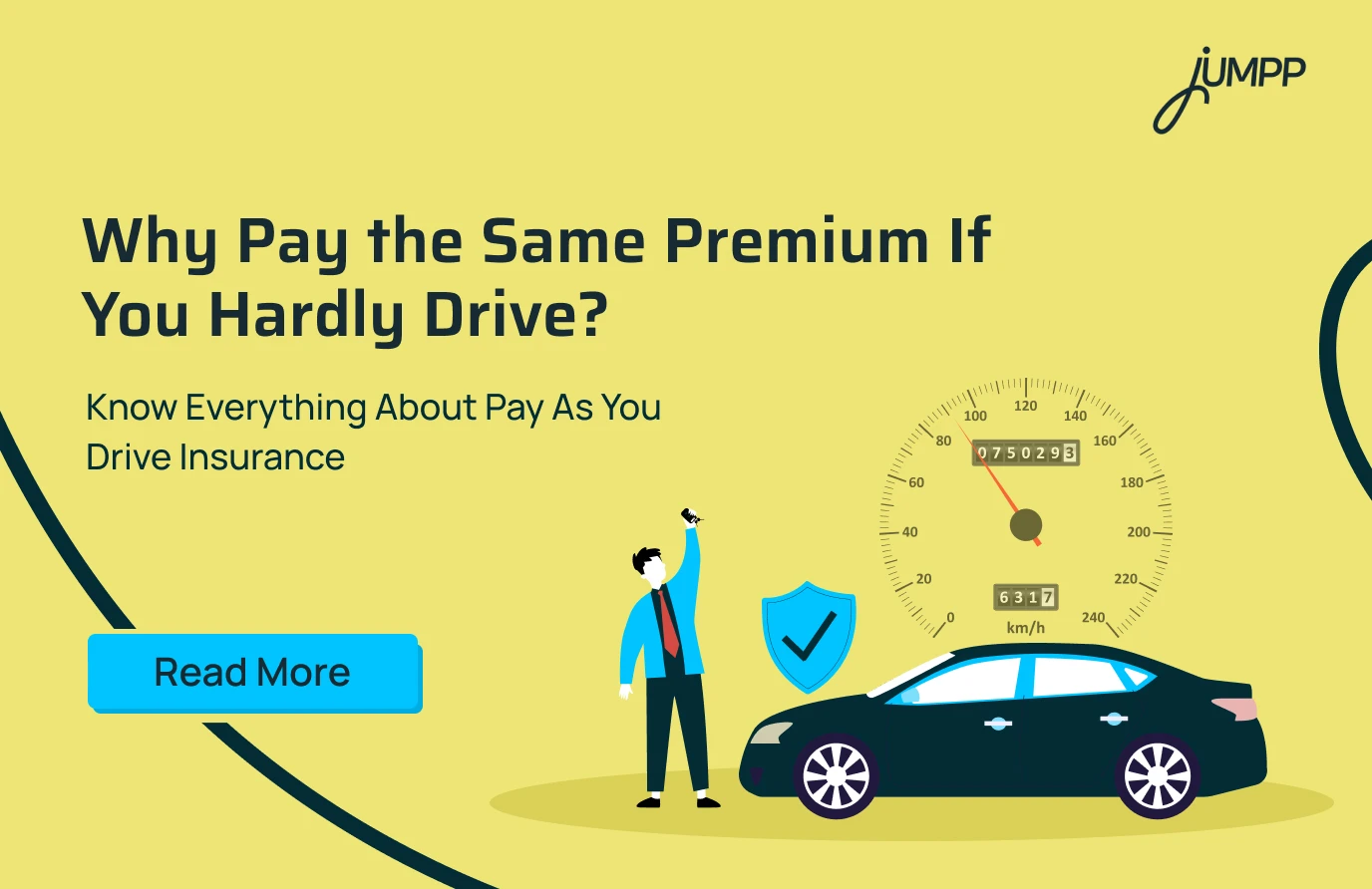
Not everyone drives their car every day. Some people work from home, others rely on public transport, and many households have a second vehicle that spends most of its time parked. Yet, despite limited usage, they often end up paying the same insurance premium as someone who drives thousands of kilometres every year. That is where Pay As You Drive insurance comes in.
Instead of following a one-size-fits-all pricing model, this usage-based insurance plan considers how much you actually drive.
In this article, you will learn how Pay As You Drive insurance works, who should buy it, and how it compares with a comprehensive motor insurance policy.
What is Pay As You Drive Insurance?
Pay As You Drive (PAYD) insurance is a usage-based motor insurance plan where your premium is linked to how much you drive instead of charging a fixed annual amount.
- With pay as you drive car insurance, you declare your expected annual kilometres while purchasing the policy.
- The insurer then monitors your vehicle usage through your odometer, a telematics device, or a mobile app.
- If your driving remains within the selected mileage limit, you can receive discounts on your own damage premium at renewal.
Pay As You Drive Bike Insurance
The pay as you drive bike insurance concept works similarly for two-wheelers. Riders select an annual mileage slab, and the premium is calculated based on their expected usage. It is suitable for people who use their bikes occasionally and want to reduce insurance costs while maintaining essential coverage.
How Pay As You Drive Insurance Works
Here is how pay-as-you-drive insurance works:
- Select a mileage slab based on your expected annual usage, such as 2,500 km, 5,000 km, or 10,000 km.
- The insurer tracks your vehicle’s mileage using the odometer, a telematics device, or a mobile application.
- If you stay within the chosen mileage limit, you may receive a discount on the own damage portion of your insurance premium when you renew the policy.
- Standard motor insurance coverage, including third-party liability, continues as per the policy terms.
What Is Covered and Not Covered Under Pay As You Drive Insurance?
Pay As You Drive insurance generally covers third-party liability, accidental damage, theft, and personal accident cover, while excluding normal wear and tear, mechanical breakdowns, negligent driving, and other policy-specific exclusions.
Here is the detailed overview of the Pay As You Drive Insurance Coverage –
| Covered | Not Covered |
| Third-party liability for injuries, death, or property damage caused to others. | Damage caused due to normal wear and tear or depreciation. |
| Accidental damage to the insured vehicle. | Mechanical or electrical breakdowns resulting from regular use. |
| Theft and vandalism. | Claims arising from driving outside the geographical area specified in the policy. |
| Personal accident cover for the owner-driver, as per the policy terms. | Damage caused due to negligent or reckless driving, including driving under the influence of alcohol or drugs. |
| Optional add-ons such as zero depreciation, engine protection, and roadside assistance, if purchased. | Any exclusions, conditions, or limitations mentioned in the insurer’s policy document. |
Pay As You Drive Insurance Benefits
Some of the key pay as you drive insurance benefits include:
- Lower premiums for drivers with low annual mileage.
- Pay only for the distance you drive instead of a fixed yearly premium.
- Access to standard coverage, including third-party liability, with optional add-ons such as zero depreciation and engine protection.
- Additional savings may be available for safe driving if the insurer also offers telematics-based rewards.
Pay As You Drive Car Insurance Disadvantages
While pay as you drive car insurance can reduce costs, it also has certain limitations:
- It may not be suitable for people who drive long distances regularly.
- Exceeding the declared mileage limit may require you to upgrade your plan or pay additional charges.
- Some insurers may require mileage tracking through a mobile app or telematics device.
- Savings are generally limited to the own damage component of the premium and not the mandatory third-party insurance.
Pay As You Drive Insurance vs Comprehensive Car Insurance
Pay As You Drive insurance is ideal for low-mileage drivers, as the premium depends on vehicle usage. In contrast, comprehensive car insurance charges a fixed premium regardless of how much you drive.
| Feature | Pay As You Drive Insurance | Comprehensive Car Insurance |
| Premium | Premium depends on the annual mileage selected and vehicle usage. | Premium is based on factors such as the car’s age, model, location, IDV, and add-ons. |
| Best For | Drivers who use their cars occasionally or have low annual mileage. | Drivers who use their cars regularly or cover long distances. |
| Savings | Can help reduce insurance costs if you stay within the selected mileage limit. | Premium remains the same regardless of how much you drive. |
| Customisation | Let’s you choose a mileage slab that suits your driving needs. | Allows you to customise coverage through add-ons, but not based on vehicle usage. |
| Claims | Claims are generally subject to the terms of the selected mileage plan. | Claims can be made throughout the policy period, subject to policy terms and conditions. |
Who Should Buy Pay As You Drive Insurance?
Pay As You Drive insurance is best suited for people who use their vehicles occasionally and want to save on insurance costs. It may not be suitable for frequent or long-distance drivers.
- Occasional drivers who use their car only on weekends or for short trips.
- People working from home or relying mainly on public transport.
- Households with multiple cars where one vehicle is used less frequently.
- Individuals who travel often and leave their car parked for extended periods.
How to Buy Pay As You Drive Insurance
You can buy Pay As You Drive insurance online by selecting a suitable mileage slab and completing the policy purchase through your preferred insurer.
- Visit your insurer’s website or mobile app.
- Enter your vehicle details.
- Choose the Pay As You Drive insurance plan.
- Select the annual mileage slab based on your expected usage.
- Review the premium, coverage, and add-ons.
- Complete the payment and receive your policy digitally.
How to Claim Pay As You Drive Insurance
The claim process for Pay As You Drive insurance is similar to a standard motor insurance policy. You need to notify the insurer, submit the required documents, and complete the verification process.
- Inform your insurer immediately after the accident or incident.
- Register the claim and provide the necessary details.
- The insurer may arrange a vehicle inspection.
- Submit the required documents for claim processing.
- Once approved, the insurer will settle the claim as per the policy terms.
- Repairs can be completed through a network garage for cashless settlement or through reimbursement at a non-network garage, depending on your policy.
Understand the complete car insurance claim process. Learn the documents required, cashless vs reimbursement claims, and the steps to ensure a smooth settlement.
As insurance products continue to evolve, selecting a policy that matches your usage can make your coverage more efficient. Always review the policy terms and conditions before making a decision.
Motor insurance is just one part of protecting your assets. Explore how Property and Casualty Insurance helps safeguard your home, business, and other valuable assets against unexpected financial losses.
FAQs
Yes, Pay As You Drive insurance is a good option for people who drive less frequently, as it can reduce the own damage premium while providing standard motor insurance coverage.
Pay As You Drive (PAYD) is a usage-based motor insurance plan where your premium is linked to your annual vehicle usage instead of a fixed yearly rate.
You select an annual mileage slab, and the insurer tracks your vehicle usage through an odometer, telematics device, or mobile app. If you stay within the chosen limit, you may receive discounts on your own damage premium.
Opening KM is the odometer reading of your vehicle when the PAYD policy begins. It serves as the starting point for measuring the kilometres driven during the policy period.
The kilometre benefit allows you to save on the own damage premium by selecting a mileage slab that matches your annual driving. Some insurers may also allow you to purchase additional kilometres if required.
Standard car insurance is not based on kilometres. However, Pay As You Drive insurance calculates the own damage premium based on your selected annual mileage.
The cost depends on factors such as your vehicle, insurer, selected mileage slab, and coverage. Low-mileage drivers generally pay a lower own damage premium than under a standard policy.
The best policy depends on your driving habits. Pay As You Drive insurance is suitable for occasional drivers, while a comprehensive car insurance policy is generally better for people who drive regularly.