How Spending Habits Affect Financial Health: Savings, Debt & More
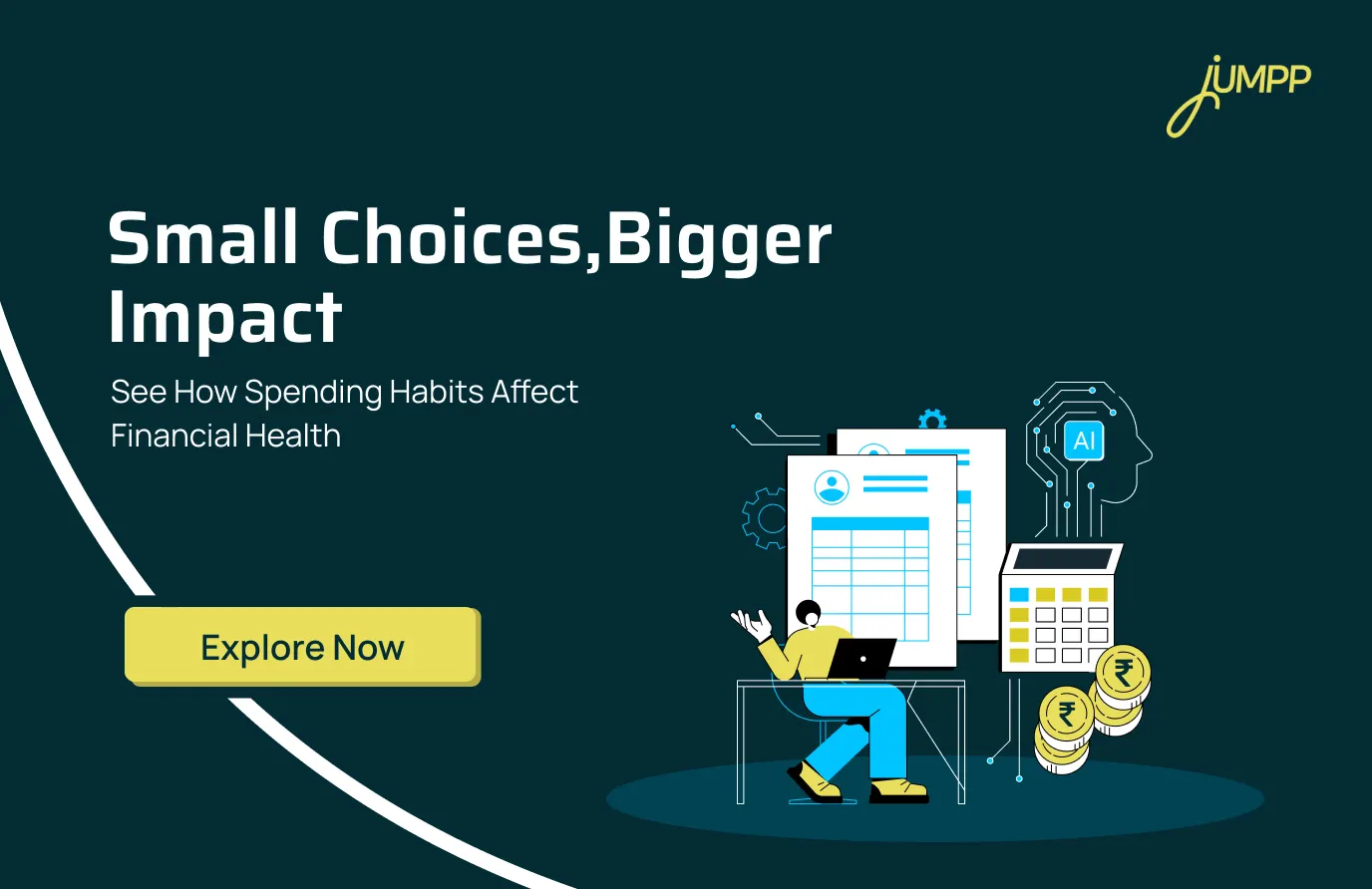
You do not always notice when your spending habits start affecting your finances. It can happen through small purchases, frequent online orders, subscriptions, or simply spending whatever is left after payday.
Over time, these choices can affect how much you save and how quickly you reach your financial goals. The first step towards better money management is not necessarily earning more. It is understanding where your money is already going.
The Psychology Behind Spending Habits and Financial Health
Spending decisions are not always logical. Emotions, stress, boredom, instant gratification and social influence can affect why and how you spend.
Recognising these triggers can help you become more aware of impulse purchases and make more intentional financial decisions.
The psychology of spending habits can therefore help people recognise why they spend the way they do and make more intentional financial decisions.
- They determine your available savings: Higher discretionary spending can leave less money available for savings and investments.
- They influence financial priorities: Regular spending on non-essential categories can sometimes take priority over goals such as building an emergency fund or saving for a major purchase.
- They affect your ability to manage emergencies: If most of your income is committed to regular expenses, an unexpected financial requirement can become harder to manage.
Quick steps to build an emergency fund!
- They shape future financial choices: Consistent spending patterns can influence whether you need to reduce expenses, increase savings, or reconsider your financial goals.
Intentional vs Unintentional Spending
Not every expense is planned, and that distinction can have a significant impact on your finances.
- Intentional spending: This happens when you make a purchase consciously and know why you are spending the money.
Paying for a planned holiday, buying groceries within a set budget or investing towards a financial goal can all be examples of intentional spending.
- Unintentional spending: This happens when money goes towards purchases that you did not plan for or barely noticed.
It could be an impulse purchase while scrolling online, ordering food because you are tired, or continuing to pay for a subscription you rarely use. Individual expenses may appear small, but repeated unintentional spending can gradually reduce the money available for savings and other financial goals.
Also read: 5 Common Financial Errors AI Can Detect That Most People Mis
How Spending Patterns Affect Financial Health
Spending patterns directly affect financial health by influencing how much you save, how well you manage expenses, your ability to handle unexpected costs and how quickly you can achieve financial goals.
Let us see how spending habits affect savings with a simple example.
Consider someone who receives ₹60,000 every month and spends ₹52,000. They have ₹8,000 left for savings, investments or other financial priorities.
Now consider another person earning the same ₹60,000 but spending ₹42,000. They have ₹18,000 available.
That is a difference of ₹10,000 every month, even though both earn the same amount.
Beyond savings, spending patterns can affect your overall financial health in several ways:
- Influences financial stability: When expenses regularly consume most of your income, there is less room to manage unexpected financial needs.
- Can increase debt: Uncontrolled spending may lead to greater reliance on credit cards, loans or other forms of borrowing.
- Shapes budgeting: Understanding where your money goes helps you create a budget that reflects your actual spending behaviour.
- Impacts financial goals: Regular spending choices can either support or delay goals such as building an emergency fund, buying a home or planning for retirement.
- Affects financial stress: Better control over spending can provide greater financial flexibility and reduce uncertainty around money.
- Helps identify unhealthy habits: Reviewing spending patterns can reveal impulse purchases, lifestyle creep or recurring expenses that may be affecting your finances.
Looking for an AI Expense Tracker App? Meet India’s First AI-Powered Finance Super App
How to Improve Your Spending Habits
If you want to improve spending behaviour, start by understanding your current expenses rather than trying to cut everything at once.
- Track your expenses: Review where your money goes across essentials, discretionary purchases and recurring payments.
- Identify patterns: Look for categories where spending has gradually increased or purchases are frequently unplanned.
- Set realistic limits: Create spending limits that leave room for both regular expenses and financial goals.
- Review recurring costs: Check subscriptions and services that you may no longer use.
- Measure progress: Compare your spending and savings periodically to see whether your changes are working.
Why You Should Review Your Spending Patterns Regularly
Your financial life does not remain static, so your spending analysis should not be a one-time activity.
A monthly or quarterly review can help you answer important questions:
- Has my income changed?
- Have my essential expenses increased?
- Am I spending more in any particular category?
- Are my savings consistent?
- Have my financial goals changed?
- Are my current spending habits supporting those goals?
This regular review can help you identify changes early and make adjustments before they become difficult to reverse.
How Technology Can Simplify Expense Tracking
Manually tracking every transaction can become tedious. Technology can make it easier to track spending habits across different categories and identify trends that may be difficult to notice from individual transactions.
Regular expense tracking and financial planning can also help you compare your actual spending with your budget and financial goals. Reviewing your personal spending patterns over time may highlight categories where expenses are gradually increasing.
Track Your Spending with jAI
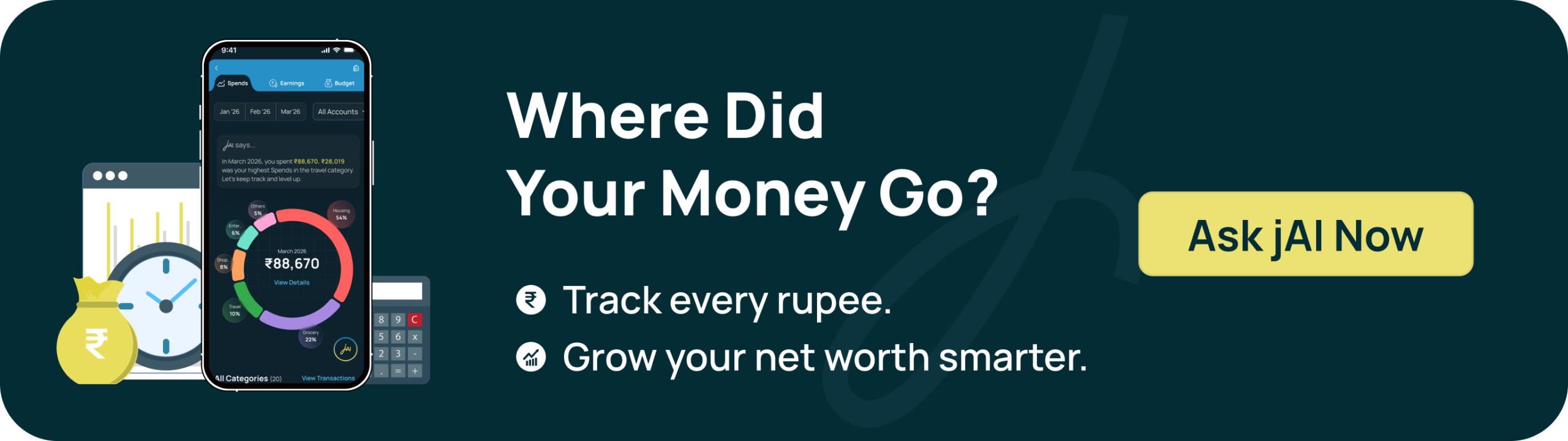
jAI is short for jUMPP Artificial Intelligence. It acts as your smart finance buddy by analysing your spending patterns, tracking expenses automatically, and helping you create better budgets. Like other AI tools, jAI needs access to financial data so it can provide smarter money insights, budget planning support, and personalised financial tracking.
Instead of simply looking at individual transactions, users can use financial insights to understand broader patterns in their spending. This can make it easier to identify where money is going, think about budgeting decisions and become more aware of habits that may influence financial goals.
Here are the quick steps to use jAI for tracking your monthly spends.
Start by tracking your expenses, identify the habits that need attention and make small changes that you can actually maintain. When spending becomes more intentional, saving and planning for bigger goals can become much easier too.
FAQs
Spending habits can affect how much you save, your reliance on debt and your ability to work towards long-term financial goals. Consistently spending most of your income can leave less room for savings, investments and unexpected expenses.
Common signs include frequent impulse purchases, regularly exceeding your budget, relying on credit for routine expenses, unused subscriptions and being unable to save consistently.
Start by tracking your expenses, identifying unnecessary or unplanned purchases and setting realistic spending limits. Review your progress regularly and make small changes that you can maintain over time.
Frequent impulse purchases can reduce the money available for savings and other financial priorities. While individual purchases may seem small, repeated unplanned spending can have a larger impact over time.
You can categorise expenses, review transactions regularly, set spending limits and use digital expense-tracking tools. Tracking helps you identify where your money goes and which expenses may need attention.
When expenses regularly exceed available income, you may become more dependent on credit cards or loans. Over time, repayments and interest costs can further reduce the money available for other financial goals.
Budgeting can help you allocate income towards essential expenses, discretionary spending and savings. It also makes it easier to identify overspending and adjust your expenses as your financial priorities change.