AI Personal Finance App: Track Spending, Budget Better and Save Smarter
With our habit of continuously using Google Pay and other apps for digital spending, one thing is common for everyone: you lose track of your money. But did you know that an AI personal finance app can monitor your expenses and forecast your cash flow? It can also guide you in smarter budgeting and investing, making your life a lot simpler.
Let’s explore how AI is shaping the future of personal finance!
What is an AI Personal Finance App?
An AI personal finance app is a digital tool that uses Artificial Intelligence to help users manage their money better.
Unlike traditional budgeting methods, where you manually track every expense, an AI-powered finance app can organise your financial data, understand your money habits, and provide personalised insights.
It helps simplify different aspects of finance, such as:
- Expense tracking
- Budget planning
- Spending analysis
- Financial reminders
- Personalised money insights
With the rise of AI for personal finance, managing everyday finances has become easier, faster, and more data-driven.
How AI Personal Finance Apps Analyse Spending Habits
Ever checked your account balance and wondered, “Where did my money go?”
AI spending analysis helps answer this question by studying your transactions and identifying your financial behaviour.
An AI money management app can:
- Automatically categorise your expenses
- Detect spending trends
- Highlight where most of your money is going
- Show your monthly cash flow patterns
- Provide insights to make better money decisions
For example, if your food delivery expenses increase every month, AI can identify this pattern and help you become more aware of your spending.
Meet jAI: Your AI-Powered Finance Buddy on jUMPP
Managing money often gets complicated because your spending is spread across different transactions, categories, and accounts. jAI by jUMPP simplifies personal finance management with AI-powered insights.
With jAI, you can:
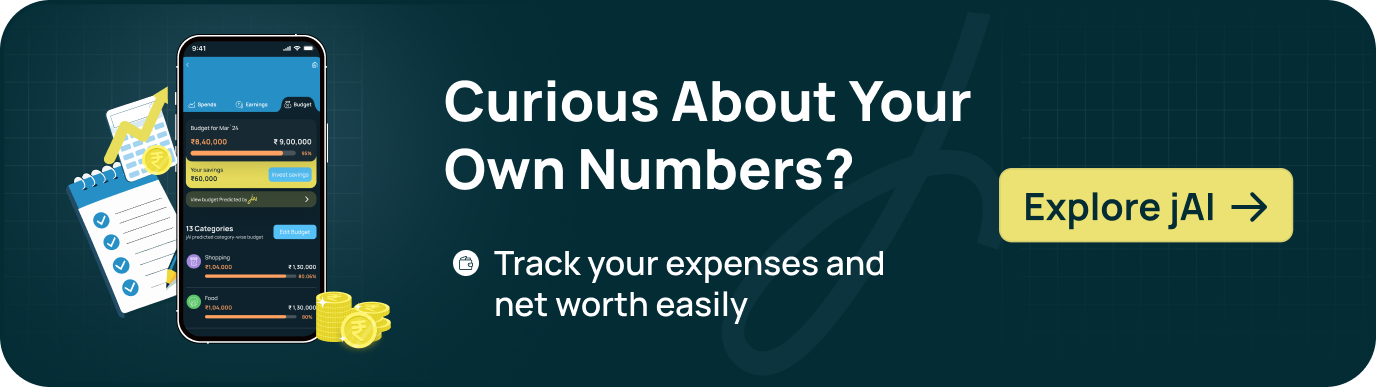
- Analyse your spending patterns and understand where your money goes
- Track your income and expenses in one place
- Categorise your spending automatically for better money management
- Create personalised budgets based on your financial habits
- Ask finance-related questions and get simple conversational insights
- Make smarter financial decisions with AI-powered spending analysis
jAI helps you move beyond basic expense tracking by helping you understand your money behaviour and manage your finances smarter.
Still Managing Budgets Manually?
Try jUMPP, your smart budgeting app that helps analyse spending patterns, track expenses, and manage your money smarter.
Traditional Money Management vs AI-Powered Finance Apps
Traditional money management depends on manual tracking and fixed planning. AI-powered finance apps make the process easier by using automation, spending analysis, and personalised financial insights.
| Traditional Money Management | AI-Powered Finance Apps |
| Manual expense entries in notebooks or spreadsheets | Automated expense tracking and categorisation |
| Fixed monthly budgets | Smart budgeting insights based on spending habits |
| Checking every transaction manually | AI spending analysis to identify money patterns |
| Manually setting payment reminders | Intelligent alerts for bills and subscriptions |
| Generic financial planning | Personalised financial insights based on user behaviour |
How AI is Changing Personal Finance Management
AI in finance management is transforming how people budget, track expenses, manage investments, and make financial decisions. Earlier, people relied on notebooks and spreadsheets to record every expense. Today, AI-powered finance apps can analyse spending habits, identify patterns, and simplify money management.
Here are some key ways AI is changing personal finance:
1. AI Budgeting and Expense Tracking
We have all had moments where we wonder, “Where did all my money go?”
An AI expense tracker helps organise your transactions automatically across groceries, bills, subscriptions, shopping, and other categories. With automated expense tracking, users can understand their monthly spending habits and manage budgets more effectively.
2. AI-Powered Investment and Financial Planning
AI in personal finance is also helping users simplify investment research and financial planning.
AI-powered finance apps can analyse financial data, understand patterns, and provide personalised insights based on different goals and preferences.
However, users should always do their own research before making decisions related to investments, loans, or taxes.
3. Everyday Money Management with AI
AI money management apps can make daily financial tasks easier by helping users track payments, subscriptions, and upcoming bills.
AI-powered reminders and alerts can help users stay organised and manage their finances better.
4. AI in Fraud Detection and Financial Security
Security is an important part of digital finance. AI helps banks and financial institutions analyse transactions, identify unusual activities, and detect possible fraud patterns.
For example, if a transaction does not match your regular spending behaviour, AI systems can identify such activities and trigger alerts.
5. AI in Loans and Credit Analysis
AI in finance is also changing how lenders analyse credit behaviour.
Along with traditional credit information, AI models can study wider financial patterns to support better risk analysis and lending decisions.
AI-powered systems can also help financial institutions create more personalised repayment communication and improve customer experiences.
6. Personalised Financial Insights
Everyone has different spending habits and financial goals. Personal finance AI tools study individual behaviour and provide customised insights.
For example, if your monthly income is ₹25,000 and your regular expenses include rent, groceries, and travel, an AI expense tracker helps answer this by tracking expenses and analysing spending behaviour.
Challenges AI Faces in Personal Finance
Although AI is helpful, it is not without challenges.
- Remote Areas: Limited smartphone or internet access can restrict AI adoption.
- Data Accuracy: Inaccurate or outdated data can lead to wrong insights.
Conclusion
AI in personal finance is not a distant future; it’s here today.
From tracking expenses to recommending investments, AI is transforming personal finance in ways that were once unimaginable.
As Albert Einstein once said, “The more I learn, the more I realise how much I don’t know.”
It’s essential to remember that while technology can offer us powerful tools, the key to financial success lies in our ability to use them wisely.
Still using spreadsheets to manage money? Learn how AI in financial management can simplify budgeting, tracking, and investing
AI Personal Finance- FAQs
AI helps you manage your money better by tracking your expenses and showing where you can save. It can even alert you about unusual spending.
AI in finance means using smart tools to make managing money easier. It analyses data, predicts trends, and automates tasks like budgeting or trading, saving you time and effort.
AI handles accounting tasks like tracking bills and payments. It reduces errors, spots fraud, and fastens the process.
AI tools can help you trade smarter by studying market trends and predicting price changes. They also automate trades and manage risks, so you can focus on growing your investments.
AI creates a step-by-step plan to help you save, invest, and achieve your financial goals. It gives you reminders, tracks your progress, and makes planning your future simple and effective.
AI is everywhere—your smart assistants, fitness trackers, and even your home devices. It simplifies daily tasks, like setting reminders, tracking workouts, or turning off the lights with a voice command.
AI personal finance apps simplify money management by auto-categorising your spending, forecasting your cash flow, and sending bill or fraud alerts. They can also personalise budgets and investment tips.
AI enhances credit scoring by utilising alternative data, such as utility bills, UPI transactions, and digital spending. It assesses borrowers with thin credit files. ML models analyse real-time income and repayment patterns. This helps in enabling faster, fairer, and more inclusive loan approvals.