AI in Money Management: Transforming the Way You Budget, Save and Invest
Managing money does not have to mean endless spreadsheets or tracking every expense manually anymore. AI is making budgeting, saving, and investing much simpler by helping you understand where your money goes and what you can do with it.
From creating personalised budgets to spotting saving opportunities and providing investment insights, AI-powered finance tools are changing how people manage their money every day.
In this blog, discover how AI is transforming money management for all.
What is AI in Money Management?
AI in money management refers to the use of artificial intelligence to analyse financial data, automate routine financial tasks, and provide personalised insights that help people manage their finances more efficiently.
How AI Helps in Money Management
AI supports different aspects of personal finance, from managing day-to-day expenses to planning long-term investments.
Its capabilities vary depending on the tool, but an AI-powered budgeting app mostly focuses on three key areas:
- Budgeting by tracking expenses and creating personalised budgets.
- Saving by identifying opportunities to reduce unnecessary spending and build savings.
- Investing by analysing portfolios, monitoring performance, and providing market insights to support informed decisions.
Let’s look at how AI works across each of these areas.
AI in Budgeting: How It Works
AI helps make budgeting easier by analysing your income, expenses, and spending patterns. Instead of manually tracking every transaction, AI-powered tools organise your finances and provide insights that can help you stay within your budget.
AI-powered budgeting tools can:
- Automatically categorise your expenses.
- Track monthly income and spending.
- Identify recurring or unnecessary expenses.
- Send alerts when you’re close to your budget limit.
- Recommend personalised spending limits based on your financial habits.
For example, if your dining expenses increase consistently over a few months, AI may identify the trend and suggest adjusting your monthly budget.
AI in Saving: How It Works
AI can support better saving habits by identifying opportunities to save based on your spending behaviour. Rather than replacing your financial decisions, it provides personalised insights that can help you allocate money towards your savings goals.
Common AI-powered saving features include:
- Goal-based savings plans.
- Automated saving recommendations.
- Emergency fund tracking.
- Spending optimisation insights.
- Personalised saving suggestions.
For instance, AI may detect subscriptions you rarely use or identify spending patterns that could be reduced. These insights can help you redirect small amounts towards your savings goals over time.
AI in Investing: How It Works
AI helps investors analyse financial information more efficiently by processing large amounts of market and portfolio data. While it cannot predict future market movements or eliminate investment risk, it can provide insights that support more informed investment decisions.
AI-powered investing tools may help you:
- Analyse your investment portfolio.
- Assess your risk profile.
- Monitor portfolio performance.
- Suggest diversified asset allocation based on your preferences.
- Access market insights, research, and educational content.
AI should be viewed as a decision-support tool rather than a replacement for independent research or professional financial advice. Investors should always evaluate recommendations carefully before making investment decisions.
Benefits of AI in Money Management
The growing use of AI in personal finance offers several practical advantages.
- Better budgeting: AI automatically tracks spending and creates budgets based on your financial behaviour.
- Personalised financial insights: Instead of generic advice, AI provides recommendations tailored to your spending patterns and goals.
- Time-saving automation: Tasks such as expense categorisation, bill reminders, and spending analysis happen automatically.
- Improved financial visibility: AI combines information from multiple accounts to give you a complete view of your financial health.
- Smarter financial decisions: By identifying trends and spending patterns, AI helps users make informed money decisions.
How jUMPP Uses AI to Simplify Money Management
AI-powered personal finance apps are evolving beyond basic expense tracking by offering personalised financial insights.
One such example is jUMPP, which combines AI with everyday money management to help users better understand and manage their finances.
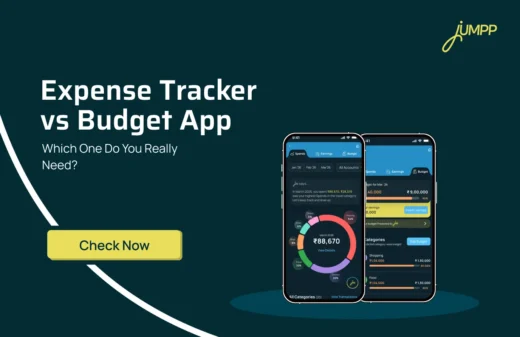
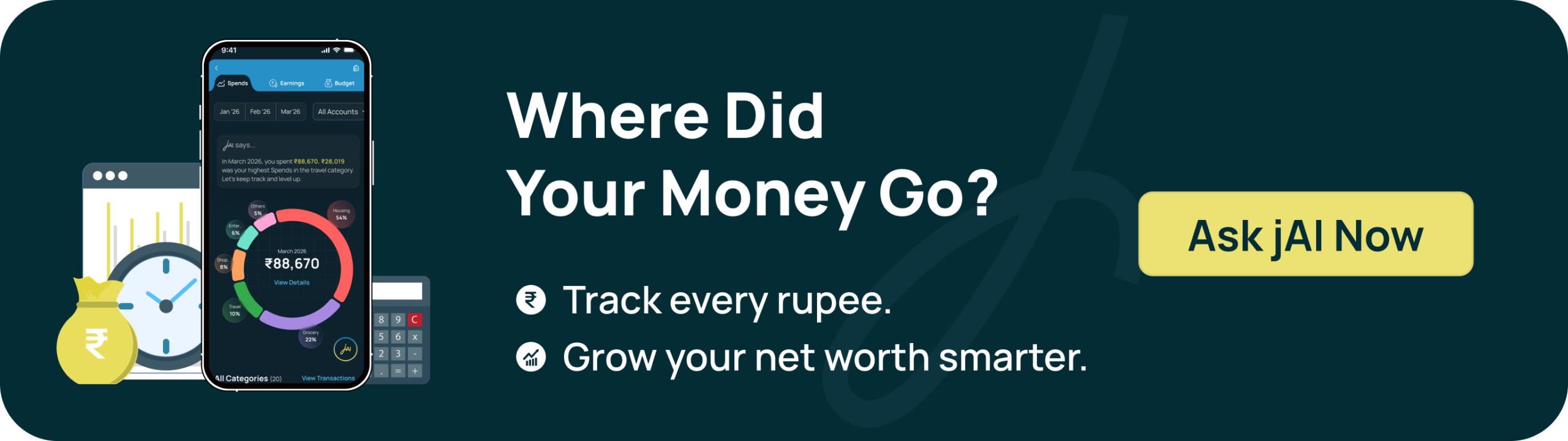
Its AI assistant, jAI, acts as your finance buddy, answers financial questions in simple language and analyses your spending habits to deliver meaningful insights. By securely linking multiple bank accounts, jAIlytics provides a consolidated view of your income, expenses, savings, budgets, and financial goals in one place.
Some of the AI-powered capabilities include:
- Personalised budgeting: Recommends realistic budgets based on your actual spending patterns.
- Smart expense tracking: Automatically categorises expenses and allows you to customise categories for improved accuracy.
- Spending insights: Identifies where your money goes each month and highlights opportunities to optimise your spending.
- Multi-account visibility: Securely connects multiple bank accounts to provide a unified financial dashboard.
- AI-powered guidance: Delivers personalised insights to help you manage expenses, stay within budget, and make the right financial decisions.
Instead of manually reviewing bank statements or maintaining spreadsheets, AI-powered tools like jUMPP turn financial data into meaningful insights, helping users make smarter money decisions every day. Download jUMPP, an AI budgeting app, to track expenses, manage your budget, and simplify money management.
Can AI Replace a Financial Planner?
AI can simplify many aspects of personal finance, but it cannot completely replace a financial planner.
For routine financial tasks such as budgeting, expense tracking, savings planning, and portfolio monitoring, AI provides quick insights and automates repetitive work. However, complex financial decisions involving retirement planning, taxation, estate planning, or large investments still benefit from professional guidance.
The ideal approach is to use AI as a financial assistant while relying on qualified professionals when making important financial decisions.
Manage Your Money Smarter with jUMPP
Take control of your finances with jUMPP, India’s AI-powered finance super app. Track your expenses, monitor your net worth, make UPI payments, invest in Digital Gold and mutual funds, and get personalised AI-powered financial insights—all from one app.
FAQs- AI in Money Management
AI offers several benefits, including automating repetitive tasks, improving efficiency, providing personalised recommendations, speeding up decision-making, and analysing large amounts of data. In personal finance, these features can make budgeting, saving, and investing much easier.
AI makes money management easier by tracking expenses, creating budgets, identifying saving opportunities, and analysing investments. While it cannot replace human judgement or remove financial risks, it can automate everyday tasks and provide personalised insights to help people make better financial decisions.
AI is widely used to automate routine tasks, analyse data, offer personalised recommendations, improve customer support, and assist with budgeting, investing, and financial planning.
AI can help improve productivity, automate repetitive work, support investment research, analyse financial data, and identify business opportunities. However, it cannot guarantee profits or income.
The 10-20-70 rule suggests that successful AI adoption depends roughly 10% on technology, 20% on data, and 70% on people, processes, and effective implementation.
AI can help with budgeting, savings planning, expense tracking, and investment analysis. However, for complex financial planning and personalised financial advice, it is still advisable to consult a qualified financial professional.