KFS Full Form: The Loan Detail That Can Save You From Hidden Charges
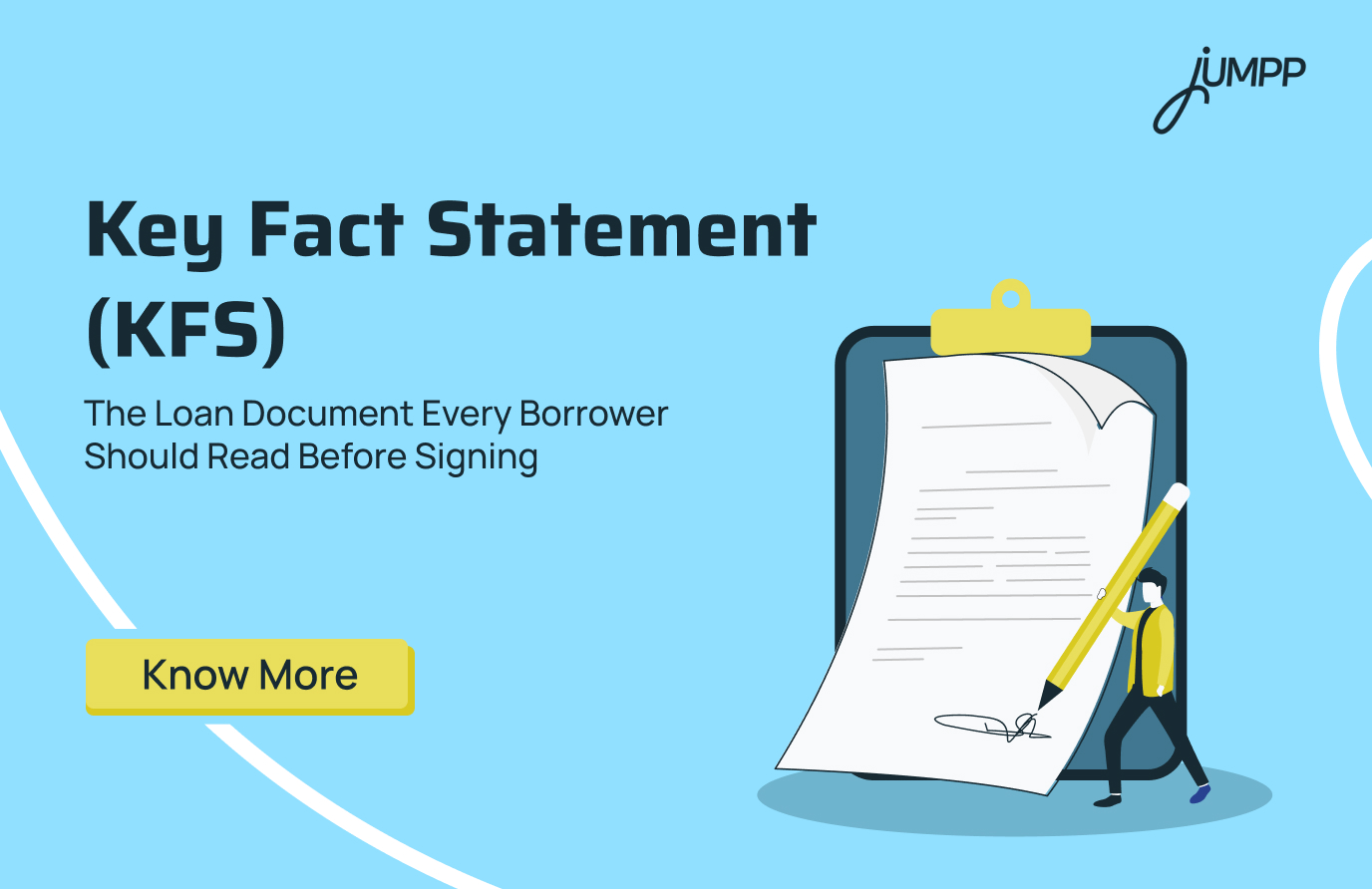
When taking a loan, most borrowers compare interest rates and EMI amounts. However, these numbers do not always reveal the full cost of borrowing. Additional charges such as processing fees, insurance premiums, foreclosure penalties, and other costs can significantly affect how much you ultimately repay. To help borrowers understand these costs upfront, lenders provide a KFS.
In this guide, explore the KFS full form and why RBI wants borrowers to read this document.
KFS Meaning
KFS’ full form is Key Fact Statement.
It is a standardised document provided by banks, NBFCs, and other regulated lenders that summarises the most important details of a loan. KFS helps borrowers understand the actual cost of borrowing before signing a loan agreement and enables easy comparison between different loan offers.
What is KFS in a Loan?
In a loan, a KFS is a document that explains the complete borrowing cost before a customer accepts the loan offer.
The statement helps borrowers understand how much they are borrowing, how much they will repay, and what charges may apply throughout the loan tenure.
What is KFS in Banking?
In banking, KFS refers to a mandatory disclosure document issued by regulated lenders.
The objective is to ensure transparency by providing borrowers with standardised information about loan products before they sign the agreement.
Before comparing loan offers, it is also important to understand the difference between banks and NBFCs, as both follow KFS requirements but may have different lending practices. Read this guide on the difference between a bank and an NBFC.
What is Included in a Key Fact Statement?
A Key Fact Statement includes all the critical information related to a loan.
The details typically include:
- Loan amount sanctioned
- Net disbursed amount
- Interest rate
- Annual Percentage Rate (APR)
- Loan tenure
- EMI amount
- Total number of instalments
- Total interest payable
- Total repayment amount
- Processing fees
- Insurance charges
- Documentation fees
- Foreclosure charges
- Prepayment terms
- Late payment penalties
- Cooling-off period
- Grievance redressal details
These details help borrowers understand the full cost of credit before accepting a loan.
Key Fact Statement Format
A Key Fact Statement follows a structured format that makes loan terms easy to review and compare.
| Key Parameter | Details Included |
| Lender Information | Bank or NBFC name |
| Loan Product | Loan type and application number |
| Loan Amount | Sanctioned and disbursed amount |
| Interest Details | Interest rate and APR |
| Repayment Terms | Tenure, EMI amount, number of instalments |
| Cost Breakdown | Processing fees, insurance charges, and documentation fees |
| Total Cost | Total interest payable and repayment amount |
| Penalties | Default and late payment charges |
| Borrower Rights | Foreclosure terms and complaint process |
This standardised format helps borrowers compare loan offers from multiple lenders more effectively.
How to Read a KFS
A Key Fact Statement (KFS) can help you avoid unexpected charges in your loan.
Here is how you can read the key fact statement –
- Check the Loan Amount and Disbursed Amount
Start by comparing the sanctioned loan amount with the amount that will actually be credited to your account. The disbursed amount may be lower if processing fees, insurance premiums, GST, or other charges are deducted upfront.
- Review the Annual Percentage Rate (APR)
The APR is one of the most important figures in a KFS. Unlike the interest rate alone, it includes interest charges and other loan-related costs, giving a clearer picture of the total cost of borrowing.
- Verify EMI and Total Repayment Amount
Check the monthly EMI amount and the total repayment obligation over the entire loan tenure. This helps you understand your repayment commitment and assess whether it fits your budget.
- Understand the Interest Rate Type
Look for details on whether the loan has a
- Fixed interest rate, which remains unchanged during the tenure.
- Floating interest rate, which may increase or decrease based on market conditions.
A KFS is especially useful when comparing different borrowing options. Learn how various retail loans work and what factors affect their overall cost.
- Review Prepayment and Foreclosure Charges
If you plan to repay the loan before the scheduled tenure, check whether any prepayment or foreclosure charges apply and how they are calculated.
- Check Late Payment Penalties
Read the section on penal charges carefully. It should clearly state the fees or penalties applicable if an EMI is missed or delayed.
- Review the Repayment Schedule
Verify important details such as:
- EMI due dates
- Repayment frequency
- Loan tenure
- First EMI date
- Loan disbursement date
- Check Grievance Redressal Details
The KFS should include contact information for customer support, grievance officers, and escalation channels. These details can help if you face issues during the loan tenure.
How to Access a Key Fact Statement
Most lenders provide a Key Fact Statement through digital and offline channels.
You can access the document through:
- Mobile banking applications
- Internet banking portals
- Loan account dashboards
- Email communications
- Customer support channels
- Physical branch visits
The document is generally made available before loan acceptance.
Most lenders provide KFS documents digitally through apps and online platforms. See how AI in Loan Management is making loan processes faster and more transparent
Key Fact Statement Importance
The Key Fact Statement plays an important role in protecting borrowers and improving transparency.
- Provides Complete Transparency
The KFS clearly discloses the loan amount, interest rate, Annual Percentage Rate (APR), fees, charges, and repayment obligations, helping borrowers understand the true cost of borrowing.
- Helps Compare Loan Offers
Since all lenders follow a standard KFS format, borrowers can easily compare loan offers based on APR, charges, tenure, and repayment terms to choose the most suitable option.
- Prevents Hidden Charges
The KFS lists all applicable fees and charges upfront. This reduces the risk of unexpected costs during the loan tenure and improves transparency.
- Supports Better Financial Planning
By providing details about EMIs, repayment schedules, and total repayment amounts, the KFS helps borrowers assess affordability and manage their finances effectively.
- Protects Borrower Rights
The KFS is a regulatory requirement prescribed by the RBI. Lenders are generally expected to adhere to the terms disclosed in the KFS, strengthening borrower protection and reducing the possibility of misleading disclosures.

New RBI Guidelines for Key Fact Statement (KFS)
The Reserve Bank of India (RBI) has strengthened KFS requirements to improve transparency and help borrowers understand the true cost of loans before signing any agreement.
- Mandatory KFS for Retail and MSME Loans
All banks, NBFCs, and regulated lending entities must provide a Key Fact Statement (KFS) for retail and MSME term loans. The KFS must also be included as a summary section within the loan agreement.
- Annual Percentage Rate (APR) Disclosure
The KFS must clearly disclose the Annual Percentage Rate (APR), which reflects the total cost of borrowing, including interest and applicable charges. This enables borrowers to compare loan offers more accurately.
- Complete Disclosure of Charges
All fees, charges, insurance premiums, and other costs must be disclosed upfront in the KFS. Lenders cannot levy charges that are not disclosed in the document unless explicit borrower consent is obtained.
- Mandatory Review Period
Borrowers must be given sufficient time to review the KFS before accepting the loan:
– Loans with tenure of 7 days or more: Minimum 3 working days.
– Loans with tenure below 7 days: Minimum 1 working day.
During this period, the lender is bound by the terms disclosed in the KFS.
- Language Requirement
The KFS must be provided in a language that the borrower understands. Lenders must also obtain an acknowledgement confirming that the borrower has received and understood the KFS before loan execution.
- Digital Lending Compliance
For digital loans, the loan agreement and related documents must comply with RBI’s digital lending framework. Regulated entities are expected to use secure and legally valid digital execution methods for loan documentation.
- Standardised Loan Information
The KFS must clearly disclose:
- Loan amount
- Disbursed amount
- Loan tenure
- Interest rate
- APR
- EMI amount
- Repayment schedule
- Total repayment amount
- Penal charges
- Grievance redressal details
Conclusion
A Key Fact Statement is one of the most important documents in the loan process. By understanding how to read and compare a KFS, borrowers can make informed decisions, avoid hidden costs, and choose the most suitable loan product for their needs.
Disclaimer– The rankings and figures in this article have been compiled from multiple verified reports, credible news sources, and public financial data available as of 2026.
All values are approximate and may vary with newer updates, revisions, or changes in official records.
KFS in Banking – FAQs
You can get your Key Fact Statement (KFS) through your lender’s email, online banking portal, mobile app, or by visiting a branch. Lenders are also required to provide the KFS for your review before you sign the final loan agreement.
A KFS document is a standardised disclosure provided by lenders that outlines the most important terms and conditions of a loan in a simple format. It is designed to improve transparency and help borrowers compare different loan offers.
For loans with a tenure of less than 7 days, the Key Fact Statement must remain valid for at least 1 working day. During this period, the lender cannot change the terms disclosed in the KFS.
The eligible loan amount depends on factors such as your income, existing EMIs, credit score, employer profile, and repayment capacity.
No, a 700 CIBIL score is generally considered a good credit score. It indicates responsible credit behaviour and can help improve your chances of loan approval, although higher scores may qualify for better loan terms.
Yes. RBI requires banks, NBFCs, and other regulated lenders to provide a Key Fact Statement for retail and MSME term loans to ensure transparency and informed borrowing decisions.
No, your CIBIL score itself does not reset after 7 years. However, certain negative credit records may stop appearing in your credit report after a specified reporting period, subject to credit bureau policies and applicable regulations.