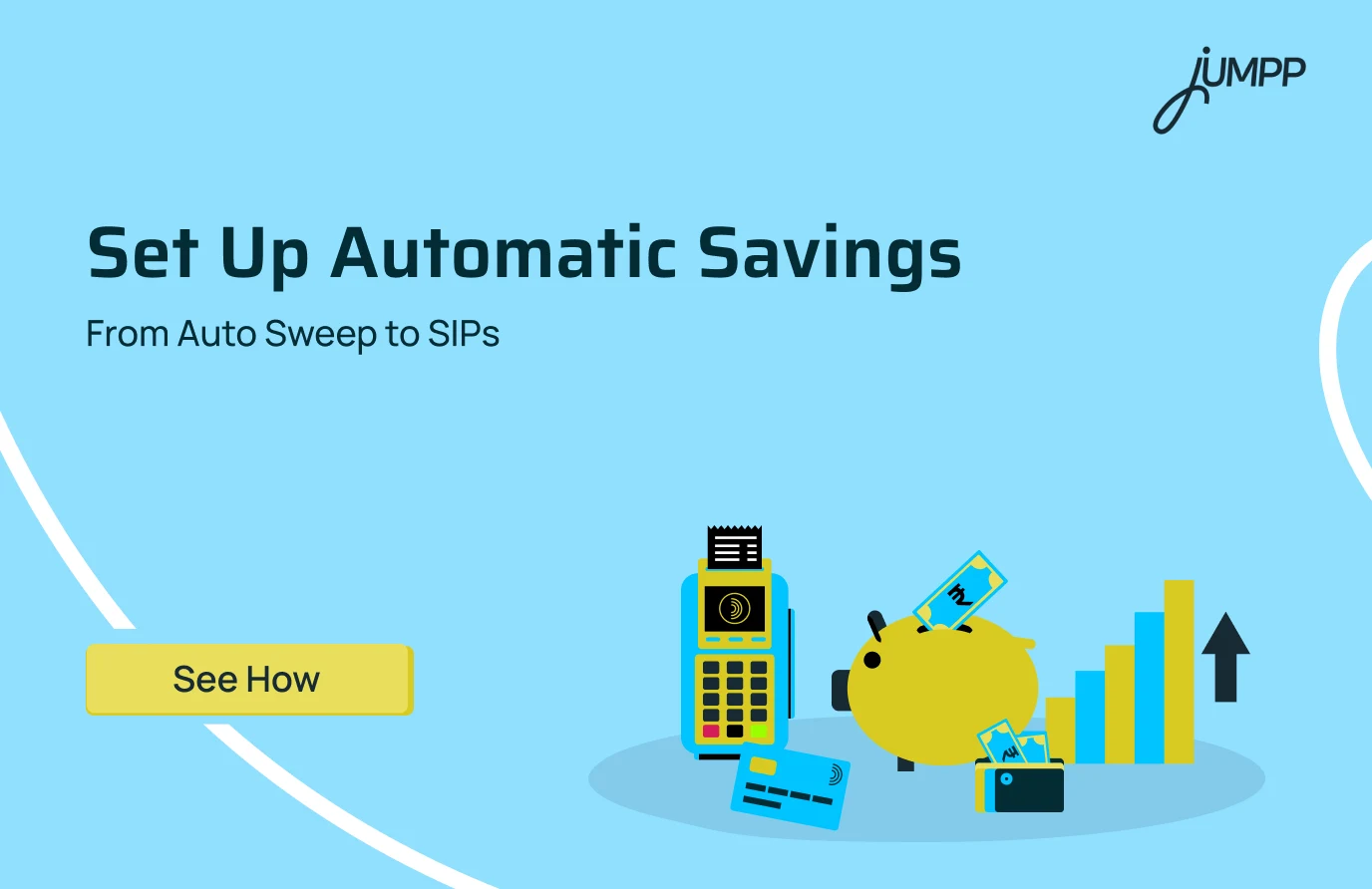
How to Set Up Automatic Savings: The Easiest Way to Save Every Month
Have you ever promised yourself that you would save money this month, only to realise that your salary had already disappeared into bills, groceries, subscriptions, and everyday expenses?
It happens more often than most people admit. Setting up automatic savings helps you save first instead of saving whatever is left at the end of the month.
What is Automatic Savings?
Automatic savings is a method of transferring money from your primary bank account to a savings or investment account at regular intervals without requiring manual action every time.
For example, you can instruct your bank to transfer ₹5,000 to your savings account on the 2nd of every month, shortly after your salary is credited. Once the instruction is set, the transfer happens automatically according to the schedule.
This approach helps you automate your savings, making it easier to save consistently without having to remember or initiate the transfer every month.
How to Set Up Automatic Savings
Setting up automatic savings is simple and takes only a few minutes.
Step 1: Set a Savings Goal
Decide what you are saving for, such as an emergency fund, a foreign vacation, higher education, or retirement.
Step 2: Decide How Much to Save
Choose an amount that fits your monthly budget. Even small, regular contributions can add up over time.
Want to save more every month? Before increasing your automatic savings, it’s important to understand where your money goes. Learn how to track daily expenses and identify unnecessary spending so you can save consistently and reach your financial goals faster.
Step 3: Choose Where to Save
Select where you want your money to go, such as:
- Zero Balance Savings Account
- Recurring Deposit (RD)
- Fixed Deposit (FD)
- Mutual Fund SIP
- Emergency Fund
Step 4: Set Up Automatic Transfers
Use your bank’s mobile app or internet banking to schedule recurring transfers. Many people set them up just after their salary is credited.
Step 5: Review Your Savings
Check your savings regularly and increase the amount whenever your income or financial goals change.
Earn More on Your Savings. Discover How Auto Sweep Works.
Best Ways to Automate Savings
There are several ways to automate your savings depending on your financial goals.
| Method | Best For |
| Automatic transfers to a savings account | Building an emergency fund or short-term savings |
| Recurring Deposits (RDs) | Saving a fixed amount every month with predictable returns |
| Mutual Fund SIPs | Long-term wealth creation through regular investing |
| Salary account transfers | Saving immediately after receiving your salary |
| Auto Sweep Fixed Deposits | Earning higher returns on surplus account balances |
1. Automatic Transfers to a Savings Account
This is one of the easiest ways to automate your savings. Most banks let you set up a standing instruction that transfers a fixed amount from your salary or current account to a savings account on a chosen date every month.
It’s ideal for building an emergency fund or saving for short-term goals because your money remains easily accessible.
2. Recurring Deposits (RDs)
If you prefer disciplined saving with predictable returns, a Recurring Deposit can be a suitable option. You contribute a fixed amount every month for a selected tenure, and the bank pays interest on your deposits.
This works well for goal-based savings where you don’t need immediate access to the money.
Know the difference between FDs and RDs.
3. Mutual Fund SIPs
A Systematic Investment Plan (SIP) automatically invests a fixed amount in mutual funds at regular intervals. Since mutual funds are market-linked, SIPs are generally considered for long-term goals such as retirement, higher education, or wealth creation rather than short-term savings.
Start a SIP from 1,000+ Direct Mutual Funds
Download jUMPP, the mutual fund investment app designed to help you start, manage, and grow your investments with ease.

4. Salary Account Transfers
Many banks allow you to schedule an automatic transfer immediately after your salary is credited. This follows the “pay yourself first” principle, ensuring your savings are set aside before you start spending on monthly expenses.
5. Auto Sweep Fixed Deposits
Some banks offer an Auto Sweep facility that automatically transfers surplus funds from your savings account into a Fixed Deposit once your balance exceeds a predefined limit. This allows idle money to earn higher interest while still remaining accessible if you need it.
Automatic Money Saving Tips
Building wealth does not always require big changes. A few simple habits, combined with automatic savings, can help you save consistently and stay on track with your financial goals.
- Increase your savings after every salary hike
Whenever your income increases, try increasing your automatic savings as well. Even a small increase can help you build wealth over time without putting pressure on your monthly budget.
- Create separate savings goals
It is a good idea to keep separate savings for different goals, such as an emergency fund, travel, or home renovations. This makes it easier to track your progress and avoid using the money for something else.
- Save unexpected income
If you receive a bonus, tax refund, incentive, or cash gift, consider saving a part of it instead of spending it all. It is one of the easiest ways to reach your financial goals faster.
- Keep your savings separate
Try keeping your savings in a different account from the one you use for everyday expenses. This simple step can reduce the temptation to dip into your savings.
- Review your savings regularly
It is important to review your automatic savings every few months. As your income or financial goals change, you can adjust the amount to keep your savings plan on track.
- Start with an amount you can maintain
You do not have to begin with a large amount. Start with what you can comfortably save every month and increase it gradually as your income grows.
Benefits of Automating Your Savings
Setting up automatic savings offers several advantages beyond convenience.
- Builds consistency: Saving happens every month without relying on motivation or memory.
- Reduces unnecessary spending: Money is transferred before you have the opportunity to spend it elsewhere.
- Helps you achieve financial goals: Whether you’re saving for an emergency fund, a vacation, or a home, regular contributions keep you moving towards your goal.
- Saves time: Once the recurring transfer is set up, there’s no need to manually move money every month.
Who Should Set Up Automatic Savings?
Automatic savings can benefit almost anyone, but it’s especially useful if you:
- Find it difficult to save consistently every month.
- Are building an emergency fund.
- Are you saving for a specific goal, such as a home, vacation, or higher education?
- Want to invest regularly without remembering monthly payments.
- Prefer a hands-off approach to managing your finances.
Automate SIP Investments with jUMPP
For those looking to automate long-term investing, jUMPP offers access to direct mutual funds, allowing you to start SIPs and invest regularly with minimal effort. Once your SIP is set up, your investments continue automatically, helping you stay disciplined and work towards your long-term financial goals.
Conclusion
Setting up automatic savings is one of the simplest ways to build financial discipline. By moving money into your savings before you have a chance to spend it, you can save consistently without relying on reminders or willpower. Over time, these regular contributions can help you build an emergency fund, achieve financial goals, and develop smart saving habits.
Disclaimer- The rankings and figures in this article have been compiled from multiple verified reports, credible news sources, and public financial data available as of 2026.
All values are approximate and may vary with newer updates, revisions, or changes in official records.
FAQs
To set up automatic savings, choose a savings goal, decide how much you want to save, select a savings or investment account, and schedule recurring transfers through your bank’s mobile app or internet banking. You can also automate investments through SIPs.
Automatic savings work by transferring a fixed amount of money from your primary bank account to a savings or investment account on a pre-set date. Once the instruction is set, the transfer happens automatically without any manual action.
An automatic savings plan is a strategy that regularly moves money into a savings or investment account through scheduled transfers. It helps you save consistently and stay on track with your financial goals.
You can automate your savings account by setting up a standing instruction or recurring transfer through your bank. This ensures that a fixed amount is transferred automatically on a chosen date every month.
Yes. Most banks allow you to schedule automatic transfers between your accounts using internet banking or their mobile app. You can choose the transfer amount, frequency, and date based on your savings goals.
You can automatically put money in a savings account by setting up recurring bank transfers, salary account transfers, or standing instructions. The selected amount will be transferred on the schedule you choose.
You can save money automatically by scheduling recurring bank transfers, opening a Recurring Deposit (RD), starting a Systematic Investment Plan (SIP), or using salary account transfers to move money into savings as soon as you get paid.
An automatic savings account is a savings account that receives money through scheduled or recurring transfers. It helps you build savings consistently while reducing the temptation to spend.
A recurring savings plan is a method of saving a fixed amount at regular intervals. This may include Recurring Deposits (RDs), automatic bank transfers, or monthly SIPs, depending on your financial goals.
Smart savings habits include paying yourself first, increasing your savings after every salary hike, reviewing your savings regularly, keeping your savings separate from your spending account, and staying consistent with your financial goals.