OVD Full Form in Banking: Meaning, Documents List & RBI Rules
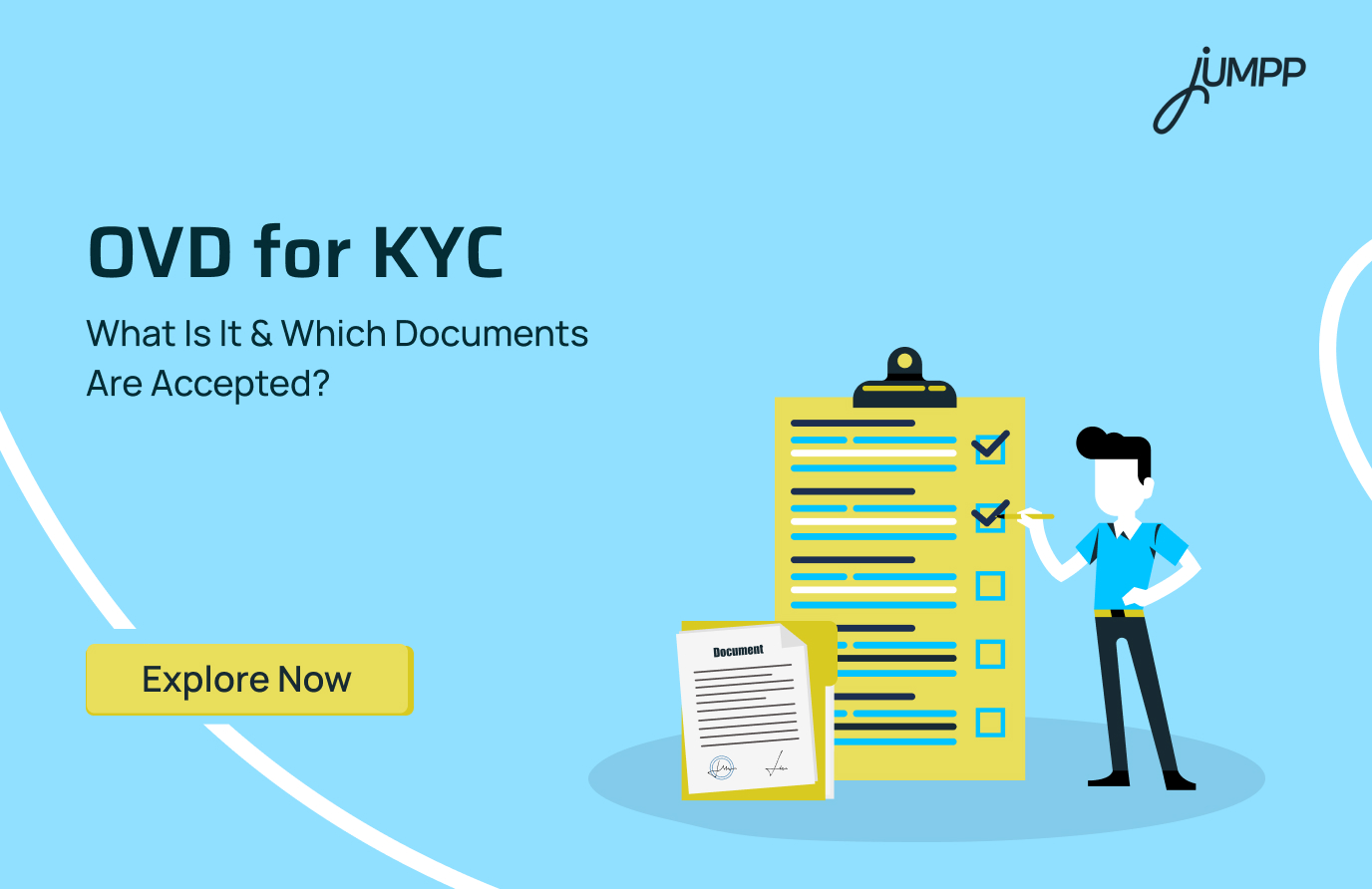
Whether you’re opening a bank account, applying for a loan, investing in mutual funds or completing your KYC, you’ll likely be asked to submit an OVD. It is one of the key requirements financial institutions use to verify a customer’s identity before offering banking and investment services.
But what exactly is an OVD? Which documents qualify as an OVD?
In this article, you’ll learn what OVD is, its full form and meaning, the list of officially valid documents accepted by the RBI, and why they’re important for KYC and banking.
What is OVD in Banking?
OVD Full Form – Officially Valid Document.
It is a government-issued document recognised under the RBI’s Master Direction on KYC for verifying a customer’s identity and address. These documents help financial institutions confirm that the person applying for a financial product or service is genuine.
It’s important to note that not every government-issued identity card qualifies as an OVD. Only documents specifically recognised under RBI guidelines can be accepted for KYC verification.
How Many OVDs Are Available?
The RBI currently recognises six primary Officially Valid Documents (OVDs) for individual KYC verification.
OVD Documents List
The RBI recognises six primary Officially Valid Documents (OVDs) for KYC verification.
| Officially Valid Document | Identity Proof | Address Proof |
| Aadhaar Card | ✔ | ✔ |
| Passport | ✔ | ✔ |
| Voter ID Card (EPIC) | ✔ | ✔ |
| Driving Licence | ✔ | ✔ |
| NREGA Job Card (signed by a State Government official) | ✔ | ✔ |
| National Population Register (NPR) Letter | ✔ | ✔ |
- Aadhaar Card
Issued by the Unique Identification Authority of India (UIDAI), Aadhaar is one of the most commonly used OVDs. Physical Aadhaar, e-Aadhaar, m-Aadhaar and other accepted formats can be used for KYC wherever permitted.
- Passport
A valid passport serves as both identity and address proof. It is widely accepted by banks, NBFCs and other financial institutions.
- Voter ID Card
The Electors Photo Identity Card (EPIC) issued by the Election Commission of India is another recognised OVD for completing KYC.
- Driving Licence
A valid driving licence issued by the Regional Transport Office (RTO) can be used as an Officially Valid Document for identity and address verification.
- NREGA Job Card
A Job Card issued under the Mahatma Gandhi National Rural Employment Guarantee Act (MGNREGA) and signed by a State Government official is also recognised as an OVD.
- National Population Register (NPR) Letter
A letter issued under the National Population Register containing your name and address is accepted as an Officially Valid Document under RBI guidelines.
How to Submit an OVD to a Bank?
Submitting an OVD to a bank is a simple process that can be completed either by visiting a branch or through online banking, depending on your bank’s facilities.
- Visit your bank branch
Carry the original OVD along with a self-attested photocopy. The bank will verify the original document and collect the copy for KYC.
Explore the difference between a savings account and a salary account!
- Submit online
Many banks allow customers to upload a scanned copy or photo of their OVD through net banking or the mobile banking app.
- Complete the KYC form
If required, fill out the KYC or re-KYC form and provide the necessary details before submitting your document.
- Verify your identity
For online submissions, you may need to complete OTP verification or Video KYC (V-CIP), depending on the bank’s requirements.
- Receive confirmation
Once your OVD is verified successfully, the bank updates your KYC records and notifies you about the completion of the process.
Can a PAN Card Be Used as an OVD?
No, a PAN card alone is generally not considered an Officially Valid Document (OVD) for KYC. While PAN is mandatory for many financial transactions and tax-related purposes, it does not contain your residential address. As a result, banks and other financial institutions usually ask for an additional OVD to verify your address.
However, PAN continues to play an important role in KYC and is often required alongside an OVD for opening bank accounts, investing in mutual funds, opening Demat accounts and other financial services.
Looking for an easy-to-use mutual fund investment app? Explore jUMPP to invest in 1,000+ direct mutual funds via SIPs or lump sum investments.
What If Your OVD Does Not Have Your Current Address?
If your OVD contains your name but not your current residential address, you may be able to submit certain additional documents for address verification, as permitted under RBI KYC guidelines. These documents are commonly referred to as Deemed OVDs.
Some commonly accepted documents include:
- Utility bills
Electricity, piped gas, water, landline telephone or postpaid mobile bills can be accepted if they are recent and meet the institution’s requirements.
- Property or municipal tax receipts
Recent property tax or municipal tax receipts may be accepted as proof of your current address.
- Pension Payment Order (PPO)
Pension or family pension payment orders issued by government departments can also be used in eligible cases.
- Government accommodation allotment letter
Accommodation allotment letters issued by government departments, statutory authorities or listed companies may also be accepted.
These documents are generally accepted only for address verification. Financial institutions may ask you to update the address on your primary OVD within the prescribed time period.
OVD Verification Process
Banks and financial institutions verify OVDs to confirm that the document is genuine and belongs to the customer, completing KYC. Depending on the institution and the mode of onboarding, verification can be completed in different ways.
- Physical document verification
The customer submits the original OVD along with a self-attested copy. The bank official verifies the original document and records the details for KYC.
- e-KYC
Where permitted, Aadhaar-based e-KYC allows customer details to be verified electronically through UIDAI using OTP or biometric authentication, making the process faster and paperless.
- Video KYC (V-CIP)
Many banks and financial institutions now offer Video-based Customer Identification Process (V-CIP). During a live video interaction, an authorised official verifies the customer’s identity by matching the person’s face with the photograph on the submitted OVD and completing the required checks.
RBI Guidelines for OVDs
The Reserve Bank of India has issued KYC guidelines that specify how Officially Valid Documents should be used for customer verification.
Some of the key guidelines include:
- One document can be enough
If an OVD contains both your identity and address details, you generally do not need to submit separate documents for identity proof and address proof.
- Current address declaration is allowed in certain cases
If your current address is different from the one mentioned on your OVD, financial institutions may accept a declaration of your current address in accordance with applicable RBI guidelines.
- Small Accounts can be opened without an OVD
Individuals who do not possess an OVD may be eligible to open a Small Account, subject to RBI conditions and transaction limits.
- Periodic KYC updates may be required
Banks may ask customers to update their KYC details periodically based on their risk classification and applicable regulations.
Why Is an OVD Important?
An OVD is important because it helps financial institutions verify a customer’s identity, comply with RBI regulations and protect the financial system from fraud.
- Helps complete KYC
Without a valid OVD, banks and other regulated entities may not be able to complete your KYC or provide financial services.
- Prevents identity theft
Identity verification reduces the risk of fake accounts, impersonation and fraudulent transactions.
- Supports anti-money laundering measures
OVDs help financial institutions comply with the Prevention of Money Laundering Act (PMLA) and identify suspicious financial activities.
- Enables access to financial services
Whether you’re opening a bank account, investing in mutual funds, applying for a loan or opening a Demat account, submitting a valid OVD is often a mandatory requirement.
- Builds trust in the financial system
Standardised KYC procedures help create a safer and more secure banking ecosystem for customers and financial institutions alike.
Want to understand another important banking term? Read our complete guide on What Is DBT in Bank to learn how Direct Benefit Transfer works, who is eligible, and how government subsidies are credited directly to your bank account.
Conclusion
Officially Valid Documents (OVDs) play a key role in the KYC process by helping banks and other financial institutions verify a customer’s identity and address. Understanding which documents qualify as OVDs, how they are verified, and the RBI guidelines governing their use can help you complete KYC without unnecessary delays.
Before starting any banking or investment process, ensure your OVD is valid, your details are up to date, and you have any additional documents required for address verification, if applicable.
Disclaimer- The rankings and figures in this article have been compiled from multiple verified reports, credible news sources, and public financial data available as of 2026.
All values are approximate and may vary with newer updates, revisions, or changes in official records.
Frequently Asked Questions
OVD (Officially Valid Document) is a government-issued document recognised under RBI KYC guidelines to verify a customer’s identity and address. Banks use OVDs before opening accounts or providing financial services.
A Deemed Officially Valid Document (DOVD) is an additional document accepted for address verification if your primary OVD does not show your current address. Examples include recent utility bills, property tax receipts and Pension Payment Orders.
There is no single strongest ID proof under RBI KYC guidelines, as all recognised OVDs are equally valid. However, Aadhaar is widely used because it supports paperless e-KYC and electronic verification.
Yes, the Aadhaar Card is one of the six Officially Valid Documents recognised by the RBI. It can be used for identity and address verification during KYC, subject to applicable regulations.
The RBI currently recognises six primary Officially Valid Documents (OVDs) for KYC verification. These documents help financial institutions verify a customer’s identity and address.
No, a PAN Card alone is not an Officially Valid Document (OVD). Since it does not contain your residential address, financial institutions usually require another valid OVD to complete KYC.
The KYC OVD requirements include submitting at least one RBI-approved Officially Valid Document, such as an Aadhaar Card, Passport, Voter ID, Driving Licence, NREGA Job Card or National Population Register (NPR) Letter. Depending on the financial institution, additional documents or verification methods such as Video KYC may also be required.
An OVD in KYC refers to an Officially Valid Document accepted under RBI guidelines to verify a customer’s identity and address. Banks, NBFCs and other financial institutions use OVDs to complete the Know Your Customer (KYC) process before offering financial services.