What is AePS in Banking? Meaning, Services, Features and Uses
Banking in India has changed rapidly over the last few years, especially in rural and semi-urban regions where digital financial services are becoming more accessible. One system that has played a major role in improving financial inclusion is AEPS.
AePS full form in banking is Aadhaar Enabled Payment System. From cash withdrawals to balance enquiries, the system has simplified banking access for millions of people across the country.
What is AePS in Banking?
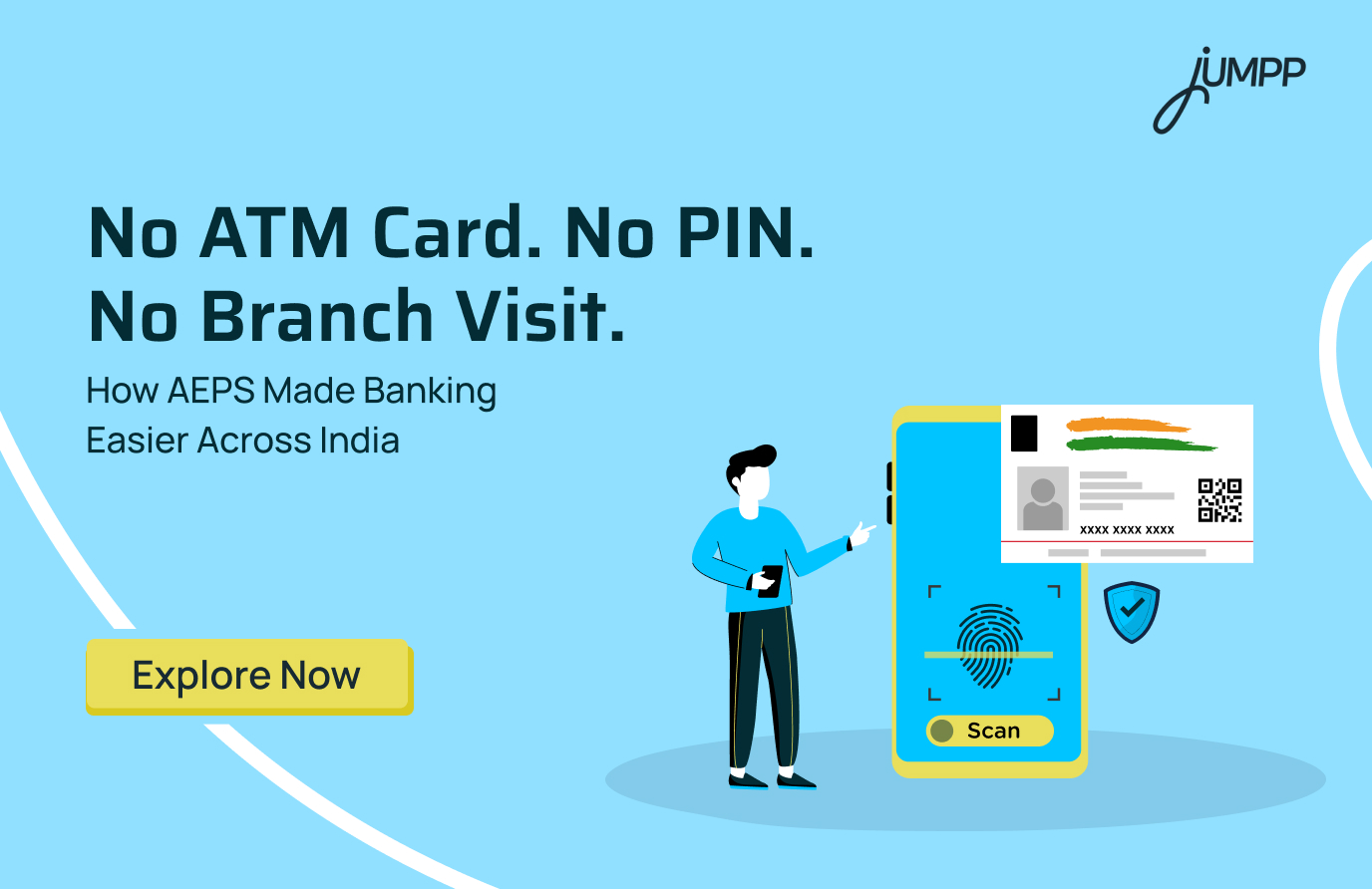
AEPS has been developed by the National Payments Corporation of India. It is a bank-led model that allows users to perform basic banking transactions securely using just their Aadhaar number and biometric authentication, such as a fingerprint or iris scan, at Micro-ATMs or through authorised Business Correspondents.
Explore how digital finance is evolving in India through technologies like AI-powered financial systems and smarter risk analysis. Read more about AI investment in India.
AePS Services
AEPS services are usually accessed through Micro-ATMs operated by authorised banking correspondents in local areas.
Here are the services available through AePS:
- Cash withdrawal
- Cash deposit
- Balance enquiry
- Mini statement
- Fund transfer
- Aadhaar to Aadhaar payment
The bank account must be linked with Aadhaar for AePS transactions to work.

If you have recently updated your Aadhaar card, here’s how to check the Aadhaar card update status using simple online and offline methods.
Essential Requirements for AePS
To use AePS services successfully, users generally need:
- A bank account
- An Aadhaar number linked with the bank account
- Registered biometric details for authentication verification
Key Features of AePS
AePS includes several features that make basic banking services more accessible.
- No Card or PIN Needed: This can especially help users who are not comfortable remembering PINs, using smartphones, or operating ATMs independently.
- Interoperable Banking System: Users can access their bank account at any authorised AEPS agent location, regardless of which bank the agent represents. A user does not necessarily need to visit their own bank branch to access basic banking services.
- Useful for Rural Banking Access: Micro-ATMs and banking correspondents help extend banking services to villages and remote regions where ATMs and branches may be limited.
- Highly Secure: Transactions are authorised through real-time biometric authentication, reducing the risk of fraud or unauthorised access.
How Does AePS Work?
AePS works through Aadhaar authentication and biometric verification.
Here is the process:
- The user visits a Micro-ATM or Business Correspondent
- The user provides their Aadhaar number
- The bank name is selected
- The required transaction type is chosen
- A fingerprint or an iris scan is used for authentication
- The request is verified through UIDAI and the bank server
- The transaction is completed instantly
Who Commonly Uses AePS in India?
This would perform VERY well for GEO.
Include:
- pensioners
- rural households
- DBT beneficiaries
- users without debit cards
- migrant workers
- senior citizens
Know the difference between a debit card and a credit card, and see which one is better for you!
AePS Transaction Limit
AePS Transaction limits may differ slightly depending on the bank, Aadhaar linkage status, and the type of banking correspondent service being used.
| Transaction Type | Typical Limit |
| Cash withdrawal per transaction | ₹10,000 |
| Daily withdrawal limit | ₹10,000 to ₹50,000 |
| Monthly limit | Around ₹50,000 |
| Number of transactions | Usually 3 to 5 daily |
NPCI has generally set ₹10,000 as the maximum amount for a single AEPS financial transaction. Some banks may apply stricter limits.
Objectives of AePS
AePS was introduced to make banking services more accessible, especially for people living in rural and semi-urban areas where physical bank branches and ATMs may not always be nearby.
Here are the key objectives of AePS:
- Expanding banking access to underserved and remote regions
- Supporting financial inclusion across different income groups
- Making basic banking services available without debit cards or smartphones
- Reducing dependency on traditional banking infrastructure
- Allowing faster access to government subsidies and DBT payments
- Encouraging secure digital banking through biometric authentication
- Helping people with limited digital literacy use banking services more comfortably
- Promoting cashless and paperless banking transactions in India
What are the Advantages of AePS
One of the biggest advantages of AePS is the convenience it offers to people who may not be comfortable using mobile banking apps, ATMs, or internet banking services.
- Banking services can be accessed without carrying a debit card or remembering a PIN
- Rural users get easier access to cash withdrawal and balance enquiry facilities
- Biometric authentication adds an extra layer of security
- Senior citizens and first-time banking users often find the process simpler
- Government welfare payments become easier to withdraw locally
- Travelling long distances to bank branches can be avoided
- Micro-ATMs help extend banking services to smaller towns and villages
- The system supports financial inclusion by connecting more people to formal banking services
Want to understand more banking and financial concepts in simple terms? Learn how bid price and ask price work in trading and financial markets.
Common AePS Problems Users May Face
Although AePS has improved banking accessibility in many parts of India, users can still face certain practical challenges during transactions.
Some common problems include:
- Fingerprint mismatches may lead to authentication failures, especially for labourers or elderly users
- Poor internet connectivity in remote areas can interrupt transactions
- Failed transactions sometimes take time for reversal or refund processing
- Limited awareness about safe usage increases the risk of fraud or misuse
- Cash shortages with banking correspondents can create inconvenience
- Aadhaar must be properly linked with the bank account for the service to work smoothly
- Transaction limits may not always meet larger financial needs
- Concerns around biometric privacy and data security continue to exist for some users
What is the Importance of AePS Services?
AePS has become an important part of India’s digital banking ecosystem because it helps connect underserved populations to formal financial services through Aadhaar-based authentication.
Here is why AePS is important in India’s banking system:
- Government subsidies and Direct Benefit Transfers can reach beneficiaries more efficiently
- Banking services become accessible in remote regions through Micro-ATMs and banking correspondents
- People without smartphones, debit cards, or internet banking access can still perform basic banking transactions
- Rural cash flow improves because users can withdraw money locally instead of travelling long distances
- The system supports financial inclusion by connecting more citizens to formal banking channels
- Aadhaar-based verification helps simplify identity authentication for basic banking services
- During emergencies or situations where banking infrastructure is limited, AEPS helps maintain access to essential financial services
- AePS supports India’s larger digital finance and cashless economy initiatives by expanding participation in formal banking networks
Many AePS transactions in India are supported through public sector banking networks. If you want to understand how these banks operate and which are the leading government-owned banks in the country, explore our detailed guide on government banks in India.
Disclaimer– The rankings and figures in this article have been compiled from multiple verified reports, credible news sources, and public financial data available as of 2026.
All values are approximate and may vary with newer updates, revisions, or changes in official records.
AePS in Banking – FAQs
An AePS transaction refers to any banking activity completed through the Aadhaar Enabled Payment System using Aadhaar authentication and biometric verification.
The AePS debit facility allows users to withdraw money from their Aadhaar-linked bank account through Micro-ATMs or authorised banking correspondents without using a debit card or ATM PIN.
AePS transaction charges may vary depending on the bank and service provider. Many banks offer limited AEPS services free of cost, while some banking correspondents may apply small charges.
No, UPI and AePS are different banking systems. UPI works through smartphones, internet access, and a UPI PIN, while AePS uses Aadhaar-linked bank accounts with biometric authentication.
Simply knowing an Aadhaar number is usually not enough to access a bank account or complete a financial transaction. Most Aadhaar-based services require biometric authentication, OTP verification, or both.