What Is a Limit Order? Meaning, How It Works, Examples and Risks
When placing an order in the stock market, the price you see may not always be the exact price at which your order gets executed. Prices can change quickly, especially when markets are volatile.
A limit order helps you control this by letting you specify the price at which you are willing to buy or sell a security.
In this blog, learn what a limit order is and how you can use it.
What is a Limit Order in the Share Market?
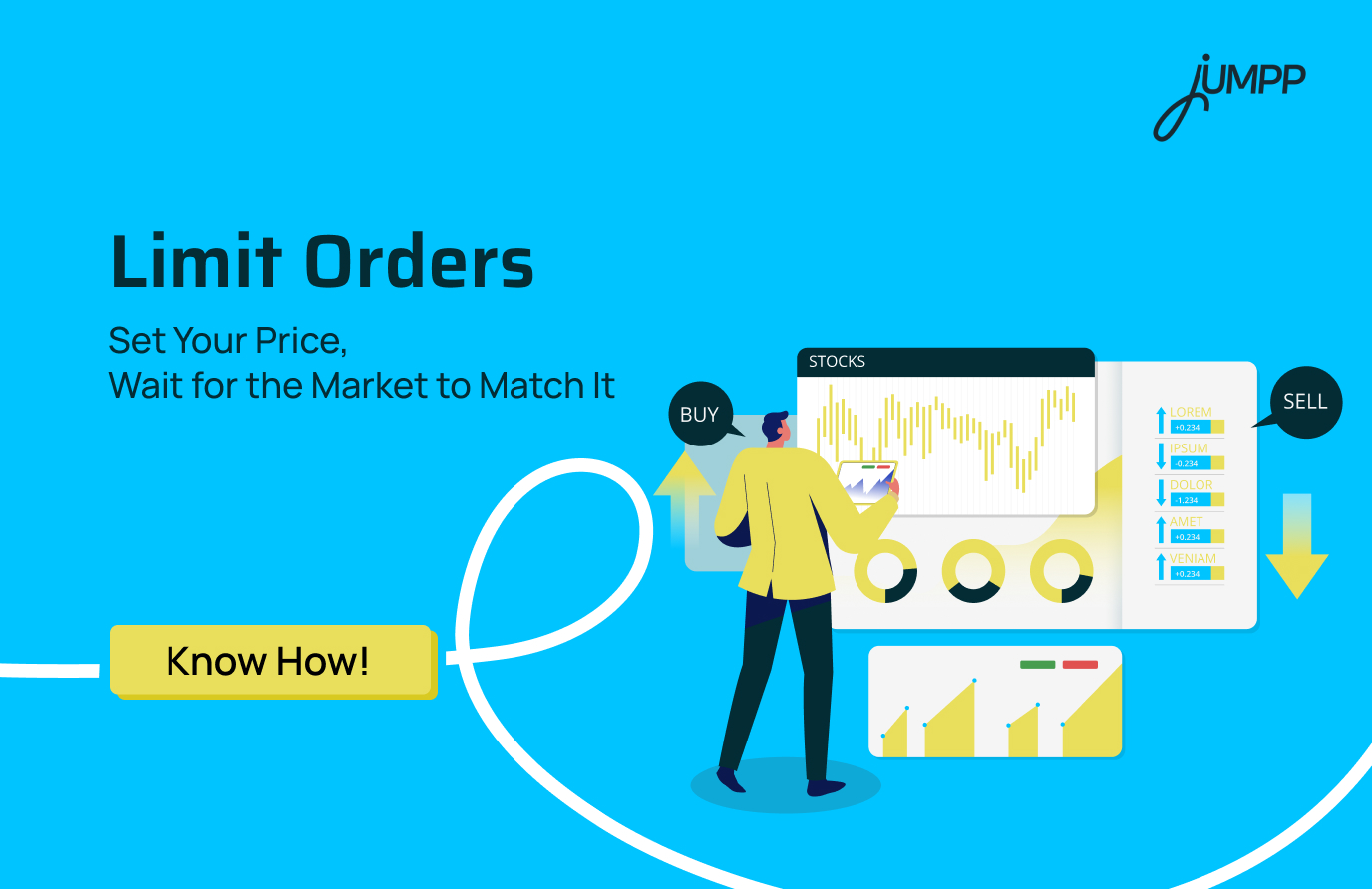
A limit order is an instruction to buy or sell a security at a specified price or better.
- For a buy order, you set the maximum price you are willing to pay.
- For a sell order, you set the minimum price you are willing to accept.
A limit price is the highest price you are willing to pay when buying a security, or the lowest price you are willing to accept when selling one.
Buy Limit Order
A buy limit order allows you to specify the maximum price you are willing to pay for a security.
For example, a stock is trading at ₹750, but you want to purchase it only at ₹730 or below. You can enter ₹730 as your limit price.
Your order can execute at ₹730 or a lower available price. It will not execute above your specified limit.
Sell Limit Order
A sell limit order specifies the minimum price at which you are willing to sell.
Suppose you hold a stock currently trading at ₹800 and want to sell only if you can get ₹825 or more. You can place a sell limit order at ₹825.
The order can execute at ₹825 or a higher available price, but not below ₹825.
How Does a Limit Order Work?
A limit price sets the maximum price you are willing to pay when buying or the minimum price you are willing to accept when selling. The order can execute only at the limit price or a better available price.
- Price Control: You control the acceptable price, but execution is not guaranteed.
- Buy Limit Order: If a stock is trading at ₹750 and you set a limit price of ₹720, the order can execute at ₹720 or lower.
- Sell Limit Order: If a stock is trading at ₹750 and you set a limit price of ₹780, the order can execute at ₹780 or higher.
- Execution: The order remains unexecuted if a matching order is not available at your limit price or better.
How to Use Limit Orders?
You can use a limit order when you want more control over the price at which you buy or sell a security. It is useful when getting your preferred price is more important than immediate execution.
Limit Order Example
Suppose ABC Ltd. is trading at ₹1,000 per share.
You want to purchase 20 shares, but you do not want to pay more than ₹980.
You place a buy limit order at ₹980.
Three outcomes are possible:
| Market Movement | What Happens? |
| Price falls to ₹980, and sufficient matching quantity is available | Your order may execute |
| Price falls below ₹980 before execution | Your order may execute at ₹980 or a better available price |
| Price remains above ₹980 | Your order remains unexecuted |
How to Place a Limit Order
The exact interface varies across trading platforms, but the basic process to place a limit order is generally similar:
- Select the security: Search for the stock or other eligible security you want to buy or sell.
- Choose Buy or Sell: Select the transaction you want to make.
- Select Limit Order: Choose “Limit” as the order type.
- Enter the quantity: Specify how many shares or units you want to buy or sell.
- Enter your limit price: Set the maximum buying price or minimum selling price you are willing to accept.
- Select the available order validity: Choose the applicable validity offered by the platform.
- Review and place the order: Check the price, quantity and other order details before submitting.
Once submitted, you can generally check whether the order is pending, partially executed, fully executed, cancelled or rejected from the order book.
Must-Follow Stock Market Rules for Beginners, Traders, and Long-Term Investors
What are the Advantages of Limit Orders
The major advantages of limit orders relate to greater control over execution.
- Price control: You decide the maximum buying price or minimum selling price.
- Protection from an unfavourable execution price: Your order cannot execute beyond the limit you have specified.
- Useful in volatile markets: It can help prevent execution at a price substantially different from the one you expected.
- No need to constantly watch the market: Once placed, the order can remain pending according to its selected validity.
- Useful with wider bid-ask spreads: You can specify the price at which you are comfortable executing rather than accepting the currently available market price.
What are the Disadvantages of Limit Orders
Price control also creates some limitations. The main disadvantages of limit orders include:
- Execution is not guaranteed: The market may never reach a price at which your order can be matched.
- Price touching your limit may not be enough: Other orders may have priority or insufficient quantity may be available.
- Partial execution: Only part of your requested quantity may get filled.
- Opportunity risk: The market may move away from your limit price and your order could remain pending.
- Order validity matters: An unexecuted order may expire depending on the validity selected.
Risks of Using Limit Orders
Limit orders offer better control over the execution price, but they do not guarantee that your order will be executed. The order may remain pending or be only partially filled if there are not enough buyers or sellers at your chosen price.
- The biggest risk is non-execution.
Suppose a stock is trading at ₹500 and you place a buy limit at ₹490. The stock falls only to ₹491 before moving to ₹550. Your ₹490 order does not execute, even though you were only ₹1 away from your chosen price.
- There is also partial-fill risk.
If you want 500 shares at ₹490 but only 200 are available to match your order, only those 200 may execute while the balance remains pending, subject to the order conditions.
- Liquidity Risk: In a low-volume market, your order may remain unexecuted because there may not be enough buyers or sellers at your chosen price.
- No Loss Protection: A limit order controls the execution price, but it does not limit losses if the price moves sharply after your order is executed.
When to Use a Limit Order
A limit order may be useful when:
- You have a specific maximum buying price.
- You have a minimum price at which you are willing to sell.
- The bid-ask spread is relatively wide.
- Prices are moving quickly and you want to control your acceptable execution price.
- You are comfortable with the possibility that the order may not execute.
If completing the transaction quickly is the priority, a different order type may be more appropriate.
Market Order vs Limit Order
A market order focuses on executing the order quickly, while a limit order lets you specify the price at which you are willing to buy or sell.
| Basis | Market Order | Limit Order |
| Main priority | Execution | Price control |
| Price specified | No | Yes |
| Execution | Generally seeks immediate execution at available prices | Only at limit price or better |
| Exact execution price | Not guaranteed | Cannot be worse than the specified limit |
| Risk of remaining unexecuted | Lower under normal liquid-market conditions | Higher |
| Partial execution possible | Yes | Yes |
| Useful when | Execution is the priority | Execution price is the priority |
Also read about volume in the stock market. The First Thing to Check Before Following a Stock Trend
FAQs
A limit order is an instruction to buy or sell a security at a specified price or better. A buy limit sets the maximum purchase price, while a sell limit sets the minimum selling price.
A limit order can execute when a matching order is available at your specified limit price or a better price. If a suitable match is unavailable, the order may remain pending or expire.
Yes. If sufficient quantity is not available at an acceptable price, part of the order may execute while the remaining quantity stays pending, subject to its validity.
The order may remain pending until its validity ends or until you cancel it. The exact treatment depends on the order validity and platform/exchange rules.
A limit order ensures that execution will not occur at a price worse than your specified limit. However, it does not guarantee that the order will execute.
Neither is always better. A limit order prioritises price control, while a market order prioritises execution at the best available prices. The appropriate choice depends on your objective and market conditions.