Stop Loss Meaning: How It Works, Types, Examples and Strategies
Markets do not always move in the direction you expect. A stock you buy at ₹500 can move to ₹520 or suddenly fall to ₹470. This is where a stop loss can help. It lets you decide an exit level in advance instead of waiting to react after the price has already moved against your trade.
Here is what stop loss means, how a stop-loss order works, its types, examples, strategies, benefits and limitations.
What Is Stop Loss in Trading?
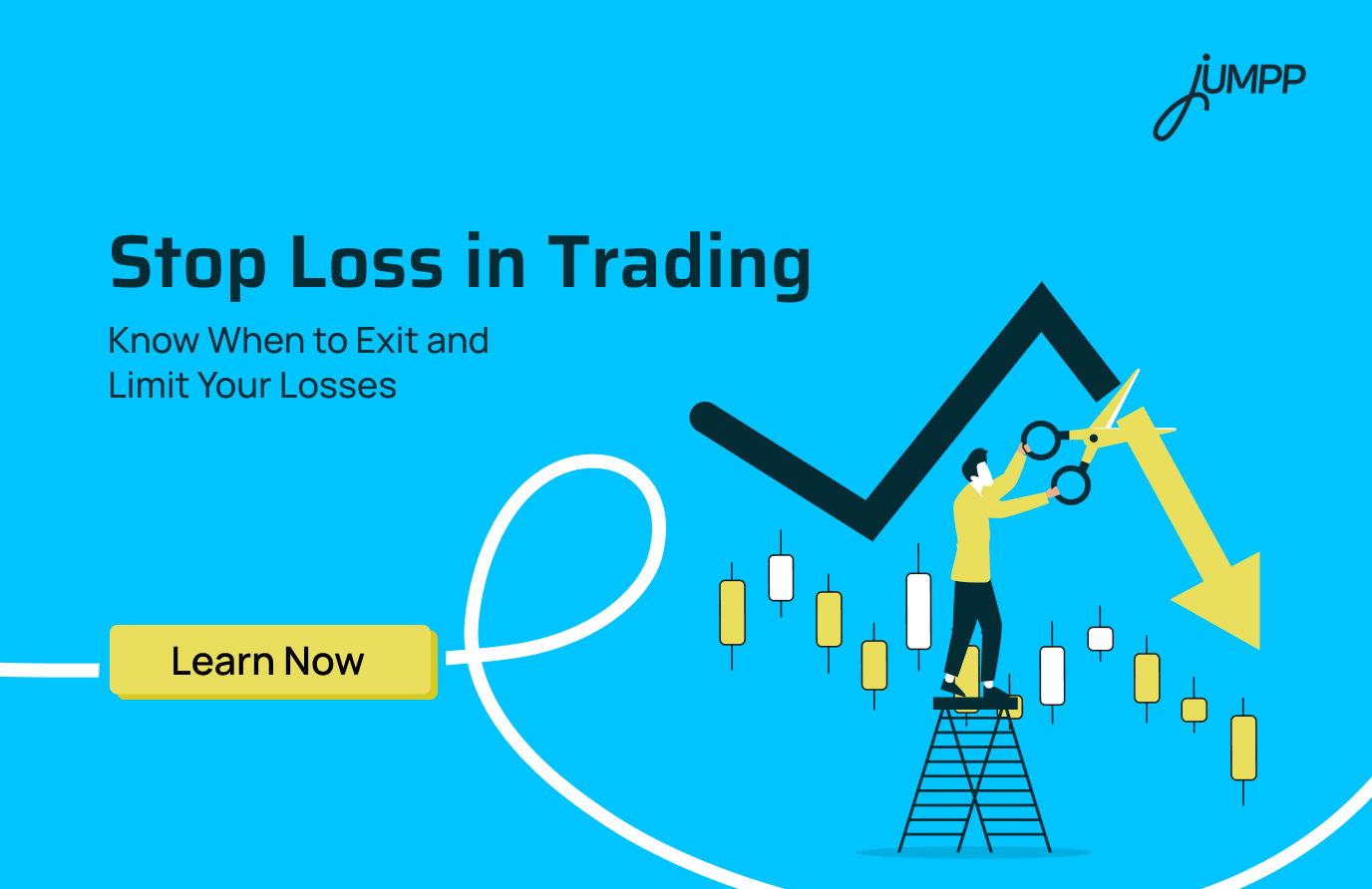
A stop loss is a risk-management tool used to exit a trade when the price reaches a predefined level. It can help traders limit potential losses when the market moves against their position.
- It is commonly used in intraday, positional and other forms of trading as part of a broader risk-management approach.
- For a long position, the stop is generally below the entry price. For a short position, it is generally above the entry price.
How Does Stop Loss Work?
A stop loss works by activating an order when the market reaches the specified trigger price. What happens after activation depends on the type of stop-loss order placed.
The process generally works like this:
- Enter the trade: Suppose you buy a stock at ₹500.
- Set your exit level: Based on your trading plan, assume you decide to exit if the price falls to ₹475.
- Place the stop-loss order: Enter the required trigger and order details on your trading platform.
- Price reaches the trigger: The stop-loss order becomes active when the trigger condition is met.
- Order is sent for execution: It is executed according to the type of stop-loss order and available market prices.
Stop Loss Example
Suppose you buy 100 shares at ₹500 each.
Your total position value is:
100 × ₹500 = ₹50,000
Assume your trading plan requires you to exit if the price reaches ₹475.
| Particular | Amount |
| Entry Price | ₹500 |
| Quantity | 100 shares |
| Position Value | ₹50,000 |
| Stop-Loss Trigger | ₹475 |
| Difference from Entry | ₹25 per share |
| Indicative Loss at ₹475 | ₹2,500 |
If the trigger condition is met, your stop-loss order becomes active.
However, ₹2,500 should not be treated as a guaranteed maximum loss. If the market moves rapidly and the order executes below ₹475, the actual loss can be higher.
What are the Types of Stop-Loss Orders?
The main types of stop-loss orders are stop-market, stop-limit and trailing stop-loss orders. They differ in how the order is executed or adjusted once the specified price conditions are met.
1. Stop-Market Order:
Once the trigger price is reached, the order becomes a market order and seeks execution at the best available market price. It prioritises execution over exact price, so the final price may differ from the trigger.
2. Stop-Limit Order:
Once the trigger is reached, a limit order is activated. It provides greater control over the execution price, but the order may remain unexecuted if the required price is unavailable.
3. Trailing Stop Loss:
A trailing stop adjusts as the market moves favourably while maintaining a predefined distance or percentage, depending on the functionality available. If the market subsequently reverses sufficiently, the stop may be triggered.
How to Set a Stop Loss in Trading
To set a stop loss, first decide the price at which you want to exit if the trade moves against you. Then enter this price as the trigger price while placing the stop-loss order on your trading platform.
- Choose your exit level: Decide the price at which you no longer want to continue the trade.
- Consider price movements: Avoid placing the stop too close if the stock normally moves up and down sharply.
- Check support or resistance: Traders may use important chart levels to decide where to place the stop.
- Select the order type: Choose the available stop-loss market or stop-limit option based on your requirement.
- Enter the trigger price: Add the price that will activate your stop-loss order and review the details before placing it.
There is no single stop-loss level that works for every trade. The level depends on the stock, market conditions and your trading plan.
What are Common Stop Loss Strategies?
Stop loss strategies include fixed stops, trailing stops, break-even stops and technical-level stops. Traders use these methods to decide where to exit or adjust their stop-loss level as the trade moves.
- Fixed Stop Loss: The stop remains at a predefined price unless the trader changes it.
- Trailing Stop Loss: The stop moves in the favourable direction as the market price moves in favour of the position.
- Break-Even Stop: Some traders move the stop towards their original entry price after the trade has moved sufficiently in their favour. This may reduce downside exposure, although normal price fluctuations can still trigger the exit.
- Technical-Level Stop: The stop is based on technical chart levels such as support, resistance, moving averages or another predefined price structure.
Can a Stop Loss Execute at a Different Price?
Yes. A stop-loss order can execute at a price different from its trigger, particularly during fast price movements, low liquidity or market gaps.
Suppose your stop-loss trigger is ₹475.
If the stock moves rapidly from ₹478 to ₹470 without sufficient orders being available around ₹475, a stop-market order may execute closer to the best available price.
This difference between the expected price and actual execution price is known as slippage.
Price gaps can create an even larger difference. For example, unexpected news released after market hours could cause a stock to open substantially below the previous day’s price.
That is why a stop loss should be viewed as a risk-management tool rather than a guarantee of a specific maximum loss.
Understanding volume in stock market can help you assess liquidity and potential execution conditions while trading. Learn more about what volume means in the stock market and how it can affect your trades.
What are the benefits of Stop Loss?
The main benefit of a stop loss is that it provides a predefined mechanism for exiting a trade when the market moves against your position.
The key advantages of stop-loss include:
- Helps manage losses: Establishes an exit condition before losses potentially become larger.
- Automates the exit: The order can activate without requiring you to manually place an exit at that moment.
- Supports trading discipline: A predefined exit can reduce impulsive decisions during rapid market movements.
- Helps with risk planning: Stop levels can be considered alongside position size and overall risk.
- Reduces constant monitoring: Traders do not have to manually watch every price movement.
What are the Disadvantages of Stop Loss?
A stop loss has limitations because market prices do not always move smoothly.
The main disadvantages include:
- Short-term fluctuations can trigger it: A stock may briefly touch the stop level and then recover.
- Execution price is not guaranteed: Stop-market orders may experience slippage.
- Stop-limit orders may not execute: The market may move beyond the specified limit before the order is filled.
- Very tight stops can cause frequent exits: Normal volatility may trigger a stop placed too close to the market price.
- Market gaps can increase losses: Overnight news or sudden events may cause the next available price to be significantly different from the stop level.
New to investing? Learn how to start investing with little money through mutual funds, stocks and SIPs.
What are Common Stop-Loss Mistakes?
Common stop-loss mistakes include placing the stop too close, choosing arbitrary levels, ignoring volatility and assuming that the trigger price guarantees the final execution price.
- Setting the stop too close: Normal price fluctuations can trigger a very tight stop even when the broader market trend has not materially changed.
- Choosing an arbitrary price: Selecting a stop simply because it is a round number may not reflect the stock’s volatility or the logic behind the trade.
- Ignoring volatility: Different stocks can have very different normal price ranges, so the same stop-loss percentage may behave differently across securities.
- Ignoring position size: A ₹10 movement on 10 shares and a ₹10 movement on 1,000 shares represent very different amounts of capital at risk.
- Assuming the trigger price is guaranteed: The trigger activates the order. It does not necessarily guarantee execution at that exact price.
Still looking for an easy-to-use investment app in India?
Try jUMPP, an all-in-one platform to invest in digital gold and mutual funds, track your net worth, and manage more of your finances in one place.
Why Is Stop Loss Important in Trading?
Stop-loss orders are important because they help limit losses when a trade moves against you. They give you a predefined exit instead of waiting for the price to fall further.
However, a stop loss is only one part of risk management. Position sizing, market volatility, liquidity, diversification and the overall trading plan can also affect trading risk.
Stop Loss vs Stop-Limit Order: What Is the Difference?
A stop-market order prioritises execution, while a stop-limit order provides greater control over the execution price.
| Factor | Stop-Market Order | Stop-Limit Order |
| Trigger Required | Yes | Yes |
| After Trigger | Becomes a market order | Becomes a limit order |
| Price Control | Lower | Higher |
| Execution Certainty | Generally higher, subject to liquidity | Lower |
| Slippage Risk | Yes | Controlled by limit price |
| Non-Execution Risk | Lower | Higher |
Stop Loss Order vs Market Order: What Is the Difference?
A market order is submitted for immediate execution at the best available price, whereas a stop-loss order remains conditional until its trigger requirement is met.
| Factor | Stop-Loss Order | Market Order |
| Purpose | Predefined conditional entry or exit | Immediate buy or sell |
| Activation | Requires trigger condition | Immediate |
| Execution Price | Depends on order type and market | Best available market price |
| Common Use | Managing predefined exits | Entering or exiting immediately |
Conclusion
A stop loss helps traders define an exit point when a trade moves against them, making risk easier to plan and manage. However, the trigger price does not guarantee the final execution price, especially in volatile or fast-moving markets.
Also read: What is a Limit Order and How It Works in the Share Market
Stop Loss in Trading- FAQs
The trigger price is the price at which your stop-loss order becomes active. Reaching the trigger does not necessarily mean the trade will be executed at exactly that price.
SL stands for Stop Loss. An SL order is a conditional trading order that becomes active when its specified trigger condition is met.
A stop-loss sell order becomes active when its trigger condition is met. Whether and at what price it executes depends on the type of stop-loss order, liquidity and prevailing market prices.
No. A stop loss can help manage downside risk, but it cannot guarantee the exact execution price. Slippage, market gaps and low liquidity can result in a different execution price.
A stop-market order seeks execution at the best available price after being triggered. A stop-limit order activates a limit order, providing greater price control but creating a risk that the order may not execute.
Yes. For a short position, a stop loss is generally placed above the entry price because an increase in the market price moves against the position.
A stop loss can be used in volatile markets, but the level requires careful consideration. A stop placed too close to the current price may be triggered by normal short-term fluctuations.
One key risk is that the execution price may differ from the trigger price during fast-moving markets. A stop-limit order provides greater price control but introduces the possibility of non-execution.
TP means Take Profit, while SL means Stop Loss. Take Profit defines an exit level after a favourable price movement, while Stop Loss defines an exit condition when the market moves against the position.
A stop-limit order may remain unexecuted if the market moves beyond its specified limit price. Stop-market orders prioritise execution, but the final execution price may differ significantly from the trigger in volatile or illiquid conditions.
Stop loss can help define an exit level, support trading discipline, reduce emotional decision-making and make it easier to manage downside risk.
A stop loss may be triggered by short-term price fluctuations, and the actual execution price may differ from the trigger. Stop-limit orders also carry the risk of remaining unexecuted.