What Is a Flexi Loan? Meaning, Features, Benefits and How It Works
Ever borrowed more money than you actually needed? It often happens with traditional loans. You receive the full amount upfront, even if your expenses are spread over weeks or months. The result? You could end up paying interest on money that sits unused.
A flexi loan works differently.
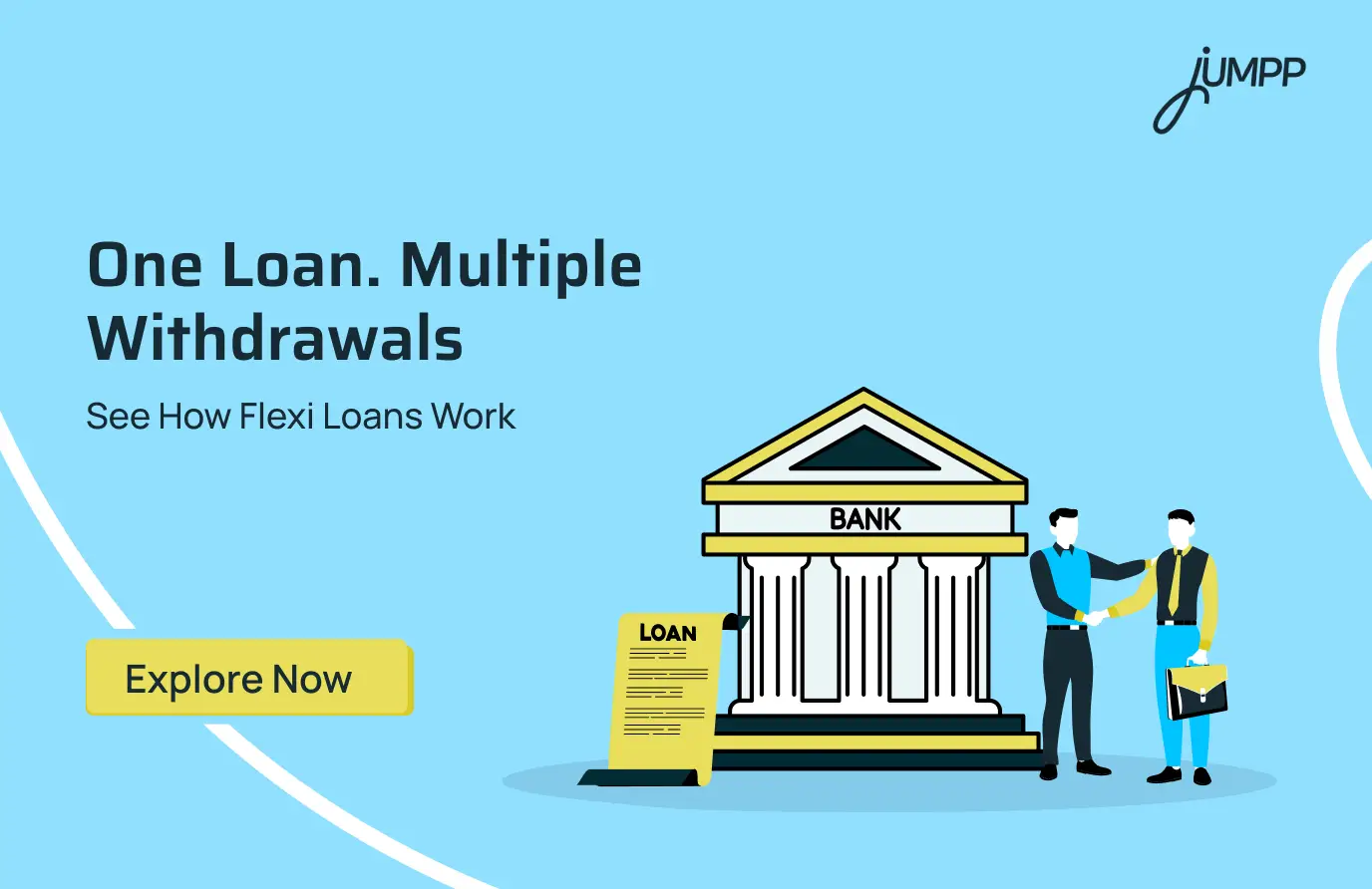
It gives you access to a pre-approved credit limit, allowing you to withdraw funds whenever you need them. In most cases, interest is charged only on the amount you use.
Here’s everything you need to know about flexi loans, including how they work, their benefits, eligibility and how they compare with personal loans.
Flexi Loan Meaning
A flexi loan is a type of loan that gives you access to a pre-approved credit limit instead of disbursing the entire sanctioned amount in advance. You can withdraw funds from this approved limit whenever required, subject to the lender’s terms and conditions.
Unlike a traditional personal loan, where interest is generally charged on the entire loan amount from the beginning, a flexi loan usually charges interest only on the amount you’ve withdrawn.
How Does a Flexi Loan Work?
A flexi loan allows you to borrow only what you need instead of taking the entire loan amount up front.
Here’s how it generally works.
- The lender approves a credit limit
The lender evaluates factors such as your income, credit profile and repayment capacity before approving a maximum loan limit.
- Withdraw funds whenever required
Instead of receiving the entire sanctioned amount in one go, you can withdraw only the amount you need. The remaining approved limit stays available for future use, depending on your lender’s policy.
- Interest is charged only on the utilised amount
In most cases, interest is calculated only on the amount you’ve withdrawn and not on the unused portion of your approved limit. This means your borrowing cost may be lower if you don’t use the entire sanctioned amount.
- Repay and continue using the facility
Depending on the lender’s terms, repaying the outstanding amount may restore your available credit limit, allowing you to borrow again without submitting a fresh loan application.
Flexi Loan Example
Suppose you’re renovating your home and your lender approves a ₹10 lakh flexi loan.
You initially withdraw ₹2 lakh to begin the renovation work. Since you’ve used only a part of your approved limit, interest is generally charged only on ₹2 lakh.
A few months later, you need another ₹1.5 lakh for interior work. Instead of applying for a new loan, you can withdraw the additional amount from your existing credit limit, subject to your lender’s terms.
This allows you to access funds as your expenses arise instead of borrowing the entire amount upfront.
Flexi Loan Features
Most flexi loans share a few common features, although the exact terms and conditions may vary across lenders.
- Pre-approved credit limit: Instead of receiving the full loan amount upfront, you’re sanctioned a maximum credit limit that you can access whenever required.
- Interest charged on the utilised amount: Interest is generally charged only on the amount you’ve withdrawn rather than the entire approved credit limit.
- Multiple withdrawals within the approved limit: You can usually withdraw funds more than once during the loan tenure, provided you remain within your sanctioned limit and comply with the lender’s terms.
- Flexible repayment options: Depending on the lender, you may be able to make part-payments or repay the outstanding balance before the end of the loan tenure.
- Digital account management: Many lenders allow you to track withdrawals, repayments and your available credit limit through their mobile app or internet banking platform.
What are the Benefits of a Flexi Loan?
A flexi loan can offer greater flexibility than a traditional personal loan when your funding requirements are spread over time rather than needed all at once.
Here are the flexi loan benefits:
- May help reduce borrowing costs
Since interest is generally charged only on the amount you use, you may avoid paying interest on funds that remain unutilised.
- Improves financial flexibility
You can access funds whenever an eligible expense arises instead of borrowing a lump sum in advance, helping you align borrowing with your actual requirements.
- Suitable for planned and recurring expenses
A flexi loan can be useful for expenses that occur in stages, such as home renovations, business working capital, medical treatment, education or seasonal business needs.
- No need for repeated loan applications
If you need additional funds later, you may be able to draw from your approved credit limit instead of applying for a new loan each time, subject to the lender’s terms.
- Greater convenience
Online access to your loan account makes it easier to monitor withdrawals, repayments and the available credit limit without visiting a branch.
Looking for a loan?
A personal loan and a credit card loan serve different borrowing needs. Compare their interest rates, repayment terms and ideal use cases before you decide.
Read next: Personal Loan vs Credit Card Loan: Which Should You Choose?
Disadvantages of a Flexi Loan
A flexi loan offers greater flexibility, but it may not be the right borrowing option for everyone.
Here are a few flexi loan disadvantages that you must keep in mind.
- Interest rates may vary
The interest rate offered depends on factors such as your credit score, income, repayment history and the lender’s policies. Comparing loan offers from different lenders can help you find a suitable option.
- Additional charges may apply
Some lenders may charge processing fees, annual maintenance fees, foreclosure charges or other applicable fees. Reviewing the complete fee structure before accepting the loan can help you avoid unexpected costs.
- Easy access to funds may encourage overspending
Since you can withdraw money whenever required, it may be tempting to borrow more than you actually need. Responsible borrowing is important to keep repayments manageable.
- Not every lender offers the same features
The withdrawal facility, repayment flexibility and redraw options can differ from one lender to another. It’s important to understand the loan terms before applying.
Flexi Loans Types
Lenders may offer different types of flexi loans based on the borrower’s requirements.
1. Flexi personal loan
This is one of the most common types of flexi loans. It can be used for personal expenses such as medical emergencies, home renovation, education or travel.
2. Flexi business loan
Businesses may use a flexi loan to manage working capital, purchase inventory or meet short-term operational expenses.
3. Flexi loan against property
Some lenders offer a flexi credit facility against residential or commercial property. The approved loan amount depends on the property’s value and the lender’s eligibility criteria.
Flexi Loan vs Personal Loan
Although both help borrowers meet financial needs, they work differently.
| Feature | Flexi Loan | Personal Loan |
| Loan disbursement | Funds can be withdrawn as needed from the approved limit | The entire loan amount is disbursed upfront |
| Interest | Usually charged only on the utilised amount | Generally charged on the entire loan amount |
| Withdrawals | Multiple withdrawals may be allowed | No additional withdrawals from the same loan |
| Repayment flexibility | Depends on the lender’s policy | Fixed EMI throughout the loan tenure |
| Best suited for | Expenses that arise over time | One-time planned expenses |
Who Should Choose a Flexi Loan?
A flexi loan may be suitable for borrowers whose funding requirements change over time rather than requiring the full amount immediately.
- Homeowners planning renovations
Home renovation projects often involve multiple payments over several months. A flexi loan lets you access funds as different expenses arise.
- Business owners managing working capital
Businesses with seasonal or fluctuating cash flow may find a flexi loan useful for meeting operational expenses whenever required.
- Individuals facing ongoing medical expenses
Medical treatment sometimes involves multiple hospital visits or procedures over time. A flexi loan can provide access to funds whenever needed.
- Borrowers who want greater flexibility
If you’re unsure about the exact amount you’ll require, a flexi loan allows you to borrow gradually instead of taking the full amount upfront.
Flexi Loan Eligibility
While eligibility criteria vary across lenders, applicants generally need to meet the following requirements:
- Be at least 21 years old (maximum age limit depends on the lender).
- Have a stable source of income.
- Maintain a good credit score, as specified by the lender.
- Meet the lender’s minimum income requirements.
- Submit the required identity, address and income proof documents.
- Satisfy any additional eligibility criteria set by the lender.
Check your credit health before applying for a flexi loan. If you have already repaid a loan but it still appears active on your report, learn how to remove a closed loan from CIBIL and improve your credit profile.
Flexi Loan’s Interest Rate
There is no standard flexi loan interest rate, as each lender follows its own pricing policy.
| Lender Type | Indicative Interest Rate* |
| Banks | Starting from 9.99% p.a. |
| NBFCs | Approximately 12% to 24% p.a. |
| Digital Lending Platforms | Starting from around 12% p.a., depending on the lender |
The interest rate generally depends on several factors, including:
- Credit score
- Income level
- Employment profile
- Existing debt obligations
- Loan amount
- Repayment history
- Lender’s internal assessment
Things to Consider Before Choosing a Flexi Loan
Choosing a loan isn’t just about getting quick access to funds.
Here are a few things you must keep in mind –
- Compare interest rates and charges
Check not only the interest rate but also processing fees, annual charges, foreclosure charges and any other applicable costs.
- Read the loan terms carefully
Understand the withdrawal facility, repayment options, tenure and redraw conditions before accepting the loan.
- Borrow only what you need
Although funds may be readily available, borrowing only the required amount can help keep your repayment obligations under control.
- Assess your repayment capacity
Before taking any loan, ensure the repayments comfortably fit within your monthly budget to avoid financial stress later.
Conclusion
A flexi loan can be a practical borrowing option when your expenses are spread over time instead of occurring all at once. It offers the flexibility to access funds as needed, making it suitable for planned as well as unexpected financial requirements. Before applying, review the lender’s terms, charges and repayment conditions to determine whether a flexi loan aligns with your financial needs.
Disclaimer- The rankings and figures in this article have been compiled from multiple verified reports, credible news sources, and public financial data available as of 2026.
All values are approximate and may vary with newer updates, revisions, or changes in official records.
FAQs
There is no fixed CIBIL score required for a flexi loan. Many lenders generally prefer a score of 650 or above, while a higher score may improve your chances of approval and help you secure better loan terms. However, eligibility also depends on factors such as your income, employment, existing debt and the lender’s policies.
Yes, a flexi loan can be a safe borrowing option when taken from an RBI-regulated bank or Non-Banking Financial Company (NBFC). Before applying, review the interest rate, applicable charges, repayment terms and other conditions to ensure the loan suits your financial needs.
It depends on your borrowing requirements. A flexi loan may be suitable if you need funds over a period and want to pay interest only on the amount you use. A personal loan may be a better choice when you need the entire loan amount upfront for a one-time expense.
A 650 CIBIL score may qualify you for a flexi loan with some lenders. However, the approved loan amount, interest rate and other terms may differ based on your overall credit profile and repayment capacity.
A 700 CIBIL score is generally considered a good credit score by many lenders. It may improve your chances of loan approval, although the final decision depends on the lender’s eligibility criteria.
A 730 CIBIL score is typically viewed as a strong credit score. Borrowers with higher credit scores may have better chances of approval and may also receive more competitive loan terms, subject to the lender’s assessment.
Some lenders may consider applications from borrowers with lower credit scores, but approval is usually based on multiple factors. Depending on the lender, applicants with poor credit may receive a lower loan amount, a higher interest rate or may be required to provide additional security.
Getting an unsecured flexi loan with a 500 CIBIL score can be difficult, as it indicates a poor credit history. Some lenders may instead offer secured loans or ask for additional collateral, depending on their lending policies.
The age criteria vary across lenders. However, many lenders require applicants to be between 21 and 65 years of age, subject to their eligibility requirements.