Credit Card Loan vs Personal Loan: Key Differences, Benefits and Which One Should You Choose?
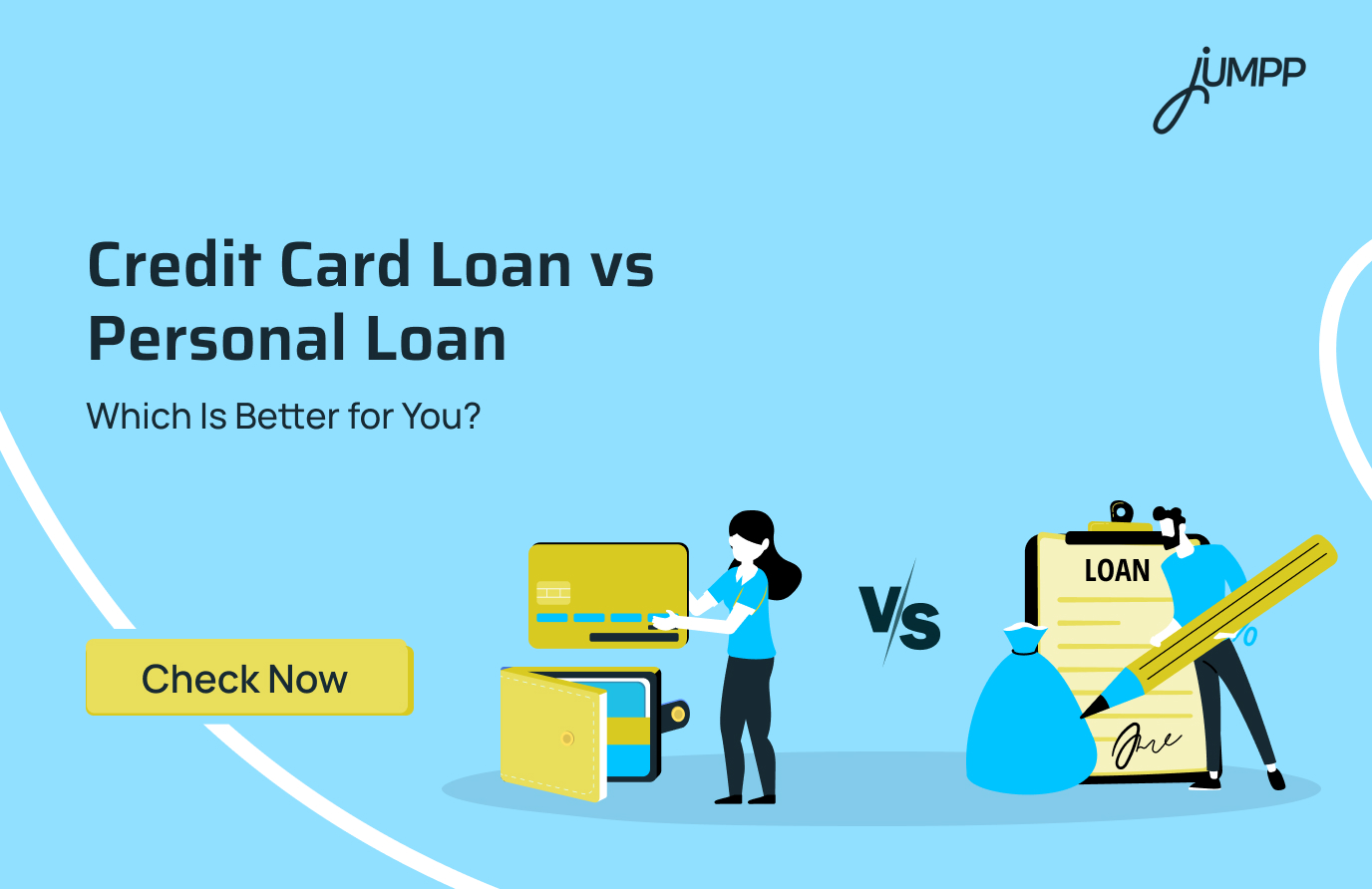
When you need extra funds, both Credit Card Loans and Personal Loans can seem like good options. While both are unsecured loans, they differ in interest rates, loan amount, repayment period and eligibility.
This credit card loan vs personal loan comparison explains the key differences to help you choose the right borrowing option.
What is the Difference Between Credit and a Loan
Credit is a revolving borrowing facility where a lender gives you access to a pre-approved credit limit. You can borrow any amount within that limit, repay it, and borrow again as long as your account remains active.
A Credit Card is one of the most common examples of revolving credit.
A loan, on the other hand, is a fixed amount borrowed from a lender for a specific purpose or need. The amount is disbursed upfront and repaid through regular EMIs over a fixed tenure. Once the loan is repaid, the borrowing arrangement ends.
What is a Personal Loan?
A Personal Loan is an unsecured loan that allows you to borrow a fixed amount of money without pledging an asset as collateral. Banks and financial institutions evaluate factors such as your income, employment, repayment capacity, and credit score before approving the loan.
Advantages of a Personal Loan
A Personal Loan offers higher borrowing limits, structured repayments, and longer repayment tenures, making it suitable for planned or high-value expenses.
- Higher Loan Amount: Personal Loans generally offer higher borrowing limits than Credit Card Loans, depending on your eligibility. This makes them suitable for expenses such as home renovation, higher education, weddings, or medical emergencies.
- Longer Repayment Tenure: Most lenders offer flexible repayment tenures, allowing you to repay the loan over several years. A longer tenure can help reduce your monthly EMI burden.
- Fixed Monthly EMIs: Personal Loans are repaid through fixed Equated Monthly Instalments (EMIs), making it easier to budget and manage your monthly finances.
- Generally, Lower Interest Rates: Personal Loans often have lower interest rates than Credit Card Loans, especially for borrowers with a good credit profile. However, the applicable rate varies by lender and borrower eligibility.
Know the steps to pay your credit card bill with another credit card.
- Flexible End Use: A Personal Loan can generally be used for various legitimate personal expenses, including travel, education, medical treatment, debt consolidation, and home improvement, unless restricted by the lender.
What is a Credit Card Loan?
A Credit Card Loan is a pre-approved loan offered by a credit card issuer to eligible cardholders. Unlike regular Credit Card transactions, where you make purchases using your available credit limit, a Credit Card Loan provides a lump sum amount that is usually credited directly to your bank account. The borrowed amount is then repaid through fixed monthly instalments over a chosen tenure.
Advantages of a Credit Card Loan
A Credit Card Loan offers quick access to funds with minimal documentation, making it suitable for eligible cardholders who need money for short-term or urgent financial needs.
- Faster Access to Funds: Credit Card Loans are often approved and disbursed quickly because they are offered to existing eligible cardholders.
- Minimal Documentation: Since the lender already has your KYC details and credit history, little or no additional documentation is usually required.
- No Collateral Required: A Credit Card Loan is unsecured, which means you do not need to pledge any asset or security to borrow.
- Convenient Application Process: Eligible cardholders can usually apply through internet banking, mobile banking, or customer support without visiting a branch.
- Suitable for Short-Term Financial Needs: Credit Card Loans are generally suitable for smaller or urgent expenses when you need funds quickly and can comfortably repay them within the chosen tenure.
Credit Card Loan vs Personal Loan: Key Differences
A Personal Loan is generally suitable for larger expenses with structured repayments, while a Credit Card Loan offers quicker access to funds for smaller or urgent financial needs.
| Basis | Credit Card Loan | Personal Loan |
| Meaning | A pre-approved loan offered on your credit card. | An unsecured loan based on your income and credit profile. |
| Best For | Small or urgent expenses. | Large planned or emergency expenses. |
| Loan Amount | Usually ₹10,000–₹10 lakh, based on your card limit. | Usually ₹50,000–₹50 lakh or more, based on eligibility. |
| Eligibility | Existing cardholder with a good repayment history and available credit limit. | Salaried or self-employed individuals meeting the lender’s age, income and credit score criteria. |
| Interest Rate (2026) | Typically 12%–24% p.a. for loan-on-card. Unpaid card dues can cost 36%–45% p.a. or more. | Typically 9.99%–24% p.a., depending on your credit profile. |
| Approval Time | Usually instant or within minutes. | A few hours to 2 working days. |
| Documents Required | Usually none for pre-approved offers. | KYC, income proof and bank statements are generally required. |
| Repayment Period | Usually 3–60 months. | Usually 12–60 months. |
| Processing Fee | Around 1%–3% of the loan amount. | Around 0.5%–3% of the loan amount. |
| Collateral | Not required. | Not required. |
| Impact on Credit Card Limit | May reduce your available card limit if linked to it. | No impact on your credit card limit. |
| EMI | Fixed monthly EMIs. | Fixed monthly EMIs. |
| Prepayment Charges | May apply, depending on the card issuer. | May apply, depending on the lender. |
| Digital Lending Rules (RBI) | Full loan details, charges and borrower consent are mandatory before disbursal. | The same RBI rules apply for transparency and borrower consent. |
| Key Fact Statement (KFS) | Mandatory before accepting the loan, showing interest, charges and total cost. | Mandatory before loan disbursal, showing all key loan details. |
| Credit Check | Based mainly on your card usage and repayment history. | Based on your income, credit score and repayment ability. |
| Recovery Rules | Lenders must follow the RBI’s fair recovery guidelines. | The same RBI recovery rules apply. |
| Ideal Choice | When you need quick funds and have a good pre-approved offer. | When you need a bigger loan at a potentially lower interest rate. |
Credit Card Loan vs Personal Loan: Which Is Better?
There is no one-size-fits-all answer. The better option depends on how much money you need, how quickly you need it, and how comfortably you can repay it.
A Credit Card Loan may be suitable if:
- You already have an eligible Credit Card.
- You need funds urgently.
- You require a relatively smaller loan amount.
- You expect to repay the loan within a shorter period.
A Personal Loan may be a better choice if:
- You need a larger amount of money.
- You want a longer repayment tenure.
- You prefer lower borrowing costs.
- You are financing planned expenses such as education, weddings, or home improvement.
Things to Consider Before Borrowing
Before choosing a Credit Card Loan or Personal Loan, keep these points in mind:
- Compare the total cost: Don’t look at the interest rate alone. Check the total amount you’ll repay over the loan period.
- Check all charges: Look for processing fees, late payment charges and any other applicable fees before applying.
- Choose an EMI you can afford: Pick a monthly EMI that fits comfortably within your budget to avoid repayment stress.
- Protect your credit score: Paying your EMIs on time helps maintain a healthy credit score, while missed payments can lower it.
- Review prepayment rules: If you plan to repay the loan early, check whether the lender charges a prepayment or foreclosure fee.
Tip: Always compare loan offers from different lenders and read the Key Fact Statement (KFS) before making a decision. It clearly explains the interest rate, charges and total borrowing cost.
Need a Personal Loan? Apply with jUMPP
If you are looking for a reliable personal loan app in India, jUMPP offers a seamless digital application process, competitive interest rates, and quick loan disbursal. Check your eligibility, estimate your EMI, and apply for a loan, all from your smartphone.
Download the jUMPP app and take the next step towards your financial goals.
Conclusion
There is no single option that is right for everyone. Compare the interest rate, loan amount, repayment tenure, fees and your repayment capacity before borrowing. Choosing a loan that matches your financial needs can help you manage debt more comfortably.
Credit Card Loan vs Personal Loan at a Glance
- Need money instantly? → Credit Card Loan
- Need a larger amount? → Personal Loan
- Lower interest rates? → Personal Loan
- Less paperwork? → Credit Card Loan
Disclaimer- The rankings and figures in this article have been compiled from multiple verified reports, credible news sources, and public financial data available as of 2026.
All values are approximate and may vary with newer updates, revisions, or changes in official records.
FAQs
It depends on your borrowing needs. A Personal Loan is generally suitable for larger expenses because it often offers higher loan amounts, longer repayment tenures, and comparatively lower interest rates. A Credit Card Loan may be more suitable for smaller or urgent expenses when quick access to funds is a priority.
Both can help build your credit score if you make repayments on time. However, missed payments or defaults on either can negatively affect your credit score. The impact depends on your repayment behaviour rather than the type of credit.
If your Credit Card Loan has a higher interest rate than your Personal Loan, repaying it first may help reduce your overall borrowing cost. However, continue making at least the minimum payments on all outstanding loans to avoid penalties and credit score impact.
Yes. You can have both if you meet the lender’s eligibility criteria. Managing both responsibly and making timely repayments can help maintain a healthy credit profile.
A Credit Card Loan may have higher interest rates than a Personal Loan, lower borrowing limits, and shorter repayment tenures. Missing EMI payments can also affect your credit score and increase the total borrowing cost.
Compare the loan amount, interest rate, repayment tenure, processing charges, and your repayment capacity before making a decision. A Personal Loan is generally more suitable for larger planned expenses, while a Credit Card Loan may be a better option for smaller, urgent funding needs.