ECS Full Form: Meaning, Types, and Benefits in Banking
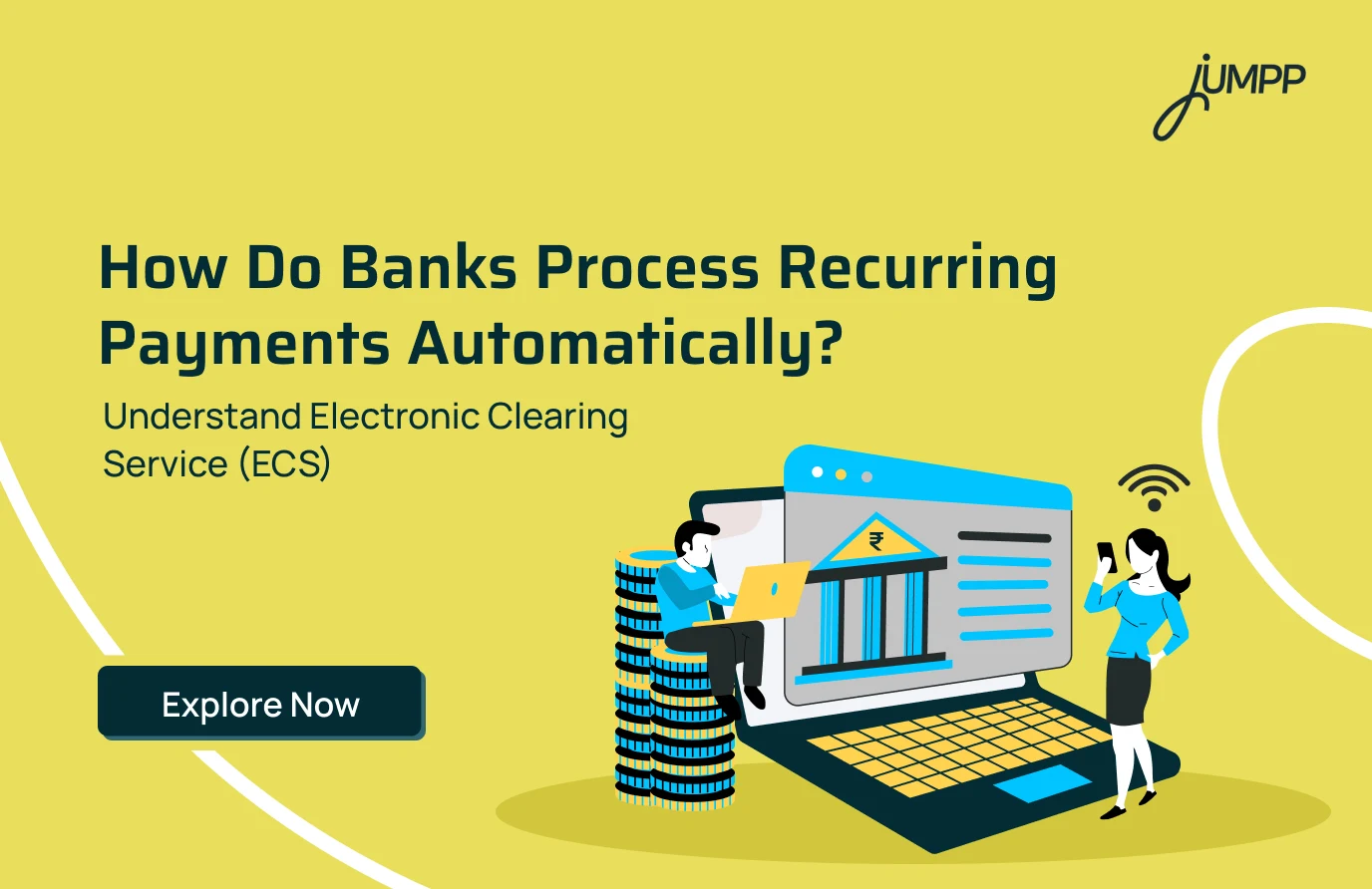
Paying loan EMIs, utility bills, insurance premiums, and other recurring payments manually every month can be time-consuming. To simplify these transactions, banks use an automated payment system that allows funds to be debited or credited electronically. One of the most commonly used systems for this purpose is ECS.
In this blog, learn the ECS full form and how the ECS mandate works.
What is the ECS Full Form?
ECS stands for Electronic Clearing Service.
It is an electronic mode of payment and receipt used for repetitive and periodic transactions. ECS facilitates the bulk transfer of funds from one bank account to multiple bank accounts or vice versa.
ECS in banking is commonly used for the following –
- Salary payments
- Pension payments
- Dividend distributions
- Interest payments
- Loan EMI collections
- Insurance premium payments
- Utility bill payments
- Mutual fund SIP collections
Today, many ECS transactions are processed through the National Automated Clearing House (NACH), a centralised payment system operated by the National Payments Corporation of India (NPCI).
What is an ECS Mandate?
An ECS mandate is an authorisation provided by an account holder that permits a bank or organisation to automatically debit funds from their bank account at regular intervals.
The mandate generally includes:
- Account holder details
- Bank account number
- Bank branch details
- Debit amount
- Frequency of payment
- Validity period
- Purpose of the payment
Customers may also specify a maximum debit limit and validity period while authorising the mandate. Once approved, recurring payments are processed automatically according to the instructions provided.
Many ECS mandates are used for recurring loan repayments. If you are planning to borrow, explore the different types of retail loans available and understand which option may suit your financial needs best.
How Does the ECS Process Work?
The ECS process involves a series of steps that enable recurring payments and collections to be processed automatically through banks.
- Mandate Authorisation: The customer provides written or digital consent through an ECS mandate, authorising a bank or organisation to debit or credit their account automatically.
- Data Preparation and Submission: The organisation prepares a file containing transaction details such as the payment amount, customer account information, and transaction date. This file is submitted through its sponsor bank.
- Clearing House Processing: The sponsor bank forwards the transaction details to the clearing house for validation and processing. The clearing house calculates inter-bank settlements and routes payment instructions to the respective banks.
- Account Settlement: On the scheduled date, the destination bank debits the customer’s account in the case of ECS Debit or credits the beneficiary’s account in the case of ECS Credit. The transaction is then completed.
When tracking ECS transactions, refunds, or payment confirmations, you may come across a transaction reference number. Understanding the UTR full form and its importance can help you monitor banking transactions more effectively.
Types of ECS
There are two primary types of Electronic Clearing Service: ECS Credit and ECS Debit
1. ECS Credit
ECS Credit is used when an organisation needs to transfer funds to multiple beneficiaries through a single debit from its bank account.
Common examples include:
- Salary payments
- Pension payments
- Dividend distributions
- Interest payments
This facility enables institutions to make bulk payments efficiently and on scheduled dates.
2. ECS Debit
ECS Debit is used when an organisation needs to collect payments from multiple customers through a single credit to its bank account.
Common examples include:
- Loan instalment repayments
- Insurance premium collections
- Telephone bill payments
- Electricity bill payments
- Water bill payments
- Mutual fund SIP investments
This facility allows organisations to collect recurring payments automatically after obtaining customer authorisation.
How to Avail of the ECS Mandate
You can avail of an ECS mandate by following these steps:
- Obtain the ECS mandate form from the bank or service provider.
- Fill in your personal and bank account details.
- Specify the payment amount and payment frequency.
- Review the mandate terms and sign the form.
- Submit the completed form along with any required supporting documents.
- Wait for verification and approval by the bank.
Once activated, recurring payments will be automatically debited from your account as per the mandate instructions.
What are the Advantages of ECS in Banking
ECS offers several benefits to customers, businesses, and financial institutions.
- Eliminates the need to make recurring payments manually.
- Helps ensure payments are made on scheduled due dates.
- Reduces paperwork and administrative effort.
- Minimises the risk of missed payments and late fees.
- Supports secure electronic fund transfers.
- Saves time and effort for both customers and institutions.
- Facilitates efficient processing of bulk transactions.
- Provides a cost-effective payment and collection mechanism.
What are the Limitations of ECS in Banking
While ECS remains a widely used system for recurring payments and collections, it has certain limitations compared to newer digital payment frameworks.
- Processing may take longer than real-time payment systems because ECS transactions are typically processed in scheduled settlement cycles rather than instantly.
- Setting up a traditional ECS mandate may involve additional documentation and verification requirements, depending on the bank or institution. In many cases, customers must submit mandate details before recurring transactions can begin.
- Modifying account details, payment amounts, or mandate instructions may require fresh authorisation and processing, which can be less convenient than modern digital mandate systems.
- Failed ECS transactions due to insufficient funds or invalid mandate details can result in ECS return charges.
- Repeated ECS failures for loan EMIs or credit obligations may lead to payment penalties and could affect a borrower’s credit profile if dues remain unpaid.
Today, many recurring transactions are processed through the National Automated Clearing House (NACH), a centralised payment system operated by NPCI. NACH has further enhanced the processing of recurring payments through a more streamlined and digitally enabled framework, and NPCI introduced NACH 3.0 to improve transaction processing and customer experience.
What are ECS Return Charges?
ECS return charges are fees charged by a bank when an Electronic Clearing Service (ECS) auto-debit transaction fails. This usually happens when there is not enough money in the account on the scheduled payment date.
Banks typically charge ₹150 to ₹750 per failed ECS transaction, along with applicable GST. The exact amount varies from one bank to another.
Common Reasons for ECS Returns
- Insufficient account balance
- Incorrect bank account details
- Expired or cancelled ECS mandate
- Dormant, frozen, or inactive bank account
How to Avoid ECS Return Charges
- Maintain sufficient funds before the auto-debit date.
- Verify account details while setting up the ECS mandate.
- Keep your ECS mandate active and updated.
- Monitor upcoming EMI, SIP, and bill payment schedules.
Example: If your loan EMI of ₹10,000 is scheduled for auto-debit and your account has only ₹8,000, the transaction may fail. In this case, the bank can charge ECS return fees, and the lender may also impose a late payment penalty.
As banking and payment systems become more automated, technology is playing a bigger role in financial services. Explore how AI in loan management is helping lenders improve efficiency, automate processes, and enhance customer experiences.
Final Thoughts
ECS remains one of the most widely used systems for automating recurring payments and collections in the banking ecosystem. By understanding how ECS mandates work and ensuring sufficient funds are available on scheduled debit dates, customers can enjoy seamless transactions while avoiding payment failures and ECS return charges.
FAQs
ECS stands for Electronic Clearing Service. It is an electronic payment mechanism used for recurring debit and credit transactions between bank accounts.
An ECS mandate is an authorisation that allows a bank or organisation to automatically debit funds from a customer’s account at specified intervals.
ECS return charges are penalties imposed when an ECS transaction fails due to insufficient funds, incorrect account details, an invalid mandate, or other banking issues.
The two main types of ECS are ECS Credit and ECS Debit. ECS Credit is used for bulk payments, while ECS Debit is used for recurring collections.
You can activate an ECS mandate by submitting a completed mandate form along with your bank account details to the concerned bank or service provider for verification and approval.
ECS (Electronic Clearing Service) is an automated payment system that facilitates recurring debit and credit transactions between bank accounts. It is commonly used for loan EMI payments, insurance premium collections, utility bill payments, etc.