Delivery vs Intraday Trading- How to Choose the Right Trading Style for Your Goals
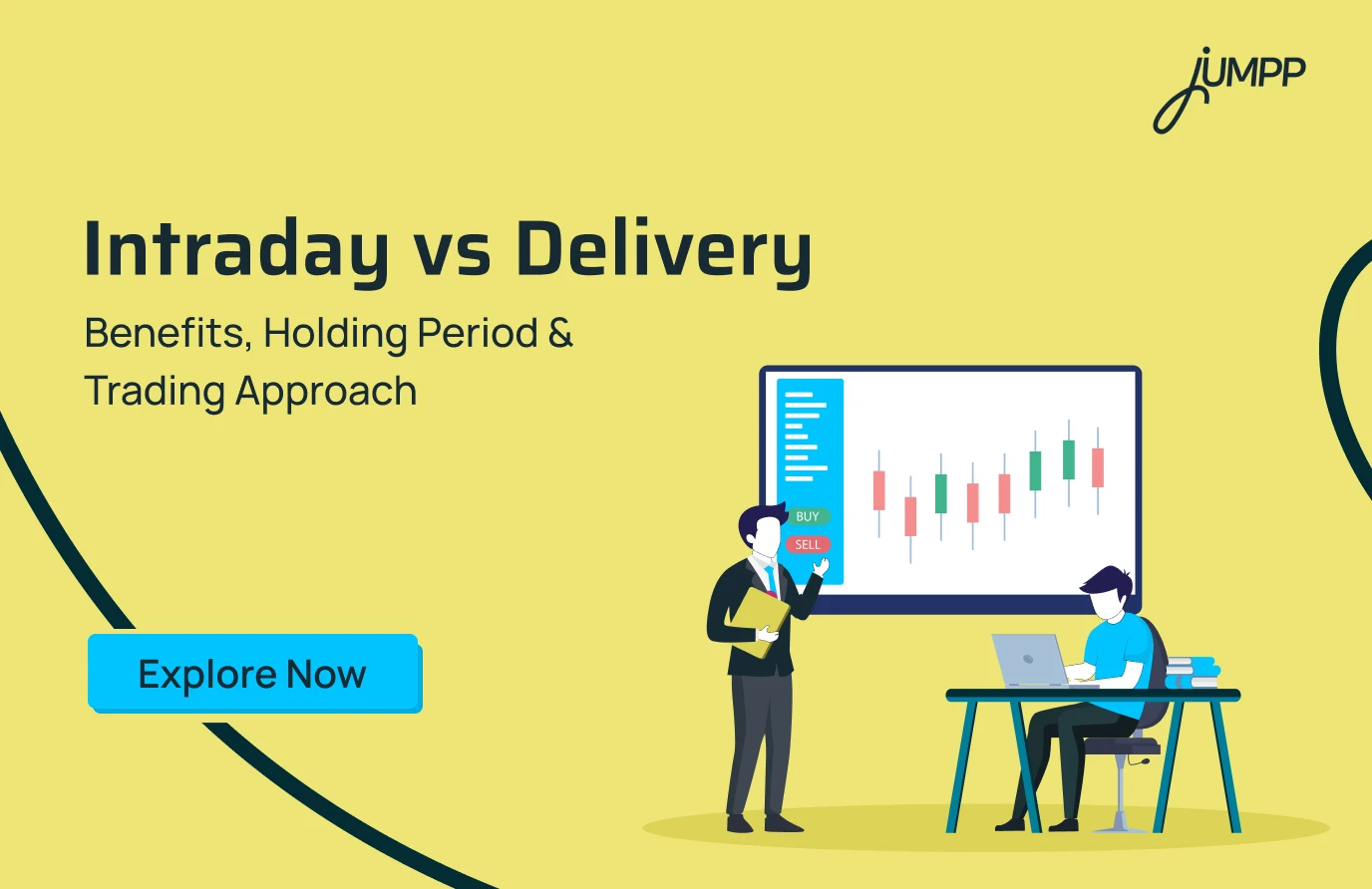
Choosing between intraday and delivery trading is one of the first decisions many stock market beginners face. Some traders prefer fast-paced short-term opportunities, while others focus on holding quality stocks for the long run. In this article, understand the real difference between delivery and intraday trading.
What is Delivery Trading?
Delivery trading means buying shares and holding them beyond the same trading day. The shares are credited to your demat account, and you become the actual owner of those stocks.
You can hold them:
- for days
- months
- years
There is no pressure to sell the stock on the same day.
Example of Delivery Trading
Suppose someone buys 10 shares of Reliance Industries at ₹1,500 each.
If they do not sell those shares before the market closes, the shares move into their demat account. They can now sell them whenever they want in the future. This is called delivery trading.
What is Intraday Trading?
Intraday trading means buying and selling shares within the same trading day. The position must be closed before the market closes.
The goal is usually to earn profit from short-term price movements during the day.
In intraday trading:
- Ownership of shares is not transferred permanently
- Positions are squared off the same day
- Traders focus on quick price movements
Example of Intraday Trading
Suppose someone buys shares of Tata Motors at ₹720 in the morning and sells them at ₹728 within a few hours. The ₹8 difference becomes the trading profit before charges and taxes.
If the trader forgets to close the position, many brokers automatically square it off before market closing time.
Delivery vs Intraday Trading- Which Trading Style Is Better for Beginners?
Intraday trading is generally better for experienced traders looking for short-term profit opportunities, while delivery trading is usually considered better for beginners and long-term investors. The right choice depends on your risk appetite, time availability, and investment goals.
| Feature | Intraday Trading | Delivery Trading |
| Holding Period | Same trading day | More than one day |
| Ownership of Shares | No actual ownership | Shares credited to the demat account |
| Main Objective | Short-term profit | Long-term wealth creation |
| Risk Level | Higher due to volatility | Comparatively lower |
| Market Monitoring | Requires continuous tracking | Less active monitoring is needed |
| Capital Requirement | Lower due to leverage | Higher because full payment is usually needed |
| Leverage/Margin | Higher margin available | Limited or lower leverage |
| Suitable For | Active traders | Long-term investors |
| Stress Level | Higher emotional pressure | Comparatively lower stress |
| Profit Potential | Quick short-term gains | Gradual long-term growth |
| Tax Treatment | Treated as speculative business income | Treated as capital gains |
| Tax Types | Added to the business income tax slab | STCG or LTCG applicable |
| STCG Tax | Not applicable separately | 20% on gains if sold within 1 year |
| LTCG Tax | Not applicable | 12.5% above ₹1.25 lakh gains after 1 year |
| Need for Technical Analysis | Very important | Helpful but not always necessary |
| Overnight Risk | No overnight risk | Exposed to overnight market movements |
| Brokerage and Charges | Usually higher due to frequent trades | Comparatively lower frequency of charges |
| Best For | Experienced traders | Beginners and long-term investors |
Choosing between intraday and delivery trading also depends on your financial stability and available cash flow. See how your savings account balance works and how it can help you plan trades better.
Pros and Cons of Intraday Trading
Intraday trading offers quick profit opportunities, no overnight risk, and leverage benefits, but it also comes with high volatility, emotional pressure, and the risk of rapid losses. It usually suits experienced traders who can actively monitor markets and manage risk carefully.
Pros of Intraday Trading
- No Overnight Risk: Since positions are closed before market closing, traders avoid overnight market shocks, global news impact, or sudden gap-down openings.
- Quick Profit Opportunities: Intraday traders try to benefit from short-term price movements during the day. Even small price changes can create trading opportunities.
- Margin and Leverage: Brokers often provide leverage for intraday trades, allowing traders to take bigger positions with lower capital. However, this also increases risk.
- Can Benefit in Falling Markets: Intraday traders can short-sell stocks and potentially earn even when markets fall.
- Faster Market Learning: Regular trading helps people understand market behaviour, charts, discipline, risk management, and trading psychology.
Cons of Intraday Trading
- High Risk: Stock prices can move sharply within minutes. Without proper risk management, losses can happen quickly.
- Emotionally Stressful: Intraday trading requires constant decision-making. Fear, greed, panic, and overtrading are common challenges for beginners.
- Requires Full Attention: Unlike long-term investing, intraday trading usually needs continuous market monitoring throughout the trading session.
- Leverage Can Increase Losses: While leverage can increase profits, it can also magnify losses significantly.
- Multiple Charges: Frequent buying and selling lead to brokerage charges, taxes, and other transaction costs that can reduce overall profits.
Pros and Cons of Delivery Trading
Delivery trading offers lower stress and ownership benefits; it also requires patience and exposure to long-term market risks.
Pros of Delivery Trading
- Long-Term Wealth Creation: Investors can benefit from long-term market growth and compounding over time.
- Lower Stress: There is no pressure to buy and sell within the same trading day.
- Ownership of Shares: Shares are credited to the demat account, making the investor an actual shareholder.
- No Continuous Monitoring Needed: Investors usually do not need to track markets throughout the day.
- Suitable for Beginners: Delivery trading is often easier for beginners because decisions are less time-sensitive.
Cons of Delivery Trading
- Requires More Capital: Investors generally need the full amount to buy shares.
- Slower Returns: Wealth creation may take months or years depending on market conditions.
- Market Risk Remains: Stock prices can still fall due to market corrections or company-related issues.
- Overnight Risk: Investors remain exposed to global news and sudden market movements.
- Patience Is Important: Emotional decisions during market volatility can impact long-term returns.
Which Is Better: Intraday or Delivery Trading?
There is no single “best” option because intraday and delivery trading suit different goals, risk levels, and personalities.
- Choose Intraday Trading if: You can actively monitor markets, understand charts and technical analysis, and are comfortable with higher risk and fast decision-making.
- Choose Delivery Trading if: You want long-term growth, lower stress, less daily monitoring, and a comparatively safer investing approach.
Difference Between Intraday and Delivery Trading in the Stock Market – FAQs
Intraday meaning refers to buying and selling shares within the same trading day. Traders aim to earn profits from short-term price movements without holding stocks overnight.
Intra day trading is another term for intraday trading, where stocks are bought and sold on the same day before the market closes.
Intraday trading focuses on short-term profits through daily market movements, while long-term trading focuses on gradual wealth creation by holding investments for months or years.
Intraday share prices may appear lower because brokers offer margin benefits for same-day trading. Delivery trading usually requires full payment since investors take actual ownership of shares.
Yes, you can sell delivery shares on the same day. However, if you buy and sell shares on the same trading day, the trade is usually treated as intraday trading instead of delivery trading.
Many day traders fail because of emotional trading, lack of risk management, overtrading, excessive leverage, and poor discipline. Intraday trading also requires constant monitoring and quick decisions under volatile conditions.
Intraday trading and intraday both refer to buying and selling stocks within the same trading day. Delivery trading is different because shares are held beyond one day and credited to the demat account.
In intraday option trading, positions are opened and closed on the same day. In delivery-style option holding, traders carry option contracts beyond one trading session until expiry or exit.
A delivery vs intraday chart compares stocks based on delivery volume and intraday trading activity. Traders use such charts to analyse market participation, price movement strength, and trading trends.
Delivery trading involves buying shares with full payment and holding them long term. Intraday trading involves buying and selling on the same day. MTF (Margin Trading Facility) allows investors to buy shares by borrowing funds from the broker and holding them for a longer period.
Usually, no. In India, funds from selling delivery shares are generally settled on a T+1 basis, meaning withdrawal may happen on the next working day after settlement. Broker rules may vary slightly.