CGST and SGST: What They Really Mean on Your Bill
If you have ever looked at a bill and noticed CGST and SGST mentioned separately, you might have wondered why one tax is split into two parts and where that money actually goes.
In reality, these are two core components of the GST system in India. However, to truly understand how they work, you first need to look at how GST itself is structured.
What is GST?
Goods and Services Tax (GST) is a unified indirect tax in India. It is charged on the supply of goods and services.
What are the Components of GST?
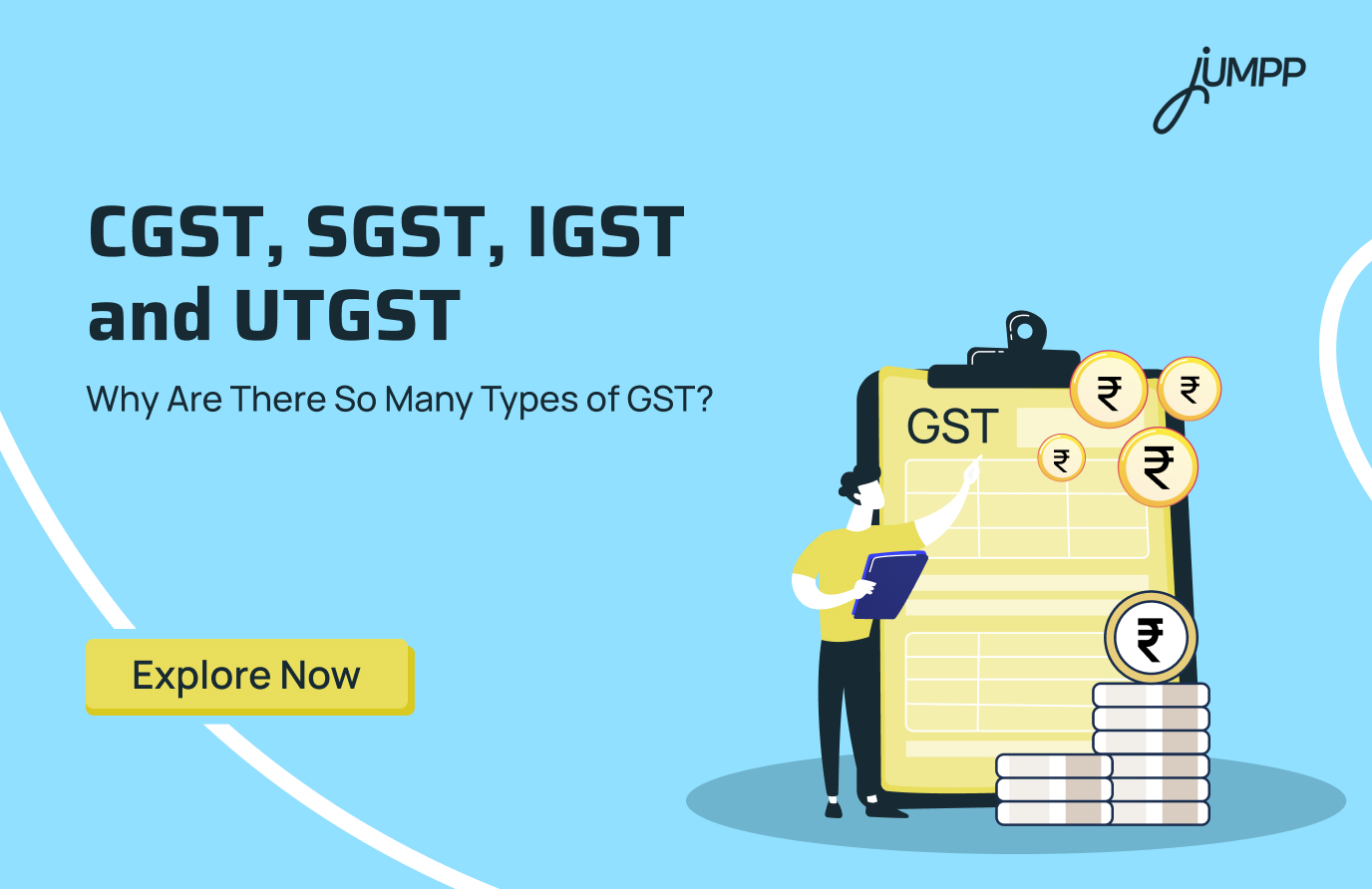
The Goods and Services Tax (GST) in India is divided into 4 key components. These determine how tax is applied based on the nature and location of a transaction.
- CGST full form is Central Goods and Services Tax. It is collected by the Central Government and applies to intra-state transactions.
- SGST full form is State Goods and Services Tax. It is collected by the State Government and is charged along with CGST on intra-state transactions.
- UTGST full form is Union Territory Goods and Services Tax. It applies to Union Territories without a legislature and is charged instead of SGST.
- IGST full form is Integrated Goods and Services Tax. It is collected by the Central Government and applies to inter-state transactions and imports.
Your first salary is where everything begins. Start strong with first job financial planning and build habits that stay with you for years.
What are CGST and SGST?
CGST and SGST are two components of the Goods and Services Tax (GST) in India. They are applied together on transactions that happen within the same state.
- CGST full form is Central Goods and Services Tax. It is collected by the Central Government.
- SGST full form is State Goods and Services Tax. It is collected by the State Government where the transaction takes place.
In simple terms, whenever you buy or sell goods or services within a state, the total GST is divided equally between the Centre and the State.
When are CGST and SGST applicable?
CGST and SGST apply only to intra-state transactions. This means the buyer and the seller are located in the same state.
For example, if a seller in Karnataka sells goods to a buyer in Karnataka, both CGST and SGST will be charged.
How is GST divided between CGST and SGST?
The total GST rate is split equally.
So, if the GST rate is 18 percent:
- CGST will be 9 percent
- SGST will be 9 percent
Both are charged on the same transaction value.
What is IGST?
Integrated Goods and Services Tax (IGST) is charged on inter-state transactions and imports in India. It applies when goods or services move from one state to another.
IGST is collected by the Central Government and later shared with the state where the goods or services are consumed.
Want to buy silver? Do not forget to check the latest GST on silver before making your purchase.
What is the difference between CGST, SGST, IGST, and UTGST (2026)?
CGST and SGST/UTGST are applied together on intra-state sales (split equally). IGST, on the other hand, applies to inter-state sales and imports, with revenue shared by the destination.
The difference between CGST, SGST, IGST, and UTGST comes down to where the transaction happens and who collects the tax.
| Tax Type | Full Form | Collected By | Applicable On | Revenue Goes To | Example (18% GST) |
| CGST | Central Goods and Services Tax | Central Government | Intra-state transactions | Central Government | ₹50,000 sale → ₹4,500 CGST |
| SGST | State Goods and Services Tax | State Government | Intra-state transactions | State Government | ₹50,000 sale → ₹4,500 SGST |
| UTGST | Union Territory Goods and Services Tax | Union Territory Government | Intra-UT transactions | Union Territory | ₹10,000 sale → ₹900 UTGST |
| IGST | Integrated Goods and Services Tax | Central Government | Inter-state transactions and imports | Shared between the Centre and destination state | ₹10,000 sale → ₹1,800 IGST |
Here is the difference between the different types of GST in India –
- CGST vs SGST (within the same state)
When a transaction happens within one state, GST is split into two parts.
- CGST (Central Goods and Services Tax) goes to the Central Government
- SGST (State Goods and Services Tax) goes to the State Government
Example:
If a seller in Punjab sells goods worth ₹50,000 to a buyer in Punjab at 18 percent GST:
- CGST (9 percent) = ₹4,500
- SGST (9 percent) = ₹4,500
So, the tax is shared equally between the Centre and the State.
- CGST vs UTGST (within a Union Territory)
In Union Territories without a legislature, SGST is replaced by UTGST.
- CGST still goes to the Central Government
- UTGST (Union Territory Goods and Services Tax) goes to the Union Territory
Example:
If a seller in Chandigarh sells goods worth ₹10,000 at 18 percent GST:
- CGST (9 percent) = ₹900
- UTGST (9 percent) = ₹900
- IGST (between different states)
When a transaction happens between two states, IGST is charged instead of CGST and SGST.
- IGST (Integrated Goods and Services Tax) is collected by the Central Government
Later, it is shared with the state where the goods are consumed
Example:
If a seller in Delhi sells goods worth ₹10,000 to a buyer in Punjab at 18 percent GST:
- IGST (18 percent) = ₹1,800
No split at the invoice level. The settlement happens later between governments.
Why is GST divided into IGST, CGST, and SGST?
GST is divided into IGST, CGST, and SGST to ensure that tax is shared correctly between the Central and State Governments while keeping the system smooth across India.
Here is the simple logic behind it.
1. To match India’s federal structure
India has both a Central and a State Government. So, when a transaction happens within a state, the tax is split. CGST goes to the Centre, and SGST goes to the State.
2. To handle inter-state transactions smoothly
When goods or services move from one state to another, IGST is charged instead of the split tax. This avoids confusion and keeps taxation simple across states.
3. To ensure tax goes to the right state
GST is a destination-based tax. This means the state where the goods are consumed gets the revenue. IGST helps transfer this share correctly between states.
4. To avoid double taxation
The structure supports input tax credit. So, businesses can adjust the tax they have already paid, instead of paying tax on tax again.
5. To maintain one unified system
Even though GST is divided into parts, the rates remain uniform across India. This ensures a smooth “one nation, one tax” experience.
In short, GST is divided this way to balance fair revenue sharing, ease of doing business, and a seamless tax system across states.
Understanding GST helps you become more aware of where your money goes. The next step is learning how to make that money grow. Here is a simple breakdown of IPO vs FPO to help you get started with investing.
Disclaimer– The rankings and figures in this article have been compiled from multiple verified reports, credible news sources, and public financial data available as of 2026.
All values are approximate and may vary with newer updates, revisions, or changes in official records.
CGST and SGST – FAQs
GST in India has four types: CGST, SGST, UTGST, and IGST. These are applied based on whether the transaction is within a state or between states.
CGST is the Central Government’s share of GST, while SGST is the State Government’s share. Both are charged together on intra-state transactions.
The four types of GST are CGST, SGST, IGST, and UTGST. These are applied based on whether the transaction is within a state or between states.
The total GST rate is divided equally. For example, 18 percent GST means 9 percent CGST and 9 percent SGST.
CGST is collected by the Central Government, while SGST is collected by the respective State Government.
The main types of taxes in India include Income Tax, GST, Customs Duty, Corporate Tax, Capital Gains Tax, Stamp Duty, and Property Tax.
Under the new tax regime for FY 2026–27, individuals with taxable income above ₹24 lakh fall in the 30 percent tax slab. Under the old regime, this applies to income above ₹10 lakh.
Income tax is classified under five heads: Salaries, House Property, Profits and Gains from Business or Profession, Capital Gains, and Income from Other Sources.
Yes, you can gift ₹1 crore to your sister, and it is tax-free for her. This is because gifts to specified relatives are fully exempt under income tax rules. However, it is advisable to create a gift deed and report it in the income tax return as exempt income.