GST on Silver Ornaments, Rates, Making Charges, HSN Codes and Taxation Guide 2026
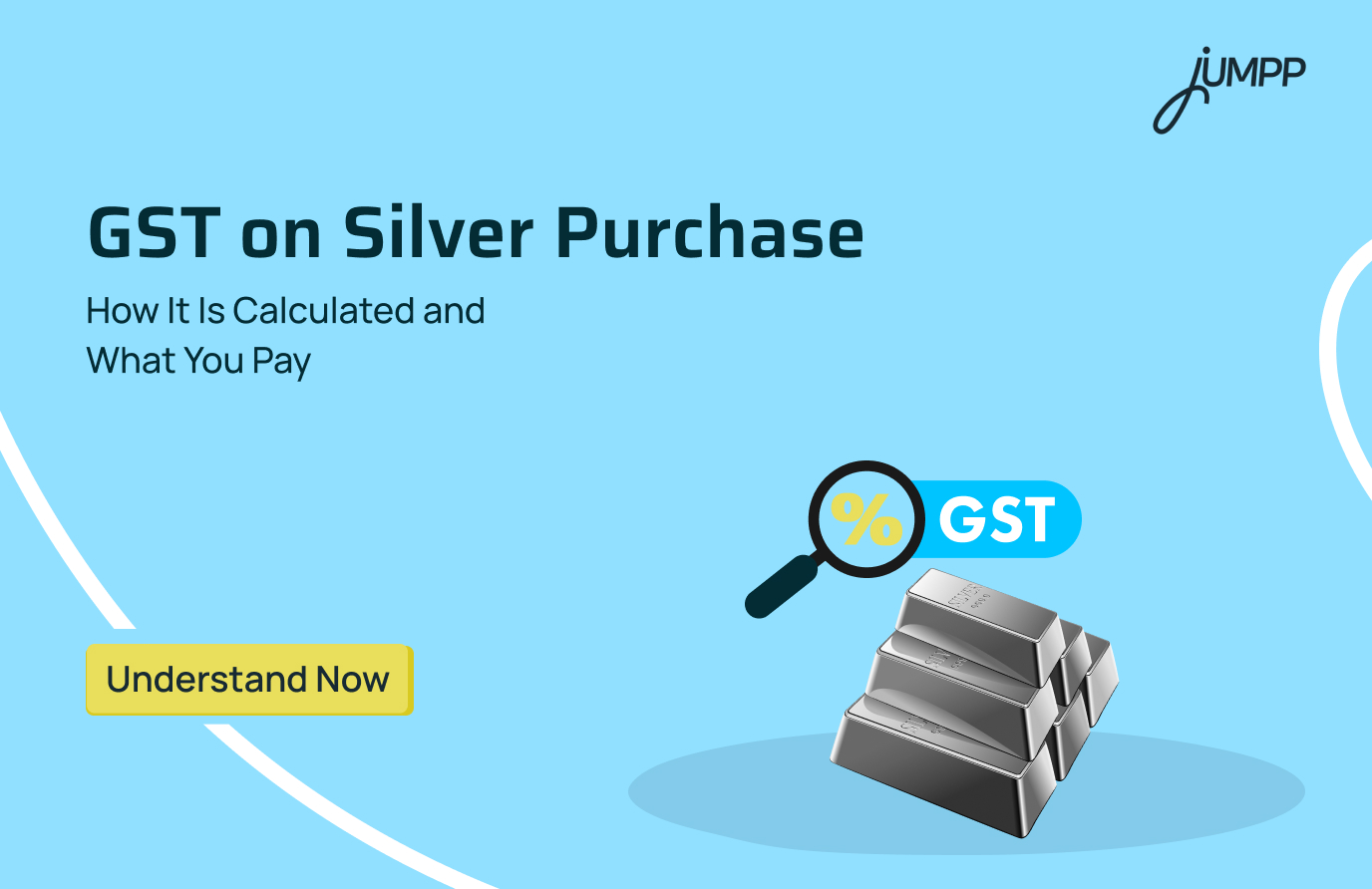
The recent spike in silver prices has pushed more people to consider it seriously, whether for investment or jewellery. However, price is only one part of the story. GST on silver, making charges, and tax rules quietly influence how much you actually pay and what you eventually earn.
How to Calculate Silver Price in April 2026
To calculate the silver price in April 2026, you need to multiply the current silver rate per gram by weight, add making charges (if any), and then apply 3 percent GST to get the final payable amount.
- Step 1: Check the current silver rate
As of April 2026, silver is roughly around ₹240 to ₹260 per gram (varies daily) - Step 2: Calculate base value
Silver value = Weight (in grams) × Price per gram - Step 3: Add making charges (if jewellery)
Usually, 5 percent to 25 percent depending on design - Step 4: Apply GST
3% GST on silver value
5% GST on making charges (if shown separately)
- Step 5: Final price
Total = Silver value + making charges + GST
GST Rates on Silver in India (2026)
In 2026, GST on silver in India is 3 percent on the value of silver, while 5 percent GST is applied separately on making charges for silver jewellery.
| Component | GST Rate (2026) | Details |
| Silver (bars, coins, raw silver) | 3% | Fixed GST on total value of silver |
| Silver jewellery (metal value) | 3% | Applies to intrinsic silver value |
| Making charges (jewellery) | 5% | Charged on labour or craftsmanship cost |
| Imported silver (BCD) | 6% (approx) | Basic Customs Duty on imports |
How is GST Calculated on Silver in India
GST on silver is calculated by applying 3 percent on the silver value. GST on making charges on silver jewellery is 5 percent (if billed separately), and then adding both to get the final payable amount.
How the calculation works in practice:
- First, calculate the total silver value based on weight and rate per gram
- Apply 3 percent GST on this silver value
- Add making charges if you are buying jewellery
- Apply 5 percent GST on those making charges
- The sum of all these components gives you the final price you pay
Simple example to understand clearly:
If you buy silver jewellery worth ₹8,000 and the making charges are ₹400:
- GST on silver (3 percent) = ₹240
- GST on making charges (5 percent) = ₹20
- Final price = ₹8,000 + ₹240 + ₹400 + ₹20 = ₹8,660
Important clarification: If a jeweller includes making charges within the total price instead of showing them separately, GST may be applied at 3 percent on the full amount, which can slightly change the final tax structure.
Impact of GST on Silver in India
GST has changed how silver is priced, purchased, and taxed. It has introduced a uniform 3 percent tax on silver, improved transparency, and simplified taxation, but it has also increased the overall cost of silver jewellery due to additional tax on making charges.
1. Uniform pricing across India
Earlier, different states had different taxes on silver. With GST, a fixed 3 percent rate applies nationwide, making pricing more consistent and easier to understand.
2. Higher cost for jewellery buyers
While silver itself is taxed at 3 percent, jewellery buyers also pay 5 percent GST on making charges, which increases the total bill beyond what many expect.
3. Impact on investors
- Buyers of silver coins and bars pay 3 percent GST upfront
- This tax becomes a cost and is not recoverable for individual investors
- It slightly reduces overall returns, especially for short-term investments
4. Improved transparency and billing
GST has made invoicing more structured. Buyers now clearly see:
- Silver value
- Making charges
- Separate GST components
This reduces hidden costs and improves trust in pricing.
5. Benefit for businesses through ITC
Jewellers and registered dealers can claim Input Tax Credit (ITC) on GST paid, which helps avoid double taxation and improves business margins.
6. Effect on resale value
- GST paid during purchase is not refunded when you sell silver
- Profits from selling silver are taxed separately under capital gains rules
- This makes GST an additional cost that impacts net returns
Legal and Taxation Rules for Silver in India
In India, silver is taxed at 3 percent GST on purchase, and profits from selling silver are taxed as capital gains based on holding period, while there is no fixed legal limit on holding silver if the source of funds is valid.
Capital gains tax on selling silver
- If you sell within 3 years, profit is treated as short-term capital gain and taxed as per your income slab
- If you sell after 3 years, it becomes long-term capital gain taxed at 20 percent with indexation benefit
- Indexation helps reduce taxable profit by adjusting for inflation
Taxation on silver ETFs and funds
- Gains from silver ETFs or funds are also taxed based on holding period
- Short-term gains are taxed as per slab
- Long-term gains are taxed at applicable rates as per latest tax rules
If you are trying to understand GST on silver in India and how it affects your overall cost, it is equally important to manage how you pay for such purchases. Learn how to pay credit card bill from another credit card.
Legal rules for holding silver
- There is no maximum limit on how much silver you can own
- However, you must be able to explain the source of funds if questioned
- Keeping proper purchase bills and records is important
Compliance and documentation
- You should always maintain invoices and proof of purchase
- You must know that any Unexplained silver holdings can lead to tax scrutiny or penalties
Silver is easy to buy and hold in India, but from a tax perspective, your profit is always tracked and taxed, so proper documentation and long-term planning make a significant difference.
HSN Codes for Silver in India
The primary HSN code for silver is 7106.
Here are the key Silver HSN Codes-
| HSN Code | Category | Details | GST Rate |
| 7106 | Raw silver | Unwrought, semi-manufactured, powder form | 3% |
| 7106 10 00 | Silver powder | Fine silver in powder form | 3% |
| 7106 91 00 | Silver bars/bullion | Investment-grade silver | 3% |
| 7113 | Silver jewellery | Includes ornaments and articles | 3% |
| 7113 11 10 | Filigree work | Decorative silver jewellery | 3% |
| 7113 11 20 | Gem-set jewellery | Silver jewellery with stones | 3% |
| 7114 | Silver articles/coins | Non-legal tender items | 3% |
| 7112 | Scrap silver | Waste and recycled silver | 3% |
If you are also exploring other investment routes, read this detailed comparison on IPO vs FPO to understand where your money can grow better.
Disclaimer– The rankings and figures in this article have been compiled from multiple verified reports, credible news sources, and public financial data available as of 2026.
All values are approximate and may vary with newer updates, revisions, or changes in official records.
Silver GST in India – FAQs
GST on silver ornaments is 3 percent on the value of silver, plus 5 percent GST on making charges if they are billed separately. This means the total tax on silver jewellery is slightly higher than 3 percent due to the additional tax on labour.
The GST rate on silver in India is 3 percent on the value of silver, and 5 percent GST is charged separately on making charges for jewellery.
As of April 10, 2026, the price of silver in India is approximately ₹2,54,900 per kilogram. Please note that the silver and gold charges change daily based on market conditions.
Legally, you cannot buy silver without GST in India. All silver purchases attract 3 percent GST.
Currently, silver is priced at around ₹2.5 lakh to ₹2.6 lakh per kilogram in India, depending on daily fluctuations and location.
Yes, selling silver is relatively easy in India. You can do it through jewellers or bullion dealers, but the resale price may be slightly lower than market value and profits are subject to tax.