Debit Freeze Meaning: What It Is, Why Banks Freeze Accounts, and How to Remove It
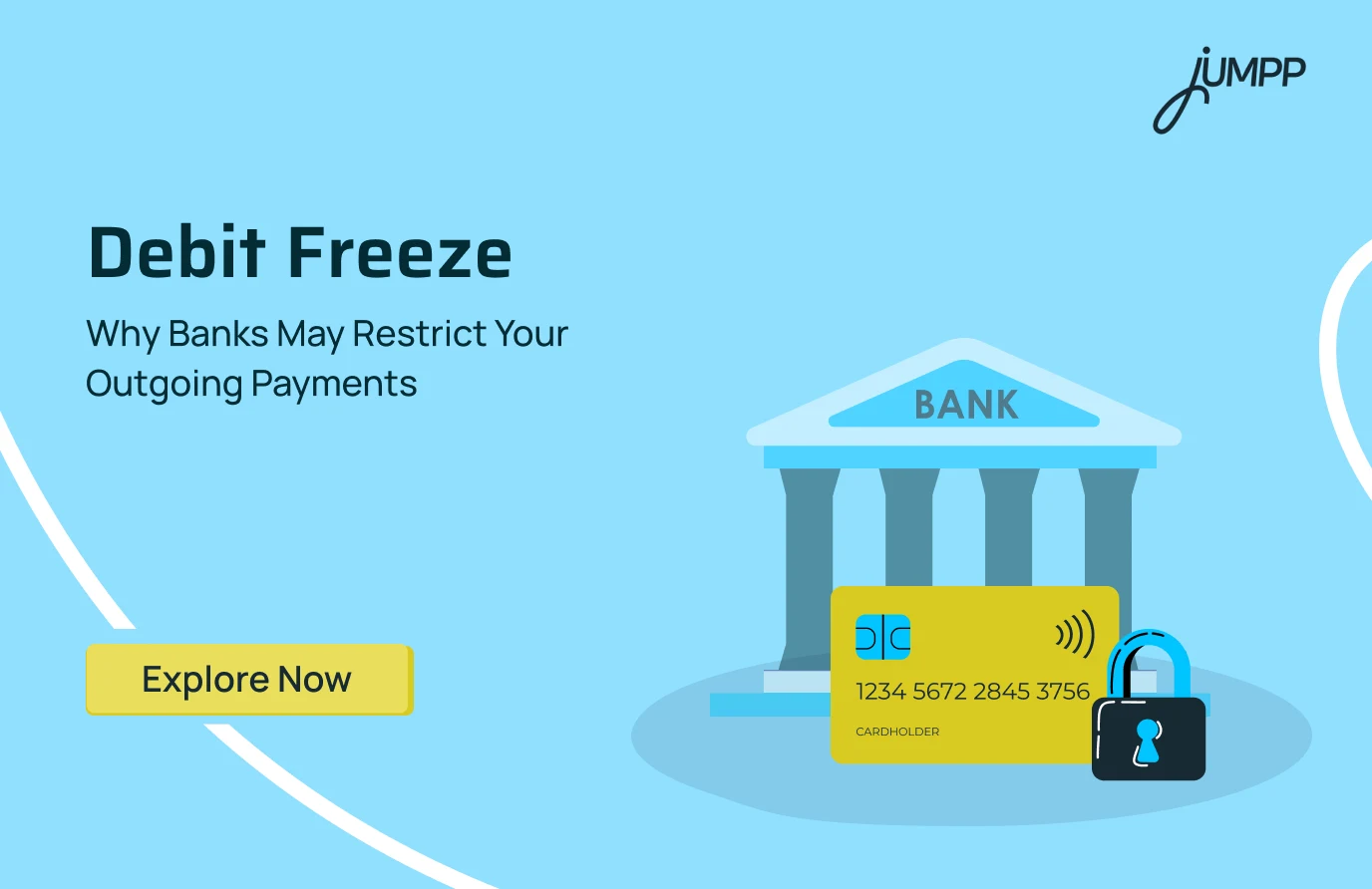
Finding out that you cannot access the money in your own bank account can be frustrating. Your salary may have been credited, your balance may be visible, but every payment or withdrawal gets declined. This situation is often caused by a debit freeze.
Understanding the debit freeze meaning, the reasons behind it, and the steps to remove it can help you resolve the issue quickly and regain access to your funds.
What is the Debit Freeze Meaning?
The debit freeze refers to a restriction placed on a bank account that prevents all outgoing transactions while allowing incoming credits to continue.
During a debit freeze, the following services generally stop working:
- UPI payments
- ATM withdrawals
- Debit card purchases
- Mobile banking transfers
- Internet banking transactions
- NEFT, RTGS and IMPS outward transfers
- EMI auto-debits
- Standing instructions
- Cheque clearances
Incoming credits generally continue unless the account has been completely frozen.
What are the Reasons for a debit freeze?
Banks place debit freezes for several operational, legal, and regulatory reasons.
- Suspicious Transactions
If the bank detects unusual transaction patterns, rapid movement of funds, or high-value transfers that appear risky, it may temporarily freeze debit transactions while reviewing the account.
- Incomplete KYC
Failure to update Know Your Customer (KYC) documents can result in debit restrictions until the verification process is completed.
- Missing PAN or Form 60
Banks may restrict debit transactions if mandatory PAN-related requirements are not fulfilled in applicable cases.
- Cybercrime Complaints
If a complaint linked to your account is registered through the National Cyber Crime Portal or another investigating agency, the bank may impose a debit freeze until the investigation progresses.
- Court Orders
Courts may direct banks to restrict transactions during legal proceedings involving the account holder.
- Money Laundering or Regulatory Investigations
Banks may also freeze debit transactions after receiving directions from regulatory or enforcement agencies investigating financial crimes.
Debit Freeze Process
Banks usually follow a structured process before imposing a debit freeze.
Step 1: Trigger
The process begins when the bank receives an internal fraud alert, compliance issue, cybercrime notice, or legal instruction.
Step 2: Verification
The bank verifies the information received through its internal monitoring systems or regulatory authorities.
Step 3: Restriction
Once verified, the bank places a debit restriction on the account, preventing all outgoing transactions.
Step 4: Customer Communication
For KYC-related issues, banks generally notify customers before applying restrictions. However, in fraud investigations or legal matters, prior notice may not always be possible.
Step 5: Resolution
The restriction remains active until the customer fulfils the required compliance requirements or the concerned authority directs the bank to remove the freeze.
How to Check if a Bank Account Is Debit Frozen
If you are unsure whether your account has been frozen, there are several ways to confirm it.
- Try a Small Transaction
Attempt to transfer a small amount through UPI or internet banking. If the transaction fails with messages such as “Account Debit Restricted,” “Debit Freeze,” or “Lien Marked,” your account may be debit frozen.
- Check Your Banking App
Many banks display account restrictions or transaction alerts in their mobile banking applications or internet banking portals.
- Contact Customer Care
Call your bank’s customer support to verify whether a debit restriction has been placed on your account and ask for the reason behind it.
- Visit Your Home Branch
Your branch can confirm the status of your account and explain what documents or actions are required to remove the restriction.
Now, you can open a zero-balance savings account online.

RBI Guidelines for Debit Freeze
The Reserve Bank of India (RBI) has rules to ensure banks do not freeze accounts without a valid reason or proper process.
Advance KYC Notices
Banks should send reminders before restricting transactions due to pending KYC updates.
PAN Compliance
If PAN or Form 60 is required but not submitted, the bank may restrict debit transactions until the documents are provided.
Interest Continues
Savings account interest generally continues to be credited even if a debit freeze is in place.
Right to Information
You have the right to know why your account was restricted and what you need to do to remove the debit freeze.
Check out RBI’s latest repo rate!
How to Remove a Debit Freeze
Removing a debit freeze depends on the reason behind the restriction. In most cases, the issue can be resolved by completing the required formalities with the bank or the investigating authority.
Step 1: Contact Your Bank
Visit your home branch or contact customer care to identify the exact reason for the debit freeze.
Step 2: Obtain Freeze Details
Request written information about the authority that imposed the freeze, along with the case reference number or compliance issue.
Step 3: Complete Pending KYC
If the restriction is due to incomplete KYC, submit updated identity and address proof or complete the verification process through the bank’s approved channels.
Step 4: Submit PAN or Form 60
Provide any missing tax-related documents if required under applicable regulations.
Step 5: Resolve Legal or Cyber Issues
If the debit freeze is linked to a cybercrime complaint or legal investigation, cooperate with the investigating authority and submit all relevant documents supporting your case.
Step 6: Confirm Removal
Once all requirements have been completed, follow up with the bank and obtain confirmation that the debit freeze has been removed.
Steps to Activate a Frozen Bank Account
If your bank account has been frozen, follow these steps to reactivate it:
- Identify the reason for the restriction.
- Contact your home branch immediately.
- Complete pending KYC verification, if applicable.
- Submit PAN, Form 60, or any other required documents.
- Resolve legal or cybercrime-related issues with the concerned authority.
- Keep copies of all submitted documents and acknowledgements.
- Obtain written confirmation from the bank once the restriction has been removed.
- Test your account with a small transaction before making larger payments.
Debit Freeze and Credit Freeze Difference
A debit freeze protects funds from being withdrawn, while a credit freeze prevents additional money from being credited to the account.
| Feature | Debit Freeze | Credit Freeze |
| Outgoing transactions | Blocked | Allowed |
| Incoming transactions | Allowed | Blocked |
| Salary credits | Allowed | Not allowed |
| UPI transfers | Outgoing blocked | Outgoing generally allowed |
| Primary purpose | Prevent money from leaving | Prevent money from entering |
Difference Between Debit Freeze and Account Freeze
A debit freeze blocks only outgoing transactions, while incoming credits, such as salary and refunds, continue. An account freeze, on the other hand, is a complete restriction where both incoming and outgoing transactions are blocked.
| Feature | Debit Freeze | Account Freeze |
| Outgoing transactions | Blocked | Blocked |
| Incoming transactions | Allowed | Blocked |
| Salary and other credits | Allowed | Blocked |
| Common reasons | Pending KYC, missing PAN, compliance issues, suspicious transactions | Court orders, cybercrime investigations, fraud, regulatory action |
| Account access | Partial restriction | Complete restriction |
| Impact | Money can be received but cannot be spent | No money can be credited or withdrawn |
Also read: detailed steps to unfreeze your bank account in India!
Conclusion
Seeing your bank account under a debit freeze can be worrying, especially when you need to make an urgent payment. However, in most cases, it is a temporary restriction rather than a permanent problem. The best approach is to contact your bank, understand why the freeze was applied, and complete the required formalities as soon as possible. Once the issue is resolved, your bank can restore normal access to your account.
Disclaimer- The rankings and figures in this article have been compiled from multiple verified reports, credible news sources, and public financial data available as of 2026.
All values are approximate and may vary with newer updates, revisions, or changes in official records.
Frequently Asked Questions
Start by contacting your bank to understand why the debit freeze was applied. Depending on the reason, you may need to complete your KYC, submit missing documents, or resolve a legal or compliance-related issue. Once everything is verified, the bank will lift the restriction.
No. When a debit freeze is in place, you cannot withdraw cash or make any outgoing transactions, including UPI payments, cheque payments, and online fund transfers.
Freezing your debit card only blocks transactions made using that card, such as ATM withdrawals and card purchases. Your bank account remains active, so you can usually continue using services like UPI, net banking, and receive money.
No. Banks and regulatory authorities can legally impose a debit freeze to prevent fraud, comply with legal orders, or meet regulatory requirements.
Most banks let you freeze and unfreeze your debit card as many times as required through their mobile banking app or internet banking portal.
Not usually. A bank freeze is generally temporary and is removed once the issue that caused it has been resolved.
Yes. It is a useful security feature that helps protect your money if your debit card is lost, stolen, or temporarily misplaced.
There is no fixed time limit. A debit freeze remains in place until the reason behind it, such as pending KYC, suspicious transactions, or a legal investigation, has been resolved.