PDC Full Form, Meaning, Validity, Uses and How It Works
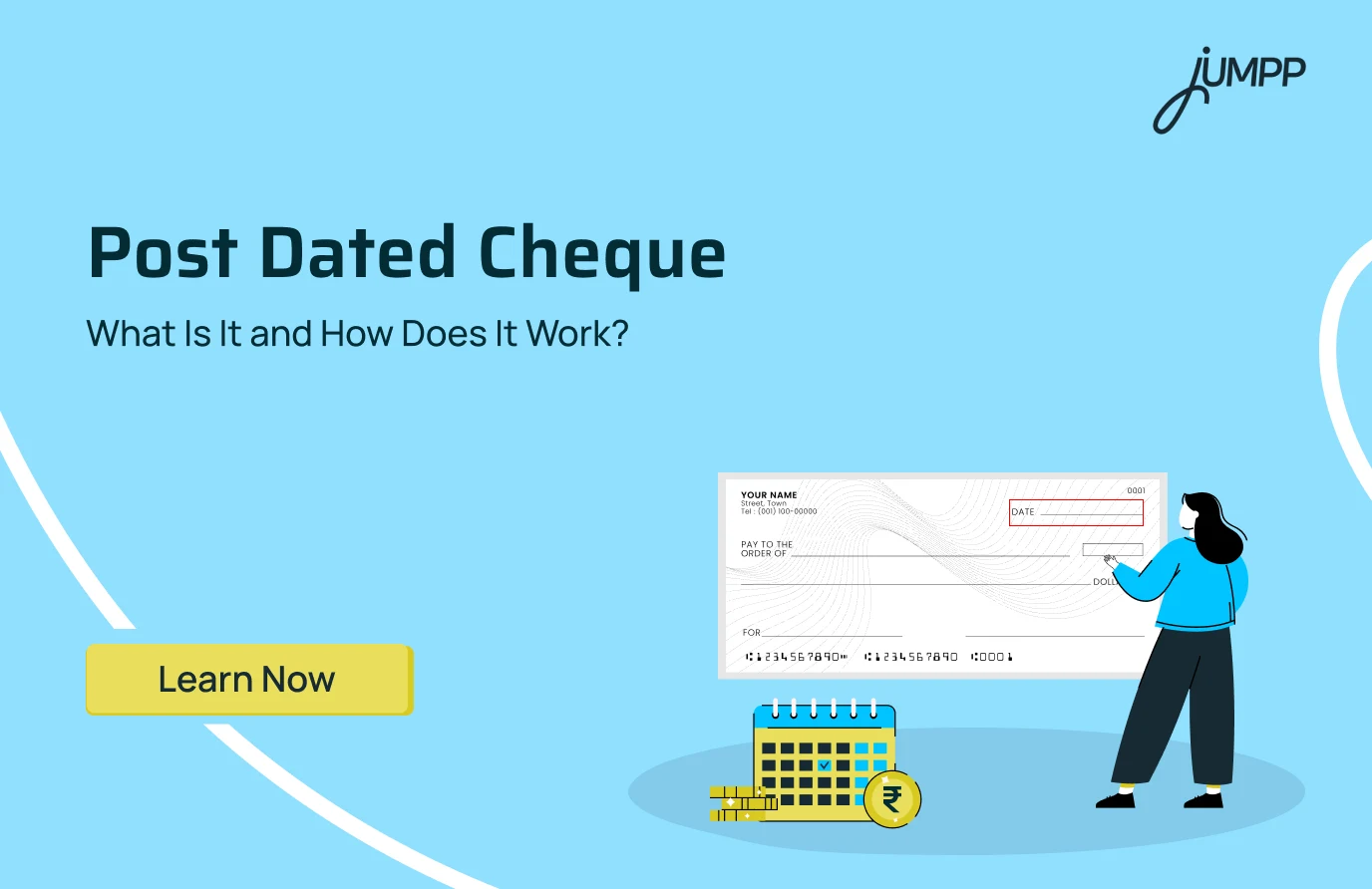
Although digital payment methods such as UPI, NEFT and IMPS have become increasingly popular, cheques continue to play an important role in banking and business transactions. Among the different types of cheques, a PDC is widely used for future payments such as loan EMIs, rent, supplier payments and instalment-based purchases. It allows the payer to issue a cheque today while authorising the bank to process it only on a specified future date.
Whether you are taking a loan, paying rent or managing business payments, understanding how a PDC works can help you avoid payment delays and cheque bounce issues.
What is a Post-Dated Cheque?
The PDC’s full form is Post Dated Cheque.
A post-dated cheque is a cheque that carries a future date. This means the cheque is issued today, but it can only be processed on or after the date mentioned on it.
For example, if a cheque is issued on 10 July but dated 10 August, it becomes payable only on or after 10 August.
How Does a Post-Dated Cheque Work?
The process generally involves the following steps:
- The drawer writes the cheque with a future date.
- The cheque is handed over to the payee.
- The payee keeps the cheque until the mentioned date.
- On or after the specified date, the payee deposits the cheque with the bank.
- The bank verifies the cheque details and processes the payment if sufficient funds are available in the issuer’s account.
If the cheque is presented before the future date, the bank generally does not process it because the payment date has not yet arrived.
Post-Dated Cheque Example
Suppose Rahul purchases furniture worth ₹50,000 but requests the seller to receive payment after his salary is credited next month.
Instead of paying immediately, Rahul issues a cheque dated one month later. Although he hands over the cheque today, the seller deposits it only on the future date mentioned on it.
What are the Uses of a Post Dated Cheque
There are several uses of a post-dated cheque in personal and business finance.
Some of the most common uses include:
- Loan EMI payments
- House rent payments
- Business and supplier payments
- Security deposits
- Instalment purchases
- Commercial agreements
- Educational fee payments
- Office or warehouse lease payments
Because the payment is scheduled for a future date, both parties have clarity about when the amount will be paid.
Using a post-dated cheque for loan EMIs? Learn the FOIR Full Form and understand how lenders assess your repayment capacity before approving a loan.
How to Write a Post-Dated Cheque
Here are the simple steps that you must follow to write a post-dated cheque-
- Write the future date clearly in the date field.
- Mention the payee’s name correctly.
- Write the amount in both words and figures.
- Avoid overwriting or making corrections.
- Sign the cheque using the same signature registered with the bank.
- Ensure sufficient funds are available in your account before the cheque date.
Writing the cheque carefully reduces the chances of rejection due to incorrect details.
How to Issue a Post-Dated Cheque
Issuing a post-dated cheque is easy. Just follow these steps:
- Write the payee’s name – Enter the name of the person or organisation receiving the payment.
- Enter the amount – Write the amount in both numbers and words.
- Mention a future date – Write the date on which the cheque can be deposited. Do not use today’s date.
- Sign the cheque – Sign it exactly as per your bank records.
Note: The recipient can deposit the cheque only on or after the date written on it.
What are the Advantages of a Post Dated Cheque
There are several advantages of a post-dated cheque for both individuals and businesses. It provides flexibility in managing future payments while offering assurance to the recipient.
Some of the key benefits include:
- Helps plan future payments: The payer can schedule payments for a later date without making an immediate transfer.
- Improves cash flow management: Businesses and individuals can better manage their finances by aligning payments with expected income.
- Provides payment assurance: A post-dated cheque acts as a commitment that the payment will be made on the specified date.
- Useful for instalment payments: Banks and financial institutions often accept PDCs for loan EMIs and other instalment-based payments.
- Widely accepted: Many landlords, suppliers and service providers continue to accept post-dated cheques for recurring payments.
Post Dated Cheque Validity
A post-dated cheque is valid for 3 months from the date written on the cheque.
For example, if a cheque is dated 15 September, it can generally be presented for payment until 14 December. If it is presented after the validity period, the bank may refuse to process it, and the cheque may need to be reissued.
- The 3-month validity starts from the future date mentioned on the cheque, not the date it was issued.
- If the cheque is deposited before the date written on it, the bank may reject it or process it only on the due date.
- If it is not deposited within 3 months, it becomes a stale cheque and cannot be encashed.
- If a cheque bounces due to insufficient funds after the due date, the issuer may face legal action under the Negotiable Instruments Act, 1881.
What is PDC Payment?
A PDC payment refers to a payment made using a post-dated cheque. Instead of transferring money immediately, the payer issues a cheque with a future date, allowing the recipient to deposit it only when the specified date arrives.
Alternatives to a Post Dated Cheque
While post-dated cheques remain useful, several digital payment options now offer greater convenience and automation. These alternatives to post-dated cheques reduce paperwork and minimise the chances of delayed or missed payments.
| Alternative | Best Used For |
| Standing Instructions | Recurring bank payments |
| NACH Auto Debit | Loan EMIs and SIPs |
| UPI AutoPay | Subscription and utility bill payments |
| NEFT | Scheduled bank transfers |
| RTGS | High-value transactions |
| IMPS | Instant fund transfers |
These digital methods allow payments to be processed automatically on the due date without issuing physical cheques.
Know the difference between IMPS, NEFT, and RTGS!

Difference Between a Regular Cheque and a Post Dated Cheque
A regular cheque can be deposited or encashed immediately after it is issued. A post-dated cheque (PDC) can only be deposited or encashed on or after the future date written on the cheque.
| Particular | Regular Cheque | Post Dated Cheque |
| Date | Current date | Future date |
| Payment | Can be processed immediately | Can be processed only on or after the future date |
| Common Uses | Everyday payments | Loan EMIs, rent, business payments |
| Purpose | Immediate transfer of funds | Scheduled future payment |
Common Mistakes to Avoid While Issuing a Post Dated Cheque
Although issuing a post-dated cheque is a simple process, certain mistakes can lead to payment delays or cheque rejection.
Avoid these common errors:
- Mentioning an incorrect future date.
- Writing different amounts in words and figures.
- Using a signature that does not match the bank’s records.
- Leaving overwriting or corrections on the cheque.
- Issuing the cheque without maintaining sufficient funds.
- Forgetting to verify the payee’s name before handing over the cheque.
Reviewing these details before issuing a cheque can help prevent unnecessary complications.
Manage Your Money Better with jUMPP
Managing finances becomes easier when all your accounts, investments and expenses are organised in one place.
With the jUMPP app, you can open a zero-balance savings account, can track your savings, monitor your spending, calculate your net worth and manage your finances through an easy-to-use dashboard. Whether you are planning future payments or working towards your financial goals, jUMPP helps you stay organised and make smarter financial decisions.
Download the jUMPP app and take a smarter approach to managing your money.
Disclaimer- The rankings and figures in this article have been compiled from multiple verified reports, credible news sources, and public financial data available as of 2026.
All values are approximate and may vary with newer updates, revisions, or changes in official records.
FAQs
A post-dated cheque (PDC) is a cheque issued with a future date instead of the current date. It can only be processed by the bank on or after the date mentioned on the cheque.
Yes, you can accept a post-dated cheque as a commitment for future payment. However, it cannot be encashed before the date written on it.
Issue it like a regular cheque, but write a future date in the date field. Ensure all other details are accurate before signing it.
Enter the future date, payee’s name, amount in words and figures, and sign the cheque. You can also cross it as “Account Payee” for added security.
A post-dated cheque becomes valid on the date mentioned on it. In India, it remains valid for 3 months from that date.
Yes, a bank cheque can be post-dated if the issuer writes a future date on it. It will only be honoured on or after that date.
A 12 post-dated cheque arrangement involves issuing 12 cheques with different future dates, usually one for each month. It is commonly used for rent or EMI payments.
Yes, post-dated cheques are widely used for scheduled payments such as rent, loan EMIs, and business transactions. The recipient can deposit the cheque on the specified date.
No, a post-dated cheque cannot be deposited before the date mentioned on it. Banks will reject it if it is presented early.