FOIR Full Form: What It Means and How It Affects Your Loan Approval
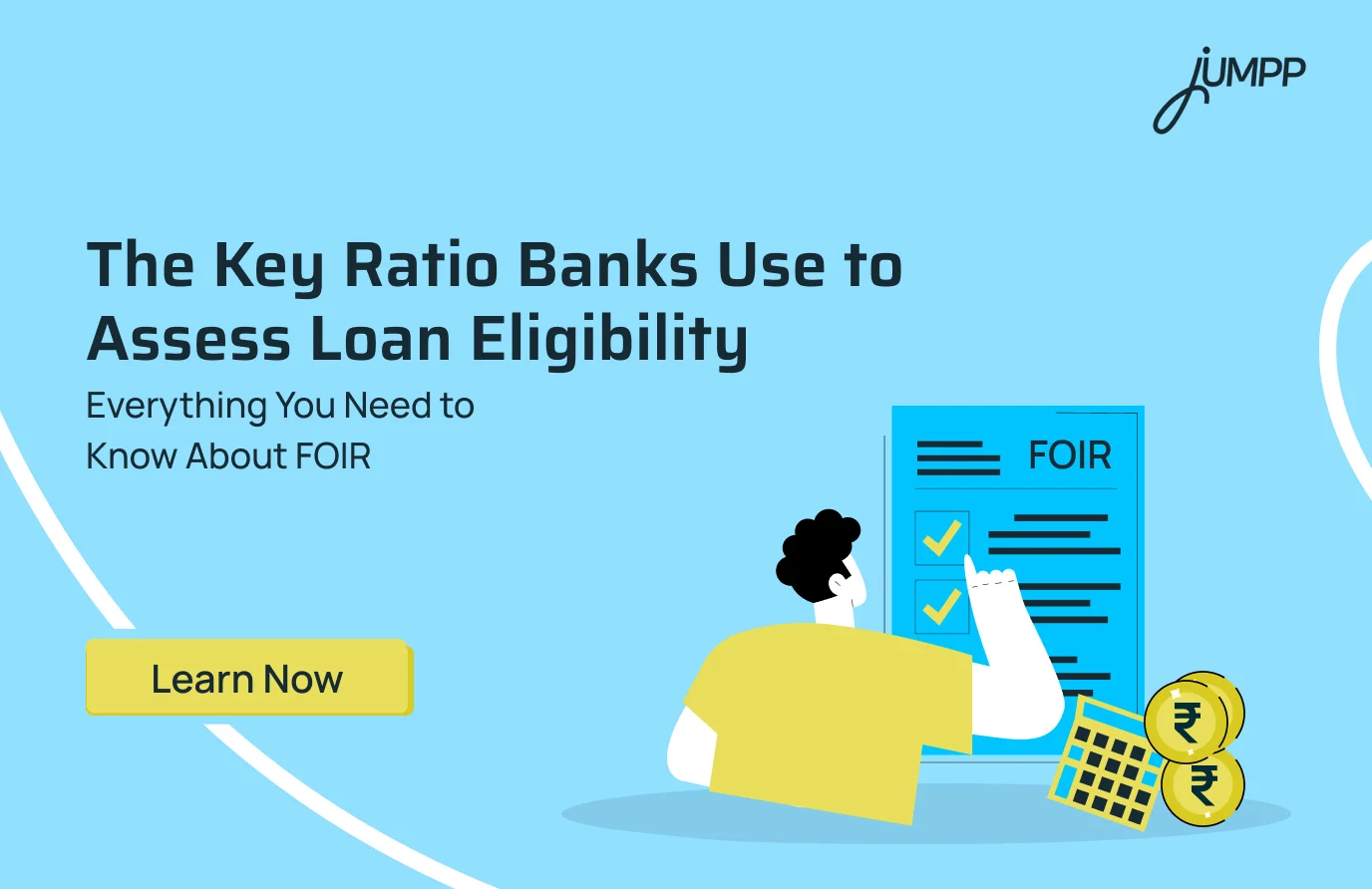
Managing debt responsibly is one of the most important aspects of financial planning. Before approving a loan, lenders need to determine whether an applicant can comfortably repay the borrowed amount without facing financial stress. This is where FOIR comes into the picture.
In this article, learn about FOIR in banking in detail.
What is FOIR?
FOIR stands for Fixed Obligation to Income Ratio. It is a key metric used by banks and non-banking financial companies (NBFCs) to assess a borrower’s repayment capacity.
It indicates the proportion of an individual’s monthly income that is already committed towards fixed financial obligations, helping lenders decide whether extending additional credit is financially viable.
- A lower FOIR generally indicates stronger repayment capacity.
- A higher FOIR may suggest that a significant portion of income is already tied up in existing obligations.
Fixed obligations considered while calculating FOIR may include:
- Home loan EMIs
- Personal loan EMIs
- Car loan EMIs
- Credit card minimum dues
- House rent
- Insurance premiums
- Other recurring debt payments
Want to manage your debt better before applying for a new loan? Explore this article on how to pay off debt fast and learn practical strategies to reduce financial obligations and improve your borrowing capacity.
Most lenders prefer borrowers with an FOIR between 40% and 55%, although the acceptable limit may vary depending on the lender’s policies, income level, and credit profile.

FOIR Formula
The formula used to calculate FOIR is:
FOIR = (Total Monthly Fixed Obligations ÷ Monthly Income) × 100
Where:
Total Monthly Fixed Obligations: Sum of all recurring financial commitments.
Monthly Income: Gross or net monthly income, depending on the lender’s assessment criteria.
How to Calculate FOIR
Calculating FOIR involves the following steps:
Step 1: Calculate Total Monthly Obligations
Add all your recurring financial commitments, including EMIs, rent, credit card payments, and insurance premiums.
Step 2: Determine Monthly Income
Calculate your gross monthly income or take-home income as required by the lender.
Monthly income may include:
- Salary and wages
- Business income
- Rental income
- Other regular income sources accepted by the lender
Step 3: Apply the Formula
Divide total monthly obligations by monthly income and multiply the result by 100.
The final percentage represents your Fixed Obligation to Income Ratio.
FOIR Calculation with Example
Suppose an individual has the following monthly commitments:
- Monthly salary: ₹80,000
- Home loan EMI: ₹7,000
- Car loan EMI: ₹5,000
- Rent payment: ₹8,000
- Other fixed expenses: ₹8,000
Total monthly obligations:
₹7,000 + ₹5,000 + ₹8,000 + ₹8,000 = ₹28,000
Applying the formula:
FOIR = (₹28,000 ÷ ₹80,000) × 100
FOIR = 35%
This means that 35% of the individual’s monthly income is already committed towards fixed obligations, while the remaining 65% is available for savings, investments, and servicing additional debt.
How Do Banks Calculate FOIR?
Banks calculate FOIR by considering a borrower’s total fixed monthly obligations and gross monthly income. They analyse existing EMIs, credit card dues, rent, and other recurring liabilities to determine whether the applicant has sufficient disposable income to service a new loan.
FOIR is only one indicator of financial health. Check out this guide on financial health indicators to understand the key metrics that can help you make smarter borrowing and money management decisions.
Why is FOIR Important for Loan Approval?
FOIR is one of the most important parameters used during loan underwriting because it helps lenders assess repayment capacity and minimise credit risk.
- Determines Loan Eligibility
Lenders evaluate whether the borrower has sufficient disposable income to manage a new loan along with existing financial commitments.
- Helps Decide the Loan Amount
A lower FOIR may improve the chances of securing a higher loan amount, while a higher FOIR can limit borrowing capacity.
- Reduces the Risk of Default
FOIR enables lenders to identify borrowers who may struggle to repay additional debt due to excessive financial obligations.
- Encourages Responsible Borrowing
For borrowers, monitoring FOIR can prevent overleveraging and promote better financial planning.
Generally, a high FOIR may result in:
- Lower loan eligibility
- Reduced the sanctioned amount
- Higher chances of loan rejection
- Stricter credit assessment
On the other hand, a lower FOIR may improve:
- Chances of loan approval
- Access to higher borrowing limits
- Better borrowing terms in certain cases
FOIR vs DTI: What is the Difference?
DTI includes all recurring debts and certain variable expenses, while FOIR primarily focuses on fixed financial obligations such as EMIs and rent and is widely used by Indian lenders to evaluate loan eligibility.
| Basis | FOIR | DTI |
| Full Form | Fixed Obligation to Income Ratio | Debt-to-Income Ratio |
| Usage | Commonly used in India | Widely used internationally |
| Includes | Fixed obligations and recurring liabilities | Fixed and variable debts |
| Purpose | Assess repayment capacity | Assess overall debt burden |
Is FOIR the Same as a Credit Score?
No. FOIR and credit score measure different aspects of financial health. FOIR evaluates the percentage of income already committed towards fixed obligations, whereas a credit score reflects a borrower’s creditworthiness based on repayment history and credit behaviour. Lenders generally consider both metrics while assessing loan applications.
How to Improve Your FOIR Before Applying for a Loan
If your FOIR is high, you must consider taking the following steps before applying for a new loan:
- Pay off existing debt wherever possible.
- Reduce outstanding credit card balances.
- Avoid taking multiple loans simultaneously.
- Increase your income through additional sources of earnings.
- Consolidate high-interest debt if feasible.
- Delay non-essential borrowing until your financial obligations reduce.
A healthy FOIR can improve your credit profile and increase your chances of securing a loan on favourable terms.
Disclaimer- The rankings and figures in this article have been compiled from multiple verified reports, credible news sources, and public financial data available as of 2026.
All values are approximate and may vary with newer updates, revisions, or changes in official records.
FAQs
FOIR stands for Fixed Obligation to Income Ratio.
FOIR refers to the percentage of a borrower’s monthly income that is already committed towards fixed financial obligations, such as EMIs, rent, and credit card dues.
FOIR is calculated using the following formula: FOIR = (Total Monthly Fixed Obligations ÷ Monthly Income) × 100
Most lenders generally prefer an FOIR between 40% and 55%, although the acceptable range may vary depending on the borrower’s profile and the lender’s policies.
Yes. A high FOIR can reduce loan eligibility, lower the sanctioned loan amount, and increase the chances of loan rejection.
Most banks and NBFCs use FOIR as one of the key parameters while assessing loan applications, along with factors such as credit score, income stability, and employment history.