Monthly Expense Tracking Checklist: Simple Way to Control Your Spending
According to a 2024 study by Home Credit India titled Great Indian Wallet, conducted across 17 cities including Delhi-NCR, Mumbai, Bengaluru, and Chandigarh, the average personal monthly income of lower-middle-class individuals stands at around Rs 33,000, while monthly expenses average Rs 19,000. That gap sounds healthy until you realise most people have no idea what makes up those Rs 19,000. The groceries, the Swiggy orders, the random Amazon purchases, the “small” UPI transfers that add up to something embarrassingly large, it all disappears before salary credit day arrives. This is where a monthly expense tracking checklist changes everything.
What is the Monthly Expense Tracking Checklist
A monthly expense tracking checklist involves logging all income, categorising expenditures (housing, food, transportation), comparing actual spending against a budget, and identifying areas for saving. Essential steps include using tools like Excel or Google Sheets to log transactions daily, reviewing subscriptions monthly, and auditing high-cost categories to ensure alignment with financial goals.
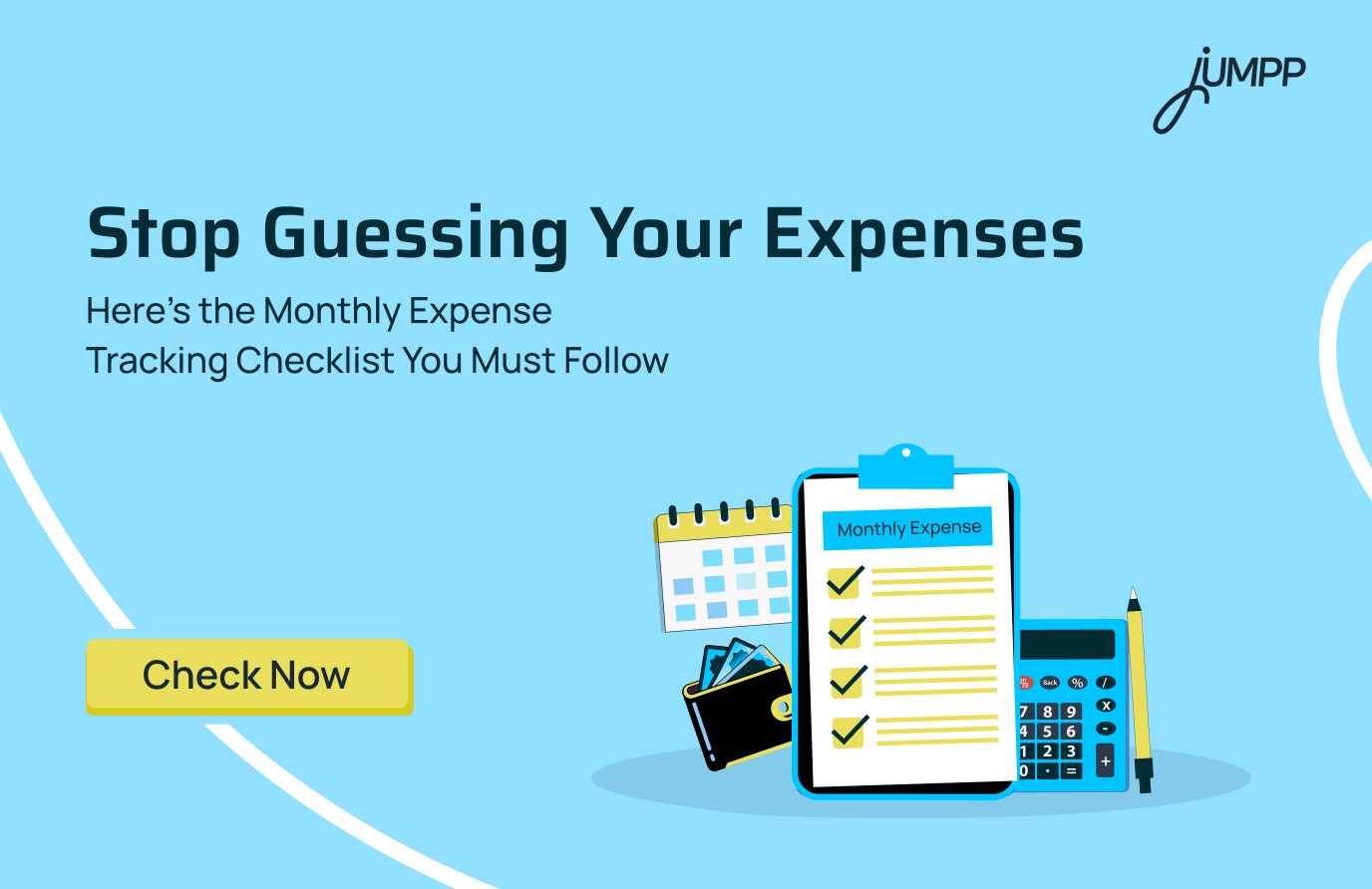
Here is one monthly expense tracking checklist that you must follow!
Monthly Expense Tracking Checklist (10 Things Indians Actually Miss)
Here is a simple-to-use personal finance checklist for you-
| Money Management Checklist | What to Track |
| UPI Small Payments | Daily small spends like tea, snacks, and quick transfers |
| Auto-Debit Subscriptions | OTT, apps, memberships, storage plans |
| Family Contributions | Money sent home, shared bills, support payments |
| Weekend Spending | Dining out, shopping, outings |
| Credit Card Payments | Minimum due vs full payment |
| Annual Expenses | Insurance, yearly subscriptions split monthly |
| Cash Spending | Local purchases, offline payments |
| Online Impulse Purchases | Sale purchases, discount-driven buying |
| Transport Costs | Fuel, cabs, metro, autos |
| Unexpected Expenses | Gifts, events, emergencies |
1. UPI “small payments” that quietly add up
Those ₹20, ₹50, ₹100 spends actually seem small. But you should not ignore the fact that they are deducted from your monthly income.
A tea here, a snack there, a quick add-on during an order, none of it feels like real spending. But when repeated daily, these small transactions become one of the biggest reasons you are not able to calculate your monthly expenditure.
2. Auto-debit subscriptions you forgot existed
Most people sign up for subscriptions with the intention of using them regularly. But over time, they become background expenses. OTT platforms, music apps, storage plans and fitness memberships continue charging silently every month. Since these are automated, they rarely get reviewed.
3. Family contributions that are never tracked
You may be ending money home, or paying a bill for parents, or covering shared household expenses. This is often because of an emotional connection. These amounts are rarely included in any expense tracking checklist. However, they form a consistent part of the monthly outflow and need to be counted for in your daily expense tracking checklist.
4. Weekend spending
After a long week, who doesn’t want to spend on outings, food, or shopping?
But they are rarely planned in advance. Over time, these “deserved” expenses accumulate and quietly stretch your monthly budget beyond what you expected.
5. Credit card “minimum due” trap
Paying only the minimum due gives a temporary sense of relief and control.
However, the remaining balance continues to attract high interest. This actually ends up increasing your financial burden over time.
This is one of the most overlooked gaps in any money management checklist.
6. Annual payments broken into monthly impact
Expenses like insurance premiums, subscriptions, or memberships do not occur every month. This is why we tend to ignore them.
However, they still affect your yearly budget. That is why you should distribute them across months for accurate tracking.
Without this adjustment, your monthly expense tracking checklist will always feel incomplete.
7. Cash spending that never gets recorded
Even in a digital-first economy, cash is still widely used for small purchases, local vendors, and daily needs. These expenses rarely get tracked because there is no digital record to refer back to.
As a result, a portion of your spending remains unaccounted for. This creates a big gap in your overall financial picture.
8. Impulse online shopping during sales
Festive sales and limited-time offers create a sense of urgency that makes spending feel like a smart decision. Discounts give us the illusion of saving money. Result?
These impulse decisions often go untracked or underestimated in a monthly budget checklist.
Expense tracking is just the start. Learn how advance tax works so you can plan your income and payments more efficiently.
9. Transport costs that fluctuate daily
Fuel, cabs, autos, and metro rides may not seem significant individually. But they vary every day and are rarely monitored closely.
Because these are routine expenses, they often escape attention in a daily expense tracker. Over a month, they form a substantial part of total spending, which most of us usually ignore.
10. Random “just this once” expenses
There are always unexpected costs like gifts, office contributions, last-minute plans, or small emergencies. Each one feels like a one-time situation. However, they occur regularly enough to impact your finances. Ignoring these in your expense tracking checklist can lead to consistent underestimation of your monthly spending.
How to Track Monthly Expenses in Real Life
How do you track monthly expenses without turning it into a task you will abandon in a week?
Effective tracking requires reviewing bank statements, setting a realistic budget, and auditing spending weekly to identify emotional triggers and areas to save.
Using apps for convenience and automation
If most of your spending happens through UPI, cards, or net banking, apps make this process almost effortless. They automatically record transactions and categorise spending.
Explore jUMPP- one of the best monthly expense tracker apps in India!
Using spreadsheets
If you are someone who wants to understand your money deeply, a simple Excel or Google Sheet works better. You can customise categories, track patterns, and actually see where your income is going over time.
Using bank statements
Sometimes, the simplest approach is the most honest one. Going through your bank and credit card statements at the end of the month shows you exactly what happened.
Tracking expenses is just one part of your journey. Explore these financial health indicators to see how strong your overall money management actually is.
Expense Tracking Tips That Can Help You
You should use a daily expense tracker, keep your categories simple, record every transaction, review spending weekly, and stay consistent with one method. You need to focus on small expenses and the big three costs to control your monthly budget effectively.
Here are the most common expense tracking tips for you-
- Start with a daily expense tracker
Track every small expense daily, even ₹20 or ₹50 spends. Missing small entries is the biggest reason your totals never match. - Keep categories simple
Do not overcomplicate with too many categories. Use broad heads like food, transport, bills, and personal to stay consistent. - Track at the same time every day
Pick a fixed time, such as night or after dinner, to update your expenses. This builds a habit and reduces missed entries. - Review weekly, not just monthly
Waiting till the month-end makes data overwhelming. Weekly reviews help you spot overspending early. - Use one method only
Do not switch between apps, notes, and spreadsheets. Choose one system and stick to it for at least a month. - Include cash and UPI both
Most people forget cash expenses or small UPI transfers. These are the hidden leaks in your monthly budget. - Set a small spending check rule
Before any non-essential expense, pause and question if it is necessary. This works similarly to the 7-day rule and reduces impulse spending. - Focus on the big 3 expenses
Housing, food, and transport impact your budget the most. Optimising these gives faster results than cutting small costs.
Disclaimer– The rankings and figures in this article have been compiled from multiple verified reports, credible news sources, and public financial data available as of 2026.
All values are approximate and may vary with newer updates, revisions, or changes in official records.
Monthly Expense Tracking Checklist – FAQs
A monthly budget checklist is a step-by-step method to organise income, track expenses, and allocate savings. This ensures that your spending stays aligned with your financial goals.
You can start by calculating your net monthly income, then list fixed and variable expenses, followed by savings and debt payments. Finally, compare totals and adjust spending to ensure your budget remains balanced.
It helps prevent overspending, identifies unnecessary expenses, and ensures consistent savings.
The 50-30-20 rule suggests that you should allocate 50 percent of your income to needs like rent and bills, 30 percent to wants like lifestyle spending, and 20 percent to savings and investments.
In India, the top five monthly expenses usually include housing or rent, groceries, transport or fuel, utility bills, and loan EMIs or credit card payments.
To track expenses in Excel, you must create columns for date, category, amount, and payment method, then update entries daily or weekly. Using basic formulas and charts can help you analyse spending patterns and manage your monthly budget effectively.
Track monthly expenses by recording every income and spending category in a simple sheet or app and reviewing it weekly. A structured checklist helps you capture fixed, variable, and hidden expenses consistently.
The 10 common expense types include housing, utilities, food, transport, insurance, healthcare, debt repayments, savings, personal spending, and entertainment.
The 7-day rule means waiting seven days before making a non-essential purchase to avoid impulse spending. It helps you prioritise needs over wants and improves financial discipline.
Write daily expenses by noting every transaction with date, amount, and category in a notebook or tracker. This habit builds awareness and makes monthly tracking more accurate.