What is First Party Insurance in India? Meaning, Benefits and How to Buy Online
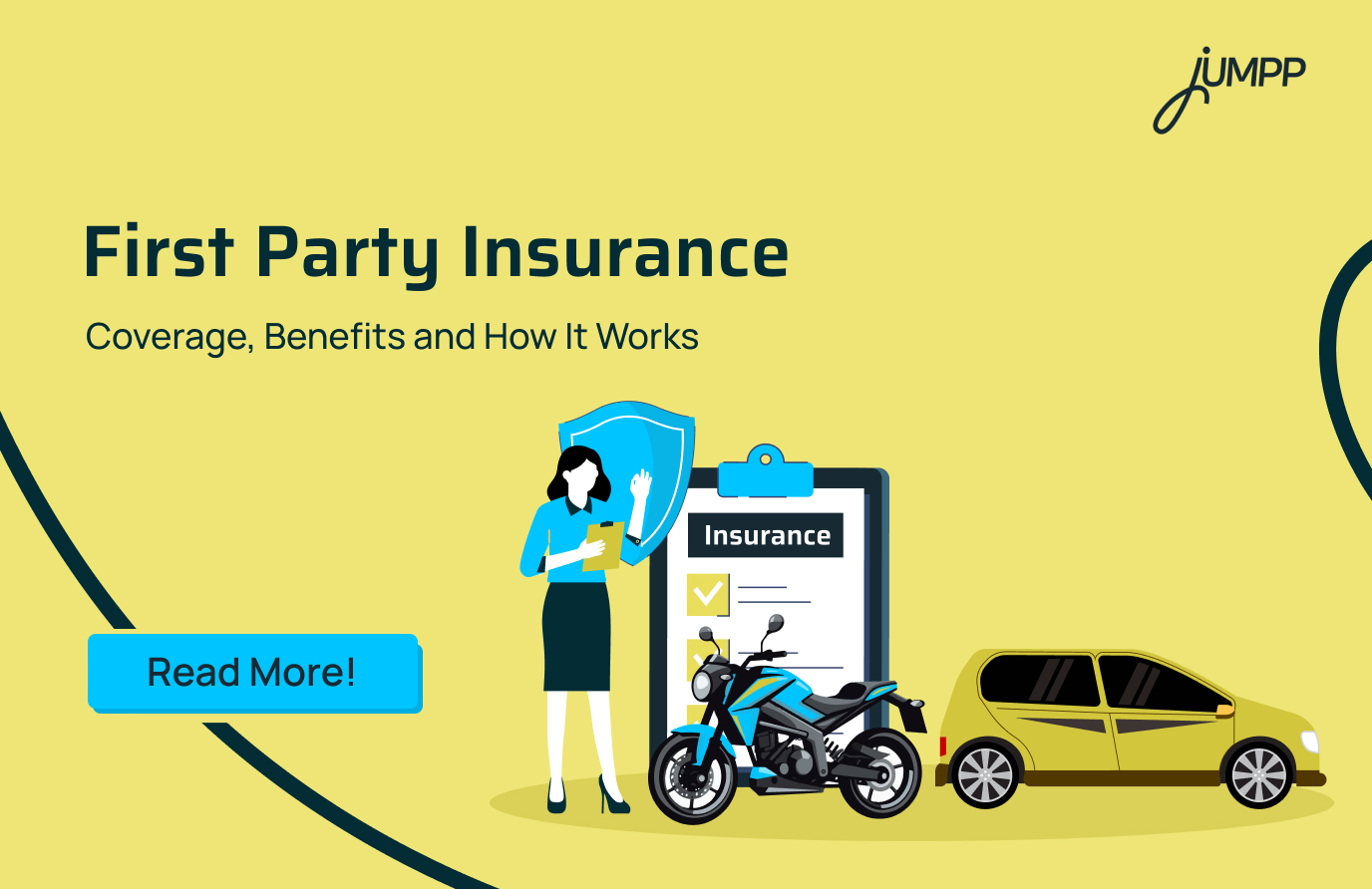
If your car gets damaged today, who pays for it? This is where first-party insurance becomes important. It is designed to cover your repair costs, protect against theft, and reduce the financial burden that comes with unexpected situations.
What is First-Party Insurance?
First-party insurance is a type of vehicle insurance that covers damage or loss to your own vehicle due to accidents, theft, fire, or natural disasters, regardless of who is at fault. It is optional but important for protecting your vehicle and avoiding out-of-pocket repair costs.
Key Features of First-Party Insurance
- It takes care of your repair bills: If your vehicle is damaged in an accident, the insurance helps cover the cost, so you do not have to pay everything yourself
- It protects you against theft: If your vehicle is stolen, you receive compensation based on its insured value
- It covers natural disasters: Situations like floods, fires, or earthquakes are included, which can otherwise be very expensive to handle
- It includes personal safety cover: You get financial support in case of serious injury or loss of life of the vehicle owner
- It gives you flexibility with add-ons: You can enhance your policy with options like zero depreciation or engine protection based on your needs
- It rewards careful driving: If you do not make claims, you get a discount on your premium over time through a No Claim Bonus
First-Party Insurance Inclusions vs Exclusions
First-party insurance covers damages to your own vehicle or property, rather than liability for damages caused to others.
| First-party insurance Inclusions (What is Covered) | First-party insurance Exclusions (What is Not Covered) |
| Accidental damage to your vehicle due to collisions or crashes | Driving without a valid driving licence |
| Damage caused by natural disasters like floods, earthquakes, and storms | Driving under the influence of alcohol or drugs |
| Theft, burglary, vandalism, and riots | Normal wear and tear or ageing of the vehicle |
| Loss due to fire, self-ignition, or explosion | Mechanical or electrical breakdowns |
| Personal accident cover for owner-driver (injury, disability, or death) | Consequential damage not directly caused by the accident |
| Add-ons like zero depreciation, engine protection, and roadside assistance | Misuse of a vehicle, such as racing or commercial use, when not insured for it |
What are the Benefits of First-Party Insurance
First-party insurance protects you financially by covering damage to your own car due to accidents, theft, natural disasters, and fire. It also reduces out-of-pocket repair costs and provides broader security compared to basic third-party cover.
Key benefits of first-party insurance:
- It protects your own vehicle completely: Whether it is an accident, fire, or damage due to external factors, your repair costs are covered
- It saves you from sudden large expenses: Repairs or total loss of a vehicle can be expensive, and this cover ensures you do not have to bear that burden alone
- It covers theft and unexpected losses: If your vehicle is stolen or damaged due to vandalism, you receive compensation based on its insured value
- It supports you during emergencies: Natural disasters like floods or earthquakes are unpredictable, and this insurance ensures you are financially prepared
- It includes personal accident protection: You get financial support in case of injury, disability, or loss of life of the owner-driver
- It allows customisation based on your needs: You can add features like zero depreciation or roadside assistance for better coverage
- It ensures faster and smoother claims: Since you deal directly with your insurer, the process is usually quicker and more straightforward
- It gives long-term savings benefits: With a No Claim Bonus, your premium reduces over time if you do not raise claims
What are First Party, Second Party, and Third Party in Insurance?
In any insurance contract, there are three key parties involved, each with a clear role in how the policy works and who receives the benefit.
First Party (The Insured):
- This is you, the person who buys the insurance policy
- You pay the premium to stay covered
- Your life, vehicle, or property is what the policy protects
- In first-party claims, you receive the compensation directly
Second Party (The Insurer):
- This is the insurance company that provides the coverage
- It could be companies like HDFC ERGO or ICICI Lombard
- They assess risk, issue the policy, and settle claims
- They are responsible for paying compensation as per policy terms
Third Party (The Affected Person):
- This is any other person who is impacted by your actions
- They are not part of the insurance contract
- For example, if your car damages someone else’s vehicle or injures a pedestrian, they become the third party
- In third-party insurance claims, the compensation is paid to them
Simple way to understand it:
- First party is you
- The second party is the insurer
- A third party is anyone else affected by you
When you start thinking about protection and assets, it is worth looking at how wealth is actually built. Discover who is leading the financial landscape with the richest person in Punjab.
Difference Between First-Party and Third-Party Insurance
First-party insurance (Own Damage/Comprehensive) covers damages to your own vehicle or property, while third-party insurance covers legal liabilities for injury or damage caused to another person. First-party is optional (but recommended), whereas third-party is legally mandatory in most regions
| Feature | First-Party Insurance (Own Damage) | Third-Party Insurance (Liability Only) |
| Coverage focus | Protects your own vehicle from damage, theft, or disasters | Covers damage or injury caused to another person or their property |
| Who gets the claim | You, as the policyholder | The third party affected by your vehicle |
| Legal requirement in India | Optional but strongly recommended | Mandatory under the Motor Vehicles Act |
| Premium cost | Higher because it offers wider protection | Lower and regulated by IRDAI |
| Add-ons | Available, such as zero depreciation and engine protection | Not available |
| Claim process | You raise the claim directly with your insurer | The third party files the claim for compensation |
| Financial protection | Covers your repair or replacement costs | Does not cover any damage to your own vehicle |
Want to understand liability coverage in detail? Read our complete guide on what is third party insurance to learn how it protects you from legal and financial risks on the road.
How to Buy Car Insurance and Which One to Choose
If you are buying or renewing car insurance, the real decision is not just how to buy, but whether you are only following the law or actually protecting your own vehicle and money.
How to buy or renew car insurance online:
- Enter your vehicle details: Add your registration number or select a new car option
- Choose the type of policy: Select between third-party only or comprehensive insurance
- Pick relevant add-ons: Options like zero depreciation, engine protection, and roadside assistance improve coverage
- Check IDV and NCB: Review your car’s insured value and any No Claim Bonus you have earned
- Make payment online: Complete the process through UPI, debit card, credit card, or net banking
- Download policy instantly: Your policy document is issued immediately after payment
Which car insurance should you choose:
- Choose third-party insurance if: You only want to meet the legal requirement at the lowest cost
- Choose first-party (own damage) or comprehensive insurance if: You want full protection for your car against accidents, theft, and disasters
- For most car owners, A comprehensive policy is the better choice because it includes both first-party and third-party coverage
Simple decision rule:
- If you only want to stay legally compliant, third-party insurance is enough
- If you want real financial protection for your car, choose comprehensive insurance with first-party cover
Practical tip: Always renew your policy before expiry to keep your No Claim Bonus intact, which can reduce your premium significantly over time
Financial protection is not just about insurance; it is also about understanding how money flows into your life. Explore how government-backed schemes like Subhadra Yojana support financial security.
First Party Insurance Meaning – FAQs
First-party car insurance covers damage to your own vehicle and protects your expenses, while third-party car insurance covers damage or injury caused to others and is mandatory by law in India.
First-party insurance offers wider protection by covering your own car damage along with third-party liability. Third-party insurance is cheaper but only covers damage to others.
It is not legally mandatory in India, but it is strongly recommended for financial protection. Without it, you must bear your own vehicle repair costs.
First party is you, the policyholder; second party is the insurance company, and third party is any external person affected. Insurance mainly covers liability towards the third party and, optionally, your own damage.
The first party is the vehicle owner or policyholder who purchased the insurance. They are the ones making the claim under their policy.
A first-party claim is when you claim insurance for damage to your own vehicle. It includes accidents, theft, and natural disasters under comprehensive coverage.
You can check your policy document or verify details on the VAHAN portal using your vehicle number. It clearly mentions whether your policy is third-party or comprehensive.
No, only third-party insurance is compulsory under the Motor Vehicles Act in India. First-party coverage is optional but financially important.
Yes, it is worth it if you want protection against high repair costs and unexpected damage. It provides peace of mind beyond basic legal compliance.
Yes, you can legally drive with third-party insurance in India. However, it will not cover any damage to your own vehicle.