What is Advance Tax- Meaning, Rules, and Who Needs to Pay in 2026
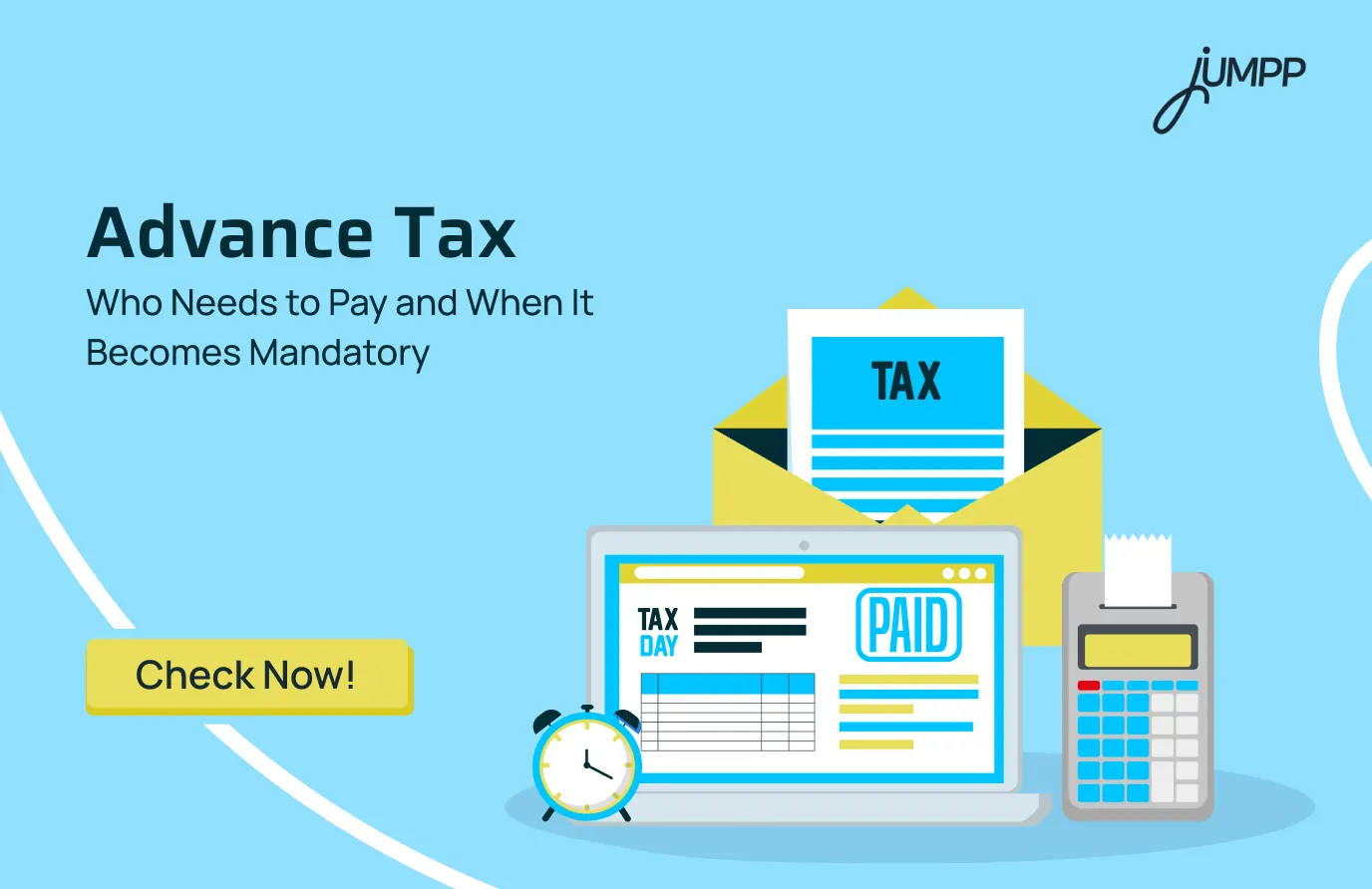
Many taxpayers assume that income tax is something they need to handle only while filing returns. This assumption leads to one common mistake: delaying tax payments until the end of the year. In reality, if your tax liability crosses ₹10,000, the law requires you to pay advance tax in instalments. Missing this requirement can result in interest penalties even if you eventually pay the full tax.
In this blog, learn the concept of advance tax in detail.
What is Advance Tax in Income Tax
Advance tax, often referred to as a pay-as-you-earn system, requires taxpayers to pay income tax in instalments during the financial year instead of a single lump sum at the end.
Advance tax applies when your total tax liability exceeds ₹10,000 in a financial year.
This includes income from salary gaps, freelancing, business income, capital gains, rental income, and interest earnings. If your tax is already fully covered through TDS, you may not need to pay advance tax separately.
Who Should Pay Advance Tax
Advance tax must be paid by any individual, professional, business, or investor whose total tax liability is ₹10,000 or more in a financial year after adjusting TDS, except for eligible senior citizens without business income.
Individuals and Salaried Employees
If a salaried person has only salary income, advance tax is usually not required because TDS covers it.
However, they must pay advance tax if they earn additional income, such as:
- Rental income
- Capital gains from shares or property
- Interest from FDs or savings
- Freelance or side income
Freelancers and Professionals
Anyone earning through independent work must pay advance tax if the liability exceeds ₹10,000:
- Freelancers
- Consultants
- Doctors, lawyers, designers
This is because no TDS is deducted automatically in most cases.
Business Owners
- Proprietors
- Partnership firms
- Companies
All must pay advance tax if their estimated annual tax liability exceeds ₹10,000.
This includes those under presumptive taxation schemes (Section 44AD/44ADA).
Investors and Traders
If income comes from:
- Capital gains (stocks, mutual funds, property)
- Dividends
- Interest income
Then advance tax applies once the ₹10,000 threshold is crossed.
NRIs (Non-Resident Indians)
NRIs earning income in India must pay advance tax if:
- Their total tax liability exceeds ₹10,000
- Income is taxable in India
Who Is Exempt from Advance Tax?
Senior Citizens (60+ years)
They are not required to pay advance tax if:
- They are residents
- They do not have income from a business or profession
Salaried Individuals with No Extra Income
If TDS fully covers the total tax liability, no advance tax is required.
Why Advance Tax is Paid
Advance tax is designed to align tax payments with income flow.
- Avoid penalties: Helps prevent interest under Sections 234B and 234C for delayed or insufficient payment.
- Reduced financial burden: Breaks tax into smaller quarterly payments instead of one large amount.
- Steady government revenue: Ensures continuous funds for public spending throughout the year.
- Mandatory compliance: Required if tax liability exceeds ₹10,000 after TDS, especially for business, freelance, or investment income.
When is the Advance Tax Payable 2026
The last date to pay Advance Tax for FY 2025–26 is 15 March 2026.
Advance tax Due Dates FY 2025- 26:
- 15 June: 15 percent of total tax
- 15 September: 45 percent of total tax
- 15 December: 75 percent of total tax
- 15 March: 100 percent of total tax
These percentages are cumulative and not separate payments.
How to Calculate Advance Tax
Advance tax is calculated by estimating your total income for the financial year, computing tax on it, and adjusting for taxes already paid, like TDS or TCS.
TDS vs TCS- Know the difference!
Step 1: Estimate Total Income
Add all income earned during FY 2025 to 26, including salary, business income, capital gains, rental income, and interest income.
Step 2: Deduct Eligible Deductions
Subtract deductions such as Section 80C, 80D, and standard deduction to arrive at net taxable income.
Step 3: Compute Total Tax Liability
Apply applicable income tax slab rates. The new tax regime is the default. Add surcharge if applicable and 4 percent Health and Education Cess.
Step 4: Adjust TDS and TCS
Subtract tax already deducted or collected at source.
Step 5: Final Advance Tax Payable
If the remaining tax liability exceeds ₹10,000, advance tax must be paid.
If manual calculation feels complex, you can use an advance tax calculator.
You only need to input:
- Estimated income
- Deductions
- TDS details
The calculator automatically shows your total liability and instalment-wise payments. This reduces errors and saves time.
How to Pay Advance Tax Online
The process is simple and completely digital.
How to File Advance Tax- Step-by-Step Process to Pay Online in India
- Log in to the Income Tax e-filing portal using your PAN
- Go to e File and select e Pay Tax
- Click on New Payment and choose Income Tax
- Select the correct assessment year, for example, AY 2026 to 27
- Choose Advance Tax (100) under the minor head
- Enter the tax amount along with the surcharge and cess
- Select a payment method such as net banking, UPI, or debit card
- Complete payment and download the challan receipt
This payment is reflected in Form 26AS and used during ITR filing.
What are the Benefits of Paying Advance Tax
Advance tax is often misunderstood as an obligation, but it actually supports better financial management.
- Reduced financial burden: Payments are spread across the year
- Avoids penalties: Prevents interest under Sections 234B and 234C
- Better financial planning: Encourages early income estimation
- Improved compliance: Reduces last-minute stress
- Better cash flow management: Helps freelancers and businesses plan better
Difference Between Advance Tax and Self Assessment Tax
Advance tax is paid in instalments during the financial year on estimated income (if liability > ₹10,000), while self-assessment tax is paid after the year ends but before filing the return to clear any remaining tax liability.
| Basis | Advance Tax | Self Assessment Tax |
| Meaning | Tax paid in instalments during the financial year on estimated income | Tax paid after the financial year to clear the remaining liability |
| Timing | Paid before year-end in four instalments (June, September, December, March) | Paid after 31 March but before filing ITR |
| Applicability | Mandatory if tax liability exceeds ₹10,000 | Applicable if any tax is still unpaid at the time of return filing |
| Purpose | To pay tax as you earn income throughout the year | To settle final dues after adjusting TDS and advance tax |
| Payment Structure | Paid in parts based on due dates | Paid as a one-time final payment |
| Penalties | Interest under Sections 234B and 234C for delay or shortfall | Interest on unpaid tax if not cleared before filing |
| Adjustment | Adjusted against final tax liability | Final adjustment before return submission |
| Challan Used | Challan 280 under Advance Tax (100) | Challan 280 under Self Assessment Tax (300) |
Explore tax-saving options for 2026!
Common Mistakes to Avoid in Advance Tax
Mistakes in advance tax usually happen due to poor estimation and missed deadlines, but they directly lead to interest penalties and compliance issues.
- Missing due dates: Advance tax must be paid on June 15, September 15, December 15, and March 15. Missing these leads to interest under Sections 234B and 234C.
- Underestimating income: Declaring a lower income to delay tax results in short payment. If less than 90 percent of the tax is paid, interest is charged.
- Ignoring additional income: Income from capital gains, rent, freelancing, or interest is often excluded, causing underpayment.
- Not adjusting TDS or TCS: Failing to subtract already deducted tax leads to incorrect final liability.
- Wrong assessment year selection: Choosing the wrong AY while paying tax creates filing mismatches and notices.
- Incorrect tax calculation: Not applying the correct slab rates, deductions, or exemptions leads to errors.
- Using the wrong challan: Advance tax must be paid using Challan 280; the payment may not be correctly recorded.
- Assuming no tax on fluctuating income: Even if income drops later, tax must be paid on earnings during the year.
- Not keeping proof of payment: Missing challan receipts can create issues during ITR filing or verification.
The concept of advance tax is built on a simple idea, pay tax as you earn rather than delaying it. This approach reduces financial stress, improves cash flow planning, and helps avoid unnecessary interest penalties.
For anyone with multiple income sources, freelance earnings, or business income, understanding this concept is essential. If you are beginning your first job financial planning, do not delay understanding how taxes, savings, and expenses work together.
Disclaimer– The rankings and figures in this article have been compiled from multiple verified reports, credible news sources, and public financial data available as of 2026.
All values are approximate and may vary with newer updates, revisions, or changes in official records.
Advance Tax Meaning – FAQs
Advance tax is income tax paid in instalments during the financial year instead of a lump sum at the end. It is calculated on your estimated annual income from all sources.
Advance tax does not have a separate rate, it is paid as per your applicable income tax slab. However, it must be paid in instalments: 15 percent by 15 June, 45 percent by 15 September, 75 percent by 15 December, and 100 percent by 15 March if total tax liability exceeds ₹10,000.
The final due date for advance tax is 15 March 2026 for FY 2025 to 26. Any tax paid until 31 March 2026 is still treated as advance tax.
Advance tax is paid online through the Income Tax e-filing portal using the e Pay Tax facility. It is recorded under Challan 280 with Advance Tax (100).
Any taxpayer whose total tax liability exceeds ₹10,000 after TDS must pay advance tax. Senior citizens without business income are exempt.
CA fees usually range from ₹1,000 to ₹5,000 for basic returns. Complex cases involving business income or capital gains can cost ₹10,000 or more.
Yes, you can file your ITR through the Income Tax e filing portal. The process is free and includes pre-filled data to simplify filing.