What is Fire Insurance? Policy Types, Coverage, Exclusions and Claim Process
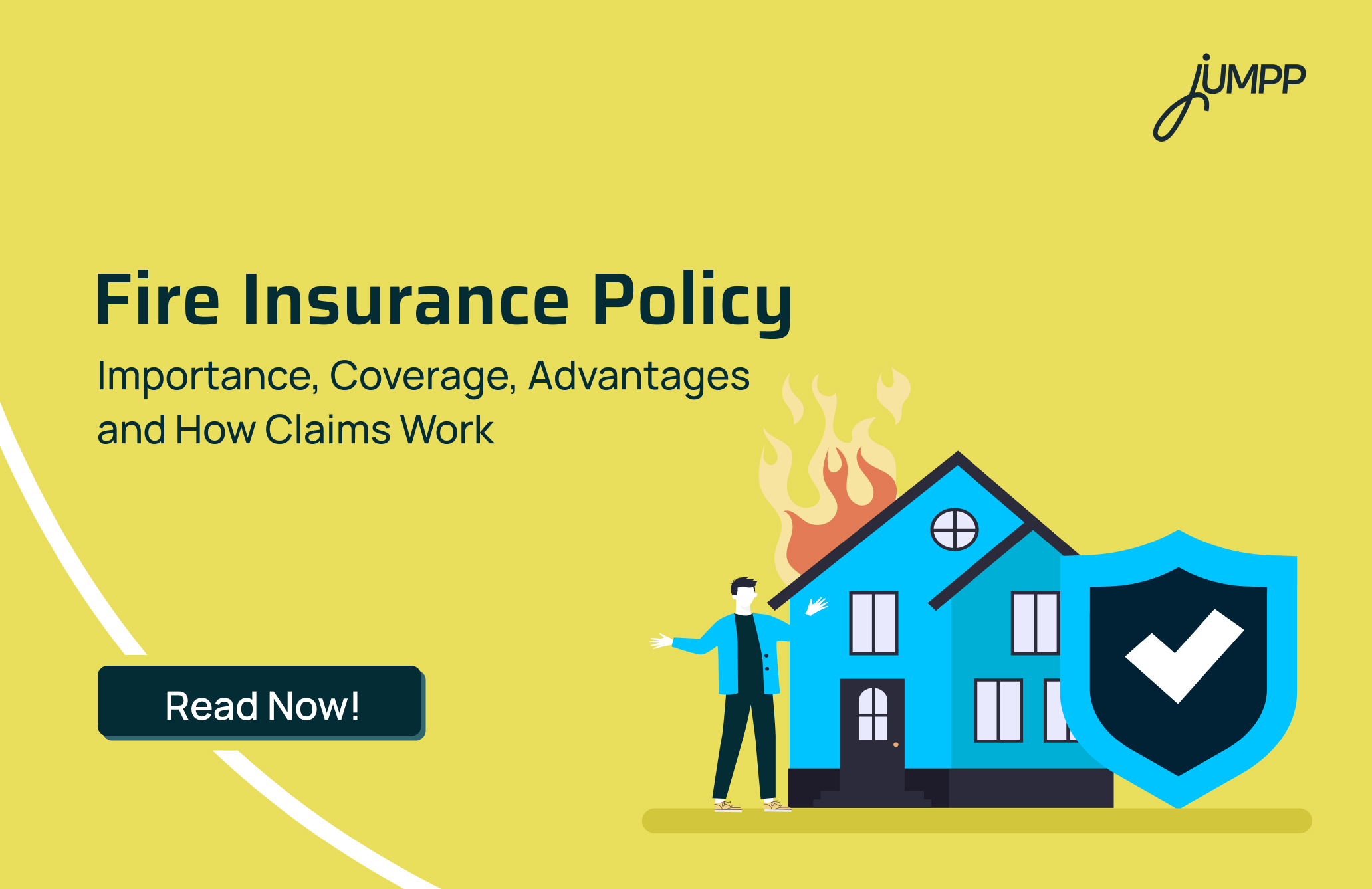
Fire accidents can cause sudden and severe financial damage, especially when homes, offices, or business assets are involved. A fire insurance policy helps protect individuals and businesses from such losses by covering repair and replacement costs after fire-related incidents.
Let us understand what fire insurance is, what it covers, and how claims work is essential for safeguarding your property.
What is Fire Insurance?
Fire insurance is a type of property insurance that protects individuals and businesses from financial losses that are caused by accidental fires and related risks, such as lightning.
Fire insurance coverage- It includes the cost of repairing, rebuilding, or replacing damaged property like buildings, inventory, and equipment. However, losses due to intentional fires, war, or nuclear risks are usually excluded.
Everything You Must Know About a Fire Insurance Policy
| Basis | Details |
| What is Fire Insurance | A fire insurance policy protects your property against financial losses caused by accidental fire and related risks. |
| Fire Insurance Coverage | Covers fire, lightning, smoke, explosions, and in many cases, extended risks like floods, riots, strikes, and impact damage. |
| What is Covered | Buildings, structures, contents such as furniture, inventory, machinery, equipment, and sometimes additional living expenses if the property becomes uninhabitable. |
| Financial Protection | Pays for repair, rebuilding, or replacement of damaged property up to the sum insured mentioned in the policy. |
| Types of Policies | Available as a standalone fire insurance policy, combined with burglary cover, or included in a comprehensive property insurance plan. |
| Who Should Buy It | Homeowners, shop owners, factory owners, landlords, and businesses with physical assets. |
| Fire InsuranceExclusions | Does not cover intentional fire, war-related damage, nuclear risks, or losses due to deliberate negligence. |
| Claim Basis | Claims are settled based on actual loss suffered, subject to policy terms and conditions. |
| Why It Is Important | Helps reduce financial shock after fire-related damage and ensures faster recovery without heavy out-of-pocket expenses. |
Inclusions Under a Fire Insurance Policy
Here are the common fire insurance inclusions-
| Inclusion | What It Covers |
| Fire and Smoke Damage | Losses caused by accidental fire and smoke affecting property and contents. |
| Lightning and Explosions | Damage due to lightning strikes or explosions. |
| Property Damage | Repair or replacement of the building, sheds, garages, and other structures. |
| Personal Belongings | Furniture, electronics, appliances, inventory, and equipment. |
| Allied Perils | Riots, strikes, malicious damage, aircraft impact, and similar risks. |
| Water Damage | Damage caused by burst pipes, overflowing tanks, or firefighting activities. |
| Loss of Use or Income | Temporary living expenses or business income loss if the property cannot be used. |
| Third-Party Liability | Damage to neighbouring property or injury to others due to a fire incident. |
| Optional Add-ons | Extended cover for floods, storms, or natural disasters through add-ons. |
Common Exclusions Under a Fire Insurance Policy
Here are the common fire insurance exclusions-
| Exclusion | What Is Not Covered |
| War and Terrorism | Losses arising from war, invasion, civil unrest, or terrorist acts. |
| Nuclear Risks | Damage caused by nuclear radiation or contamination. |
| Intentional Acts | Fire damage caused deliberately by the policyholder. |
| Pollution and Contamination | Environmental damage due to pollution or contamination. |
| Electrical Breakdown | Short circuits or power surges unless they result in a fire. |
| Spontaneous Combustion | Fire caused by self-heating or fermentation of materials. |
| Cold Storage Losses | Stock damage due to temperature variation. |
| Missing Property | Items lost or misplaced without direct fire damage. |
| Consequential Losses | Indirect losses, such as loss of profit or business interruption. |
| High-Value Items | Cash, jewellery, bullion, or manuscripts unless declared and insured. |
| Wear and Tear | Damage from ageing, rust, or lack of maintenance. |
| Government Action | Loss due to seizure or demolition by authorities. |
Common Types of Fire Insurance Policies
Fire damage can affect homes and businesses in different ways, which is why fire insurance comes in multiple forms, each designed for specific needs.
1. Standard Fire and Allied Perils Policy (SFSP)
This policy covers fire along with common risks such as lightning, explosions, floods, earthquakes, riots, and aircraft damage. It is the most basic and widely used fire insurance policy in India.
2. Comprehensive Fire Policy
This policy offers greater protection by covering fire and allied perils. In some cases, it also includes risks such as burglary or theft under a single policy.
3. Specific Policy
This policy insures a particular property or item for a fixed amount. The claim paid is either the actual loss suffered or the sum insured, whichever is lower.
4. Valued Policy
Under this insurance policy, the value of the property is agreed upon in advance. In the event of a loss, the insurer pays this fixed amount, even if the market value of the property changes.
5. Average Policy
This policy applies when the property is underinsured. If the sum insured is lower than the actual value of the property, the claim amount is reduced in the same proportion.
6. Floating Policy
This policy covers goods stored at multiple locations under a single policy. It is useful for businesses that operate more than one warehouse or storage facility.
7. Consequential Loss Policy (Loss of Profit)
This policy covers indirect losses such as loss of profits and fixed expenses when business operations are disrupted due to fire-related damage.
8. Reinstatement or Replacement Policy
This policy pays for the cost of rebuilding or replacing damaged property with new materials. Depreciation is not deducted while settling the claim.
9. Declaration Policy
It is said to be suitable for businesses with fluctuating stock levels. Stock values are declared periodically, and premiums are adjusted based on these declarations.
Specialised Fire Insurance Policies and Add-ons
- Bharat Sookshma Udyam Suraksha
This is a fire insurance policy designed for small businesses in India. It comes with lower sum insured limits and simplified coverage. - Bharat Laghu Udyam Suraksha
This policy is meant for medium-sized businesses. It offers higher coverage limits compared to the Sookshma Udyam policy. - Terrorism Cover (Add-on)
This add-on provides protection against losses caused by terrorist activities.
Read about different types of insurance riders!
What are the Advantages of Fire Insurance?
Beyond repairing walls and assets, fire insurance offers financial breathing space during recovery.
- Immediate financial support after loss
Fire insurance provides quick financial assistance to repair or replace damaged property. - Protection beyond just fire incidents
Most fire insurance policies also cover allied risks such as lightning, explosions, floods, riots, and water damage caused during firefighting efforts. - Support for temporary living or operations
The policy can cover temporary accommodation for homeowners or interim operating expenses for businesses while repairs are underway. - Third-party liability cover
Fire insurance protects you if a fire spreads to neighbouring properties or causes injury to others. It helps cover legal liabilities and compensation costs. - Encourages safer property management
Insurance providers often offer lower premiums for properties with safety measures like fire alarms and sprinkler systems. This promotes better risk management and long-term safety.
Complete Your Financial Safety Net
Fire accidents often come with medical emergencies and unexpected hospital expenses. A cashless health insurance plan ensures you get immediate medical treatment without worrying about upfront payments during emergencies.
What is the Importance of Fire Insurance?
The importance of fire insurance lies in how it protects years of savings from being wiped out in a single incident.
1. Protects long-term savings and assets
Prevents years of savings or investments from being wiped out due to a single fire incident.
Start with a zero-balance savings account and enjoy the flexibility of banking without upfront costs.
2. Ensures continuity of business operations
Helps businesses survive major disruptions that could otherwise lead to permanent shutdown.
3. Reduces dependence on loans or emergency funding
Avoids the need to borrow money or liquidate assets to recover from fire damage.
4. Fulfils legal and financial requirements
Often mandatory for bank loans, leases, factory licences, and commercial approvals.
5. Provides mental and financial stability
Knowing that losses are covered allows individuals and businesses to focus on recovery instead of panic.
Protect More Than Just Property
While fire insurance safeguards your physical assets, long-term financial security comes from protecting your family’s future. Learn how whole life insurance offers lifelong coverage, guaranteed benefits, and financial stability beyond property protection.
Conclusion
Fire insurance plays a vital role in protecting property and financial stability against sudden fire-related losses. Whether for homes or businesses, a fire insurance policy helps cover repair, rebuilding, and replacement costs, reducing the financial burden after an incident.
Fire Insurance Claim – FAQs
Fire insurance is a contract where an insurer compensates the insured for financial loss caused by accidental fire and related perils. It protects property like buildings, stock, and machinery in return for a premium.
Fire insurance is a contract of indemnity that covers loss or damage to property caused by fire in exchange for a premium.
In banking, fire insurance is taken on mortgaged or pledged property so the bank’s loan remains protected if the asset is damaged by fire or allied risks.
There are generally six to ten types of fire insurance policies. These include valued, specific, average, floating, comprehensive, consequential loss, and standard fire policies.
The top three types of insurance are life insurance, health insurance, and general insurance covering assets like property, motor, and fire.
The two main types of insurance are life insurance and general insurance. Life insurance covers human life, while general insurance covers property, health, and liability risks.