Family Floater vs Individual Health Insurance: Which One Actually Saves You Money?
At first glance, a family floater policy looks simpler and cheaper, which is why many people buy it without thinking twice. The confusion begins when parents grow older, medical needs increase, or two claims happen in the same year. That is usually the moment people start questioning whether they should have chosen a family floater vs individual health insurance, and what the real difference is when it comes to coverage and claims.
What Is the Difference Between Family Floater and Individual Health Insurance?
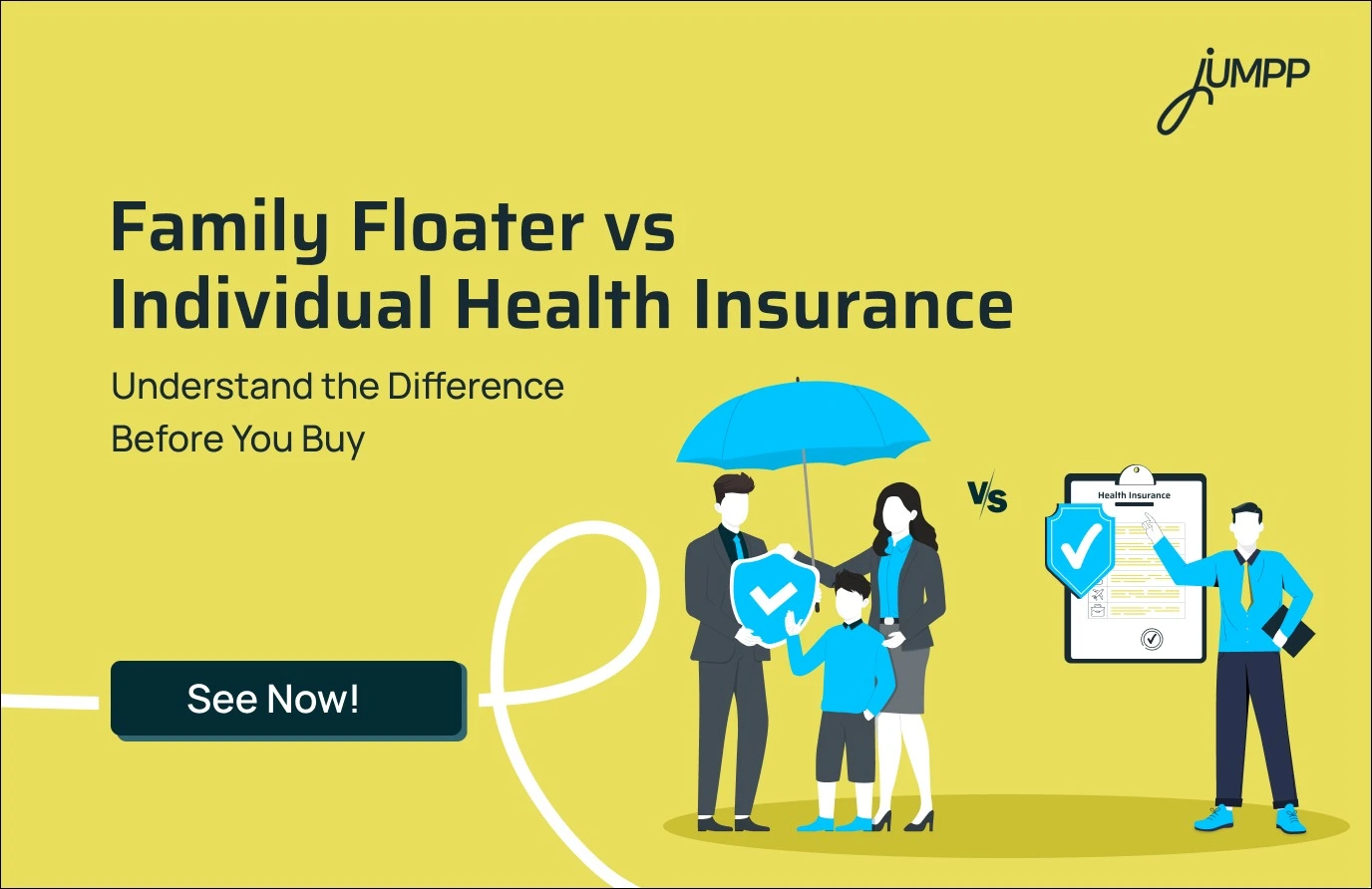
The core difference lies in how coverage is structured. A family floater plan provides one shared sum insured for all members under a single policy, while individual health insurance assigns a separate sum insured to each person under separate policies.
Family Floater vs Individual Health Insurance: Which Is Better?
Family floater health insurance tends to work better for young and medically stable families where the risk of multiple high-value claims in the same year is low.
Individual health insurance, however, offers more certainty because each person has a dedicated sum insured that cannot be impacted by another member’s medical needs.
| Basis | Family Floater | Individual Health Insurance |
| Coverage Structure | One shared sum insured | Separate sum insured for each member |
| Premium Cost | Lower and cost-effective | Higher overall premium |
| Sum Insured Usage | Shared among all members | Fully available for each person |
| Claim Impact | One claim affects all | No impact on others |
| Premium Calculation | Based on the eldest member’s age | Based on individual age and health |
| Suitability | Best for young families | Suitable for senior citizens |
| Maximum Coverage | Limited to one pool | Dedicated full coverage per member |
| Risk Factor | Higher if a major claim occurs | Lower due to independent cover |
| Tax Benefits | Tax deduction available | Tax deduction available |
| Long Term Flexibility | Becomes costly as the family ages | Easier to continue and customise |
What is Individual health insurance?
Individual health insurance is a personal medical cover that you purchase directly from an insurer to protect yourself against rising healthcare costs in India. Unlike employer-provided group plans, an individual health insurance plan covers essential medical expenses such as hospitalisation, surgeries, doctor consultations, ambulance charges, and many modern treatments.
You can customise the sum insured and add optional benefits based on your age, medical history, and lifestyle.
Key Benefits of Individual Health Insurance
- Dedicated Sum Insured
The full coverage amount is reserved only for you. Unlike family floater plans, one large claim by another person does not reduce your available cover. - Tailored Coverage and Premiums
Premiums are calculated only on the basis of your age and health profile. You can customise the policy with add-ons such as a critical illness rider or personal accident cover, depending on your needs. - Individual Ownership
The policy belongs to you and stays active even if you change jobs or stop working. It does not depend on your employer. - Comprehensive Coverage
Most individual health insurance plans cover hospitalisation, pre and post hospitalisation expenses, day care procedures such as cataract surgery, and ambulance charges. - Cashless Treatment and Network Hospitals
You can receive treatment at a wide network of hospitals without paying bills upfront, allowing you to focus on recovery instead of paperwork and payments.
Designed for flexibility and accessibility. Open a zero-balance savings account online and manage money easily.
- Tax Benefits
Premiums paid for individual health insurance are eligible for tax deductions under Section 80D of the Income Tax Act, subject to applicable limits. - Long-Term Benefits
Many policies offer no claim bonus benefits, where your sum insured increases for every claim-free year. Pre-existing illnesses are also covered after the specified waiting period.
What Is Family Floater Health Insurance?
Family floater health insurance is a single health insurance policy that covers multiple members of a family under one shared sum insured. Instead of buying separate individual policies for each person, one policy is issued for the entire family.
This means if the total cover is ₹20 lakh, any family member can use any portion of that amount during the policy year. You also pay one combined premium for the entire family, rather than separate premiums for each individual.
Family Floater Meaning
It is health insurance that typically covers hospitalisation expenses, pre and post hospitalisation costs, day care procedures, and ambulance charges, similar to individual health insurance. The premium is generally calculated based on the age of the eldest family member covered under the policy.
Key Benefits of Family Floater Health Insurance
- Cost Effectiveness
Family floater health insurance plans are usually more economical than purchasing separate individual policies for each family member. You pay a single, lower premium to cover multiple people under one policy.
Explore the types of health insurance plans in India!
- Shared Sum Insured
The total sum insured is shared among all covered members. If one person does not use their share, it remains available for another family member during a medical emergency. - Simplified Policy Management
You only need to manage one policy document, one premium payment, and one renewal date, making administration easier compared to handling multiple individual policies. - Tax Benefits
Premiums paid for self, spouse, children, and parents qualify for tax deductions under Section 80D of the Income Tax Act. The deduction limit is up to ₹25,000 for non senior citizens, ₹50,000 for senior citizens, and up to ₹75,000 when senior citizen parents are included, subject to applicable conditions. - Comprehensive Coverage
Family floater plans generally cover hospitalisation expenses, pre and post hospitalisation costs, day care procedures, and ambulance charges. - Flexibility to Add Family Members
You can easily add new members, such as a newborn child, to the existing policy without purchasing a new one. - Restoration Benefit
Since the sum insured is shared, many policies offer a restoration or reinstatement benefit. This feature restores the sum insured if it gets exhausted during the policy year due to one or more claims.
Family floater health insurance plans are often ideal for young families due to their affordability and flexibility. As the family grows older, it may be practical to review the coverage and consider a combination of individual and floater plans for better long-term protection.
- Can Family Floater Be Converted to Individual Health Insurance
Most insurers allow conversion from a family floater plan to individual health insurance at the time of renewal, provided the policy has been continuously maintained without a break. The exact process depends on the insurer.
- What Happens If Family Floater Sum Insured Is Exhausted
If the shared sum insured is fully utilised during the policy year, no further claims can be made unless the policy includes a restoration or reinstatement benefit that refills the coverage.
- Can Multiple Claims Be Made in Family Floater at the Same Time
Yes, multiple claims can be made simultaneously under a family floater plan. All claims are settled from the same shared sum insured, which can reduce available coverage quickly.
- Does Family Floater Premium Increase Every Year
Family floater premiums usually increase as insured members move into higher age brackets and due to medical inflation. Changes in health conditions can also impact renewal premiums.
Individual vs Family Health Insurance Plan: Which One Should You Actually Choose
Choosing between an individual health insurance plan and a family floater plan is less about which one is better and more about how your health risks are structured today. Individual plans offer certainty through dedicated coverage that cannot be reduced by another person’s claim, while family floater plans rely on shared risk and cost efficiency, which tends to work better when all members are young and medically stable. As age, medical history, or financial responsibility increases, the logic behind the choice often shifts quietly but significantly.
- Family Floater or Individual Health Insurance for Parents
For parents, especially those above sixty, individual health insurance or senior citizen plans usually make more structural sense. Adding parents to a family floater often increases premiums sharply and raises the risk of exhausting the shared sum insured.
- Is Family Floater Cheaper Than Individual Health Insurance
In most cases, family floater health insurance is cheaper than purchasing multiple individual policies, especially when all insured members are young and healthy. The cost advantage reduces as age gaps widen or health risks increase
Family Floater vs Individual Health Insurance – FAQs
The core difference lies in how coverage is structured. A family floater plan provides one shared sum insured for all members under a single policy, while individual health insurance assigns a separate sum insured to each person under separate policies.
Family floater plans suit smaller families with similar age and health profiles, while individual health insurance offers better long-term stability for families with ageing members or existing medical conditions. Suitability often changes with life stages.
Family floater premiums usually increase as insured members move into higher age brackets and due to medical inflation. Changes in health conditions can also impact renewal premiums.
For senior citizens, individual health insurance plans are generally more suitable because they provide fixed, non-shared coverage and better control over benefits. Family floater plans with senior members tend to become costly and carry a higher exhaustion risk.
In most cases, family floater health insurance is cheaper than purchasing multiple individual policies, especially when all insured members are young and healthy. The cost advantage reduces as age gaps widen or health risks increase.