Digital Gold vs Gold ETFs in India (2026): Returns, Costs, and Key Differences
Gold has always been the safety net Indians turn to when markets feel uncertain. But today, buying gold no longer means visiting a jewellery shop or locking it away in a cupboard. Digital gold and Gold ETFs promise convenience, transparency, and ease, yet they work very differently. Let us today understand digital gold vs gold ETF difference.
What is Digital Gold?
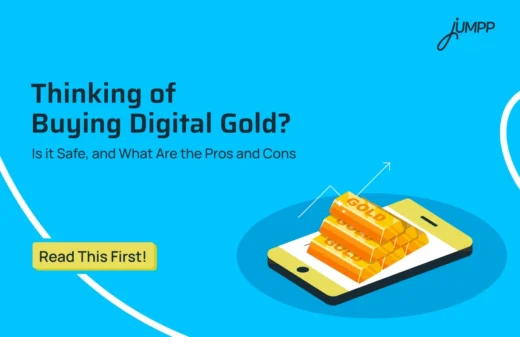
Digital gold is an online way to invest in physical gold where you buy, sell, and hold 24-carat pure gold in grams through apps or platforms, while the actual gold is stored in insured vaults on your behalf. It allows small investments starting from as little as one rupee.
It offers real-time price tracking. Not only this, but digital gold also removes storage hassles. However, you must know that it carries counterparty risk as it is not uniformly regulated.
How digital gold works
- Purchase: You buy gold online through an app or website in small amounts, even as low as one rupee.
- Storage: The provider stores an equivalent quantity of 99.9 percent pure gold in a secure, insured vault.
- Tracking: Your gold balance and its value move in real time with market prices.
- Redemption: You can sell the gold back for cash or redeem it as physical gold, such as coins or bars.
Advantages of Digital Gold- Should You Really Buy It?
Digital Gold looks convenient and affordable, but does it actually help you build wealth or just feel easier to buy?
Let us take a quick look at the advantages of digital gold in India!
1. High purity guaranteed: Digital gold is backed by certified 24-carat, 99.9 percent pure physical gold, removing concerns around adulteration or quality mismatch.
Each unit you buy represents an equivalent quantity of real gold stored on your behalf.
2. Convenience and accessibility: Buying and selling can be done online at any time through apps and platforms, without visiting a jewellery shop or bank.
This makes digital gold easy to manage alongside everyday financial activity.
3. Low minimum investment: You can start investing with extremely small amounts, often from as little as one rupee.
This makes digital gold accessible for first-time investors and those building gold exposure gradually.
4. No storage hassles: The gold you purchase is stored in insured vaults by third-party custodians such as MMTC-PAMP or SafeGold.
There is no need for home storage, bank lockers, or personal security arrangements.
5. High liquidity: Digital gold can usually be sold instantly at prevailing market prices.
Sale proceeds are typically credited to your bank account within a few working days.
6. Collateral for loans: Many platforms allow you to pledge digital gold as collateral for short-term online loans.
This provides financial flexibility during emergencies without selling the investment.
7. Convertibility to physical gold: You can redeem digital gold for physical coins or bars delivered to your address.
This allows a smooth shift from investment to consumption when required.
Are There Any Disadvantages of Digital Gold?
Digital Gold is often promoted as a simple and modern way to invest in gold, but convenience alone does not make an investment complete. Before choosing it, investors should understand the limitations, risks, and trade-offs that are rarely discussed upfront.
1. Lack of direct regulation: Digital gold is not directly regulated by SEBI or the RBI in India.
This limits formal investor protection and increases counterparty risk if a platform fails.
2. Additional costs and taxes: A 3 percent GST is charged at the time of purchase, which directly reduces effective returns.
Bid-ask spreads, storage fees after the free period, and delivery charges for physical redemption can further increase costs.
3. Investment limits: Most platforms cap total holdings, often around two lakh rupees or a fixed quantity such as thirty grams.
This makes digital gold less suitable for large or institutional investors.
4. Limited holding period: Some providers enforce a maximum storage duration, commonly around five years.
After this, you must either sell the gold or take physical delivery, which may disrupt long-term planning.
5. No passive income: Digital gold does not generate interest or regular income.
Returns depend entirely on price appreciation, unlike instruments such as Sovereign Gold Bonds.
6. Platform dependency and cyber risk: Your investment is tied to the stability and security of the chosen platform.
System outages, technical failures, or cyber threats can temporarily restrict access or transactions.
How to Invest in Digital Gold?
Digital gold is bought online through apps that partner with accredited gold vault providers.
Simple steps
- Choose a platform: Use apps like PhonePe, Google Pay, or Amazon Pay, or buy directly from the provider’s website.
- Complete KYC: Register with basic details and complete PAN-based KYC if required.
- Add funds: Pay using UPI, net banking, or cards.
- Buy gold: Invest by amount or grams, starting from as little as one rupee.
- Track holdings: Your 24-carat gold is credited instantly and tracked at live prices.
Other digital ways to invest in gold
- Gold ETFs: Traded on stock exchanges, SEBI-regulated, and suitable for long-term investing.
Open a free demat account with one of the best investment apps, and start investing in bonds, Gold ETFs, mutual funds, etc.
- Sovereign Gold Bonds: Issued by the Reserve Bank of India, offering 2.5 percent annual interest.
- Gold mutual funds: Funds that invest in Gold ETFs, often without a demat requirement.
What is a Gold ETF?
A Gold ETF (Gold Exchange Traded Fund) is an investment fund that holds physical gold and is designed to track the market price of gold.
Its units are traded on stock exchanges like shares, allowing investors to buy or sell gold digitally without owning or storing physical gold.
- Each Gold ETF unit represents a fixed quantity of pure gold.
- It is SEBI-regulated in India and is best suited for transparent, long-term gold investment through a demat account.
- Gold Exchange Traded Funds (Gold ETFs) let you invest in gold prices without buying or storing physical gold.
- They are traded on stock exchanges, held in demat form, and regulated in India by the Securities and Exchange Board of India.
What are the Advantages of Gold ETFs?
Unlike physical or digital gold, Gold ETFs bring regulation, liquidity, and transparency together in one investment.
- Convenience and security: Gold ETFs are held electronically, so there is no risk of theft, storage, or insurance costs linked to physical gold.
- High liquidity: Units can be bought and sold easily on stock exchanges during market hours at live prices.
- Cost efficiency: You avoid making charges and locker costs. Only a low expense ratio and brokerage apply.
- Transparency and purity: Gold ETFs are backed by high-purity physical gold, usually 99.5 percent, stored in secure vaults and audited regularly.
- Portfolio diversification: Gold ETFs help balance portfolios during inflation, market volatility, and economic uncertainty.
- Low minimum investment: You can start with as little as one unit, which generally represents one gram of gold.
Disadvantages of Gold ETFs
Gold ETFs simplify gold investing, but they are not completely free from costs, conditions, or practical limitations.
- Expense ratio and brokerage: Annual fund charges and trading costs can slightly reduce long-term returns.
- Market price risk: Gold prices can fluctuate due to global economic and geopolitical factors.
- No physical ownership: You cannot use ETF gold for personal consumption or gifting.
- Tracking error: ETF prices may differ marginally from actual gold prices due to costs and market factors.
- Demat account required: Investing requires a demat and trading account, which may involve maintenance charges.
- No regular income: Gold ETFs do not pay interest or dividends.
- Taxation: Capital gains tax applies when you sell, based on the holding period and prevailing tax rules.
Gold ETFs are best suited for investors who want regulated, liquid, and cost-efficient exposure to gold without the complications of physical ownership.
Want to explore higher-return trading strategies beyond gold?
Learn what is margin trading, how it works, its risks, costs, and whether it suits your investment goals in India.
How to Invest in a Gold ETF
To invest in a Gold Exchange Traded Fund, you need a demat and trading account with a registered stockbroker, as Gold ETF units are bought and sold on stock exchanges like shares.
This gives you exposure to gold prices without buying, storing, or insuring physical gold.
- Open a demat and trading account: This is compulsory because Gold ETF units are held electronically and traded through your broker.
If you already invest in stocks, you can use the same account. - Add funds: Transfer money from your linked bank account to your trading account using UPI or net banking.
- Choose a Gold ETF: Compare ETFs based on expense ratio, tracking error, and liquidity. Popular fund houses include HDFC Mutual Fund, ICICI Prudential Mutual Fund, and SBI Mutual Fund.
- Place a buy order: Enter the ETF symbol, select the number of units, and place the order during market hours.
One unit usually represents one gram of gold. - Track your investment: The units are credited to your demat account, and you can monitor prices through your broker’s platform.
- Sell when required: You can sell Gold ETF units anytime during market hours, just like shares, and receive the cash value.
SIP option for gold exposure
If you want regular investing without a demat account, you can use SIPs in gold mutual funds, which invest in Gold ETFs on your behalf.
This method suits long-term investors who prefer automated, small-amount investments.
Digital Gold vs Gold ETF – Which One Should You Choose
| Feature | Digital Gold | Gold ETF |
| Min. Investment | ₹1 | 1 unit (≈ ₹8,000) |
| Account Needed | None (app based) | Demat and trading account |
| Trading | 24/7, anytime | Market hours only |
| Fees | 3 percent GST plus around 0.4 percent storage per year | 0.5 to 1 percent expense ratio |
| Physical Gold | Yes, coins or bars | No, cash settlement only |
| Regulation | Unregulated (SEBI warning) | SEBI regulated |
| Tax (LTCG) | 12.5 percent after 3 years | 12.5 percent after 1 year |
| Best For | Beginners and small purchases | Long term portfolios |
Gold ETF vs Digital Gold Taxation in India (2026)
Digital gold and Gold ETFs now follow a largely similar capital gains tax structure, but important differences remain in holding periods, GST, and cost efficiency.
| Basis | Digital Gold | Gold ETF |
| GST on Purchase | 3 percent GST applicable | No GST |
| Short-Term Capital Gains | Holding below 36 months, taxed as per income slab | Holding below 12 months, taxed as per income slab |
| Long-Term Capital Gains | Holding above 36 months | Holding above 12 months |
| LTCG Tax Rate | 12.5 percent flat (indexation may apply if treated as physical gold under older rules) | 12.5 percent flat, no indexation |
Gold ETFs do not attract GST and have a shorter holding period for long-term classification, making them more cost-efficient for investors focused purely on returns.
For correct reporting, gains are typically disclosed under ITR-2 or ITR-3 depending on income type and trading activity. Individual tax impact depends on income slab and future regulatory clarifications, so professional tax advice is recommended for 2026 filings.
Choose digital gold if you want simplicity, very small investments, and round-the-clock access.
Choose Gold ETFs if you prefer a regulated, exchange-traded product with higher liquidity and cost efficiency through your demat account.
Which one makes sense for a first-time person
Choose Digital Gold if:
- You want to start very small
- You want simplicity over optimisation
- You are testing the idea of gold investment
Choose Gold ETF if:
- You already have or are willing to open a Demat account
- You want a regulated and cost-efficient option
- You plan to invest larger amounts or long-term
Digital Gold vs Gold ETFs- FAQs
Gold ETFs are generally better due to SEBI regulation, transparent pricing, and lower long-term costs. Digital gold offers convenience and low entry value but carries higher counterparty and regulatory risk.
Gold ETFs are better for investment as they avoid storage costs, making charges, and GST losses. Physical gold suits cultural or consumption needs but delivers lower effective returns.
Gold ETFs are better for beginners because they are regulated, liquid, and track market prices accurately. Digital gold is easier to start, but lacks uniform regulation and investor protection.
Digital gold works for small, short-term, or goal-based purchases like jewellery redemption.
For long-term wealth building, Gold ETFs are safer and more cost-efficient.
Digital gold is not SEBI-regulated, which tends to increase counterparty and platform risk. Additional charges for storage, delivery, and conversion reduce overall returns