Personal Loan Balance Transfer: Meaning, Process, Benefits and Eligibility
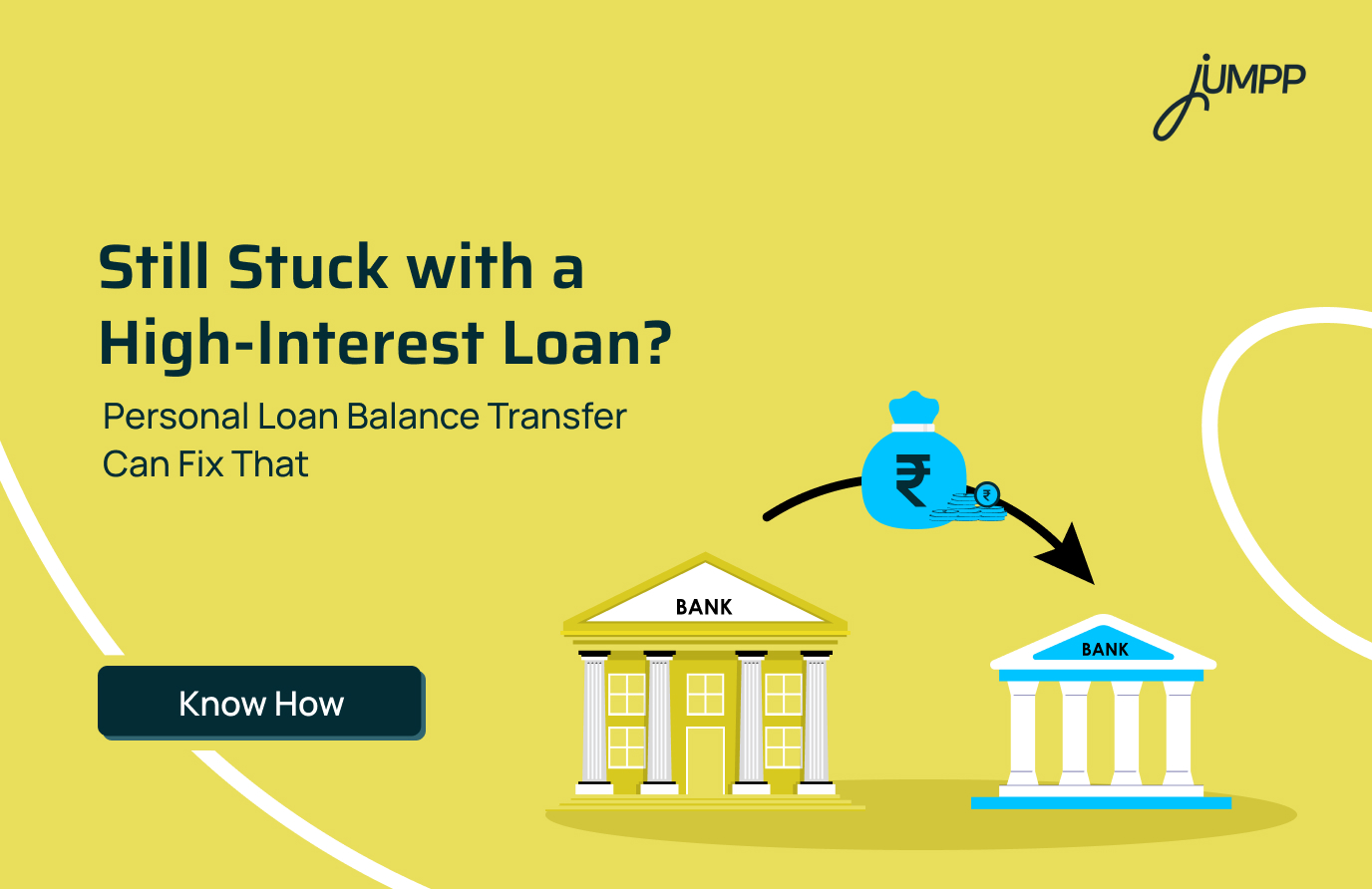
Most borrowers continue paying the same EMI for years without realising they could reduce it significantly. A personal loan balance transfer gives you the option to move your loan to another lender offering lower interest rates. This can help you save money without changing your financial commitments drastically.
What is BT in Loans?
BT in loans stands for Balance Transfer, which means shifting your existing loan from one lender to another to get better terms, like lower interest rates or reduced EMIs. It is commonly used for personal loans, home loans, and even credit card dues to reduce the overall repayment burden.
What is Personal Loan Balance Transfer?
A personal loan balance transfer is the process of moving your existing personal loan from one lender to another that offers a lower interest rate or better repayment terms.
It helps reduce your EMI and overall interest cost, as the new lender pays off your current loan and you continue repayment under improved conditions.
Key aspects you should know:
- Purpose: Balance transfer personal loan helps reduce the total interest burden and the monthly EMI
- How it works: The new lender closes your existing loan and transfers the balance
- Eligibility: Usually requires a credit score of 750 or above and a stable repayment history
- Charges involved: May include processing fees or foreclosure charges from the current lender
- Top-up option: Some lenders allow an additional loan amount along with the transfer
How to Do Balance Transfer of Personal Loan
A personal loan balance transfer can be done by applying with a new lender who offers a lower interest rate, submitting your existing loan details, and allowing the new lender to close your current loan on your behalf.
Once approved, you continue repayment with the new lender under improved terms.
Before starting the process, it is important to verify your existing loan details and outstanding balance to avoid errors during transfer.
Know how to check loans on a PAN card
How to Transfer a Loan from One Bank to Another
Transferring a loan from one bank to another involves moving your existing loan to a new lender that offers better terms, such as a lower interest rate or improved repayment options.
Applying for a personal loan balance transfer online is a simple process.
Steps to transfer your loan:
- Compare lenders: Look for banks offering lower interest rates and better repayment terms
- Check eligibility: Ensure you meet basic criteria such as a good credit score and stable income
- Request loan details: Obtain a foreclosure letter showing your outstanding loan amount
- Apply with a new lender: Submit required documents, including KYC, income proof, and loan statements
- Loan closure: The new lender pays off your existing loan directly
- Start repayment: Continue EMI payments with the new lender under revised terms.
Personal Loan Balance Transfer Eligibility
To be eligible for a personal loan balance transfer online, you must meet basic criteria such as a good credit score, stable income, and a consistent repayment history on your existing loan. Lenders assess these factors to ensure that you can handle the revised loan terms and qualify for better interest rates.
Key eligibility criteria:
- Age: Typically between 21 and 65 years at the time of application
- Employment type: Salaried or self-employed with a stable source of income
- Minimum income: Usually between ₹15,000 and ₹25,000 per month, depending on the lender and city
- Credit score: A score of 750 or above is preferred to secure lower interest rates
- Existing loan track record: At least 6 to 12 EMIs already paid with no defaults or delays
- Outstanding loan amount: Generally, a minimum balance of around ₹50,000 is required for transfer
- Work experience: At least 1 year for salaried individuals and up to 2 to 3 years for self-employed applicants
A personal loan balance transfer works best when your overall financial position is stable.
Check the main financial health indicators before making a decision
Want to explore smart financial support options beyond loans? Check out our complete guide on Subhadra Yojana to understand how government schemes can help improve your financial stability.
Personal Loan Balance Transfer Interest Rates 2026
For 2026, personal loan balance transfer interest rates in India typically start from around 9.99 percent per annum, depending on the lender, your credit profile, and repayment history.
What are the Benefits of Personal Loan Balance Transfer
A personal loan balance transfer offers several financial advantages by allowing you to shift your existing loan to a lender with better terms. It is primarily used to reduce interest costs, improve cash flow, and manage debt more efficiently.
Key benefits you should know:
- Lower interest rates: Transferring to a lender offering reduced rates helps decrease the total cost of the loan
- Reduced EMI burden: A lower interest rate directly leads to smaller monthly instalments, improving cash flow
- Interest savings over time: Even a small rate difference can result in significant savings across the loan tenure
- Flexible repayment tenure: You can choose to extend the tenure for lower EMIs or shorten it to close the loan faster
- Top-up loan facility: Many lenders offer additional funds over and above the transferred amount if you meet eligibility
- Debt consolidation: Multiple loans or high-interest dues can be combined into a single, manageable EMI
- Better service and features: Switching lenders may also give access to improved digital services or customer support
Curious how top individuals manage and grow their wealth? Discover insights from the Tamil Nadu richest man and learn key financial habits you can apply in your own journey.
Things to Keep in Mind Before Choosing a Personal Loan Balance Transfer
Before choosing a personal loan balance transfer, you should ensure that the total savings from a lower interest rate are higher than the combined costs of closing your current loan and starting a new one.
A transfer only makes sense when it genuinely reduces your overall financial burden, not just your EMI.
Important factors to consider:
- Net interest savings: Proceed only if the new interest rate is at least 1 to 2 percent lower than your current rate
- Foreclosure charges: Your existing lender may charge 2 to 5 percent of the outstanding loan amount for early closure
- Processing fees: The new lender usually charges 1 to 3 percent of the transferred loan amount
- Additional charges: Watch for documentation fees, stamp duty, and GST on service charges
- Remaining tenure: Transfers are more beneficial in the early or mid-stage of the loan, not near closure
- Credit score impact: A strong credit profile helps secure better rates and faster approval
- Loan terms and conditions: Check for prepayment rules, penalties, and flexibility before switching
Taking time to calculate the complete cost and savings ensures that your balance transfer decision is financially sound and not just based on surface-level benefits.
You can also use Balance transfer calculators. These are essential online tools that analyse potential savings by comparing current high-interest debt (loans or credit cards) against a new lower-rate offer.
Balance Transfer Personal Loan – FAQs
A personal loan balance transfer means moving your existing loan to a new lender offering a lower interest rate or better terms. The new lender closes your old loan, and you continue repayment under revised EMI and tenure.
Yes, you can transfer an existing personal loan to another bank or NBFC if they offer better rates.
It is treated as a new loan with updated interest rate, tenure, and charges.
Yes, balance transfer is allowed for personal loans and is commonly used to reduce EMI or total interest cost. Approval depends on your income, credit score, and repayment track record.
In India, a default on a credit card or loan remains on your CIBIL report for 7 years from the date of first default. During this period, it can significantly affect your ability to get new credit.
Secured debts such as home loans cannot be erased without repayment because they are backed by assets.
Legal liabilities, including court-ordered dues or fraud-related debts, also cannot be easily written off.
No, personal loans cannot typically be moved to a credit card through balance transfer.
Balance transfer on credit cards is mainly meant for shifting outstanding credit card dues only.
Yes, applying for a balance transfer may cause a small temporary dip due to a hard enquiry.
However, consistent repayment after transfer can improve your CIBIL score over time.