Gross Salary vs Net Salary: Understanding Pay Before and After Deductions
Your salary on paper is not the same as your salary in hand. This is because your gross salary includes deductions. However, your net salary shows what you can truly spend. Let us today learn the difference between gross salary and net salary in detail.
Gross Salary vs Net Salary
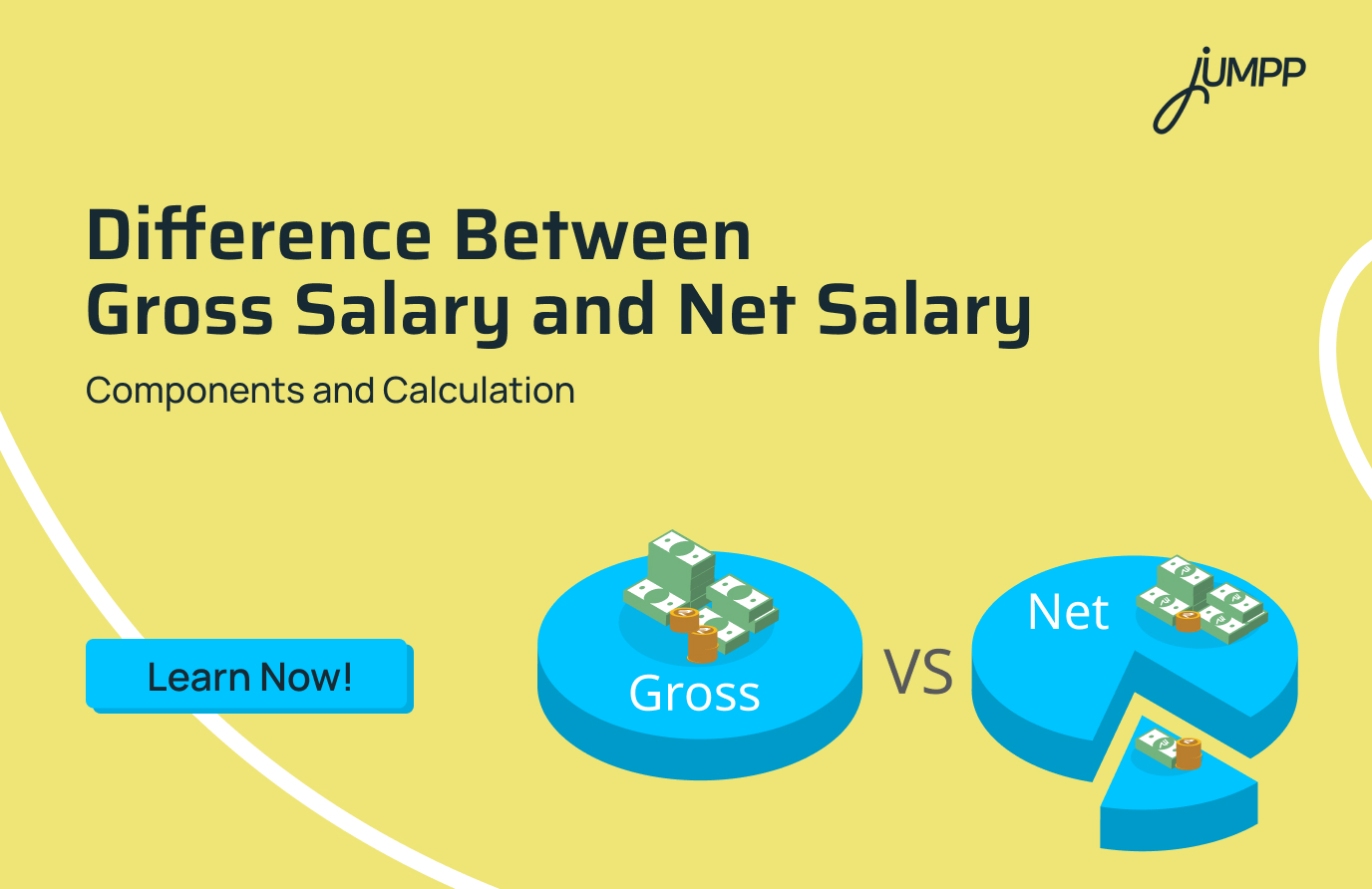
Gross salary is the total amount you earn before any deductions. On the other hand, your net salary is the amount you actually receive in your bank account after all mandatory and voluntary deductions are applied.
In simple terms, gross salary reflects your complete pay package. However, your net salary shows what you can actually spend after taxes, Provident Fund, EPF and other deductions.
What is the Difference Between Gross Salary and Net Salary
| Basis | Gross Salary | Net Salary |
| Meaning | Total earnings before any deductions | Final take-home pay after deductions |
| Also Known As | Total salary package | Take-home salary |
| Includes | Basic pay, HRA, allowances, bonuses, overtime | Amount left after deductions |
| Deductions Applied | No deductions applied | Income tax, PF, professional tax, insurance, and loan deductions |
| Formula | Basic Salary + Allowances + Bonuses + Overtime | Gross Salary minus all deductions |
| Amount Credited to Bank | Not credited directly | Credited to your bank account |
| Usage | Used for salary structure and negotiations | Used for budgeting and monthly expenses |
What is gross salary?
Gross salary is the total amount an employee earns before any deductions, such as income tax, Provident Fund (PF), or other statutory contributions, are applied.
It includes the basic pay, allowances, bonuses, and overtime and represents the full compensation offered by the employer.
Components of Gross Salary
- Basic Salary: The fixed core component of an employee’s pay.
- Allowances: House Rent Allowance (HRA), conveyance allowance, medical allowance, and dearness allowance (DA).
- Bonuses and Incentives: Performance-linked bonuses, commissions, and seasonal incentives.
- Overtime Pay: Additional compensation for work done beyond regular working hours.
- Other Benefits: Any additional perks or monetary benefits provided by the employer.
What is net salary?
Net salary, also known as take-home pay, is the amount an employee actually receives in their bank account after all mandatory and voluntary deductions are subtracted from the gross salary. It represents the money available for spending or saving during each pay period.
Key Components of Net Salary
- Gross Salary: Total earnings before deductions, including basic pay, allowances such as HRA and travel allowance, bonuses, and other benefits.
- Mandatory Deductions: Income Tax (TDS), Provident Fund (PF), Professional Tax, and Employee State Insurance (ESI), where applicable.
- Voluntary Deductions: Health insurance premiums, loan repayments, and contributions to retirement or savings plans.
Gross Salary vs Net Salary Calculation
Gross salary shows what you earn before deductions, while net salary shows what you take home.
Let us see how both of them are calculated.
How to Calculate Gross Salary
To calculate gross salary, you must add your basic pay to all allowances, bonuses, and other fixed payments before any taxes or deductions, such as Income Tax (TDS) or Provident Fund (PF), are applied.
- For Salaried Employees (Fixed Monthly or Annual Pay)
Step 1: Identify salary components
Start by listing your basic salary along with allowances such as House Rent Allowance (HRA), transport allowance, medical allowance, and any fixed incentives or perks.
Step 2: Apply the formula
Gross Salary = Basic Salary + All Allowances + Bonuses + Other Perks
Basic Salary ₹26,000 + HRA ₹10,500 + Other Allowances ₹5,200 + Fixed Bonus ₹3,300
Gross Salary = ₹45,000 per month
- For Hourly Employees (Variable Pay)
Step 1: Calculate weekly earnings
Multiply your hourly wage by the total number of hours worked in a week.
Step 2: Calculate monthly or annual gross income
Multiply the weekly amount by 52 for an annual figure. Monthly income can be estimated by dividing the annual total by 12.
38 hours per week × ₹1,150 per hour = ₹43,700 per week
₹43,700 × 52 weeks = ₹22,72,400 per year
How to Calculate Net Salary
To calculate your net salary, you must begin with your gross salary and deduct all mandatory and voluntary contributions.
These typically include income tax, Provident Fund or pension contributions, professional tax, and insurance premiums. The remaining amount is the salary that is credited to your bank account.
Net Salary Formula:
Net Salary = Gross Salary − (Income Tax + EPF or Pension + Professional Tax + Other Deductions)
Gross salary shows your total earnings, but net salary is what you actually receive in your bank account. Understanding this difference helps you plan expenses and savings with clarity and avoid financial miscalculations.
What to Do With Your First Salary?
Now that you understand the difference between gross salary and net salary, the next step is using your take-home pay wisely. Learn what to do with your first salary—from smart budgeting and savings to investments and financial planning—to build a strong financial foundation from day one.
Gross Salary vs Net Salary – FAQs
Gross salary is your total earnings before any deductions, including basic pay, allowances, and bonuses. Net salary is your take-home pay after deductions such as income tax, provident fund, and professional tax.
Gross pay matters more for long-term benefits like provident fund, gratuity, and loan eligibility.
Net pay is more relevant for monthly expenses and day-to-day cash flow.
Gross pay is always higher because it is calculated before any deductions. Net pay is lower, as it reflects what remains after statutory and voluntary deductions.
Yes, under the new Labour Codes implemented from 2025, basic pay plus dearness allowance must be at least 50% of total wages.
No, as per current labour regulations, basic salary cannot be below 50% of total wages or CTC.
Earlier structures with 30–40% basic pay are no longer compliant.
Gross salary is calculated as basic pay plus HRA, dearness allowance, bonuses, and all other cash allowances.
If starting from CTC, subtract the employer provident fund, gratuity, and non-cash benefits to arrive at gross salary.
A ₹25,000 gross salary means total monthly earnings before tax and provident fund deductions.
The net take-home amount is usually around ₹22,000–₹23,000, depending on deductions.
CTC is the total annual cost an employer incurs for an employee, including non-cash benefits.
Gross salary is the cash component paid before deductions and shown on the monthly payslip.