EPF vs EPS: Contribution, Pension Benefits, Taxation, and Returns in 2026
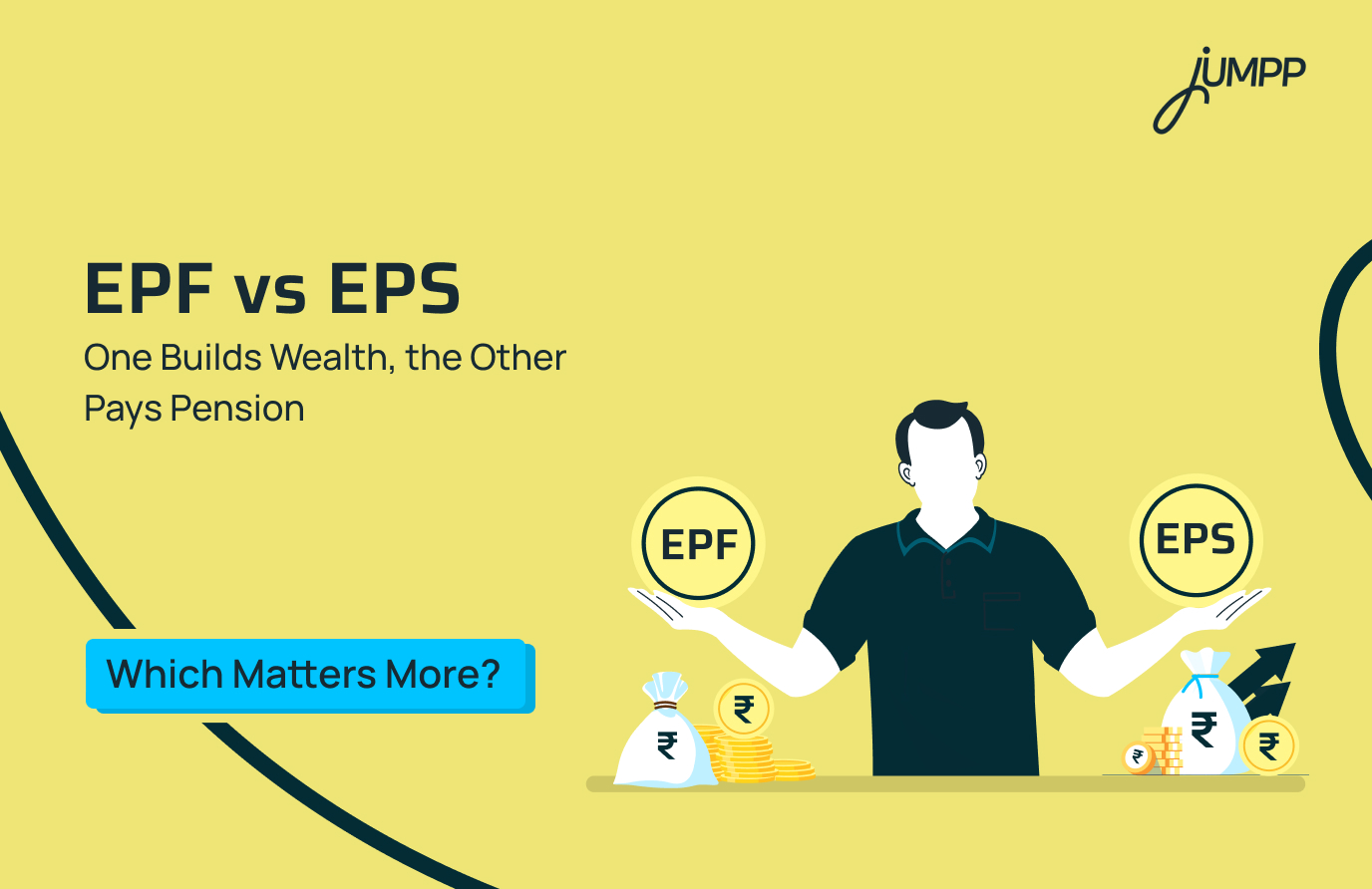
EPF and EPS are both retirement benefit schemes under the Employees’ Provident Fund Organisation. While both are mandatory for most salaried employees, they serve very different purposes. One focuses on building long-term savings through interest, while the other provides a fixed monthly pension after retirement. In this blog, we explain EPF vs EPS in detail.
EPF and EPS Difference You Should Know
EPF (Employee Provident Fund) is a savings scheme that helps build a lump-sum retirement corpus through contributions from both the employee and the employer.
The EPS (Employee Pension Scheme) is a pension scheme that provides a fixed monthly income after retirement. It is funded only by the employer and does not earn interest.
In short, EPF is meant for retirement savings, while EPS is meant for regular pension income.
EPF vs EPS: Taxation and Returns (As of 2026)
| Basis | EPF (Employee Provident Fund) | EPS (Employee Pension Scheme) |
| Returns | Interest rate around 8.25% per annum (government-declared) | No interest earned |
| Growth Nature | Compounding growth, creating a lump-sum retirement corpus | No growth, fixed monthly pension |
| Tax on Contributions | Employee contribution eligible for deduction up to ₹1.5 lakh under Section 80C (old tax regime) | No tax deduction, as the employee does not contribute |
| Tax on Interest | Interest earned is tax-free, subject to applicable limits | Not applicable |
| Tax on Employer Contribution | Employer contribution above ₹2.5 lakh per year becomes taxable | Not applicable separately |
| Tax on Withdrawal or Pension | Lump-sum withdrawal tax-free after 5 years of continuous service | Monthly pension fully taxable as per the income tax slab |
| Typical Payout | Large one-time corpus at retirement | Monthly pension, minimum ₹1,000 per month |
| Administered By | Employees’ Provident Fund Organisation | Employees’ Provident Fund Organisation |
What is the EPF Scheme?
The Employees’ Provident Fund is a mandatory retirement savings scheme for salaried employees working in the organised sector in India. It is managed by the Employees’ Provident Fund Organisation and helps employees build a secure retirement corpus.
- Under EPF, both the employee and the employer contribute 12 percent of basic salary plus dearness allowance every month.
- The total contribution earns government-declared interest and grows through compounding over time.
- The accumulated EPF balance can be withdrawn at retirement or partially used for needs such as housing, education, or medical emergencies.
Eligibility for EPF Scheme
- The employee must work in an establishment covered under EPF rules, generally employing twenty or more persons.
- Mandatory EPF enrolment applies to employees whose basic salary plus dearness allowance is up to fifteen thousand rupees per month.
- Employees earning more than fifteen thousand rupees per month may join the EPF scheme voluntarily with employer consent.
- Once enrolled, EPF membership continues even if the employee’s salary later exceeds the eligibility threshold.
- Only salaried employees working in organised sector establishments covered under EPFO rules are eligible for EPF membership.
- The EPF scheme is administered by the Employees’ Provident Fund Organisation.
Know EPF Pension Rules for Private Employees!
Contribution to EPF Scheme
- EPF contributions are calculated on the employee’s basic salary plus dearness allowance.
- The employee contributes 12 percent of basic salary plus dearness allowance every month, and this amount is fully credited to the EPF account.
- The employer also contributes 12 percent of basic salary plus dearness allowance.
- Out of the employer’s contribution, 3.67 percent is credited to the EPF account.
- The remaining 8.33 percent of the employer’s contribution is diverted to the Employees’ Pension Scheme.
What is EPS in PF?
The Employees’ Pension Scheme is a government-backed social security scheme managed by the Employees’ Provident Fund Organisation to provide a fixed monthly pension after retirement. It ensures financial support for employees and their families in old age, disability, or death.
EPS is funded only by the employer, with eight point three three percent of the employer’s Provident Fund contribution going towards the pension scheme. It applies to salaried employees working in organised sector establishments covered under EPFO, subject to eligibility conditions.
Eligibility for EPS Scheme
- The employee must be an active member of the Employees’ Provident Fund Organisation to be covered under EPS.
- The employee must work in an establishment that is covered under EPFO regulations.
- A minimum of ten years of contributory service is mandatory to qualify for monthly pension benefits.
- Full pension benefits can be claimed on attaining the age of fifty-eight years.
- Reduced pension may be claimed from the age of fifty years, subject to prescribed conditions.
- EPS coverage primarily applies to employees whose basic salary plus dearness allowance is up to fifteen thousand rupees per month.
- Employees earning above the wage ceiling may opt for EPS, subject to EPFO rules and necessary approvals.
Contribution to EPS Scheme
EPS is funded exclusively by the employer, with no direct contribution from the employee.
- Out of the employer’s 12 percent Provident Fund contribution, eight point three three percent is mandatorily allocated to the EPS.
- The EPS contribution is calculated on basic salary plus dearness allowance, subject to a statutory wage ceiling of fifteen thousand rupees per month.
- Due to the wage ceiling, the maximum employer contribution to EPS is limited to one thousand two hundred and fifty rupees per month.
- The employee’s entire twelve percent contribution is credited only to the EPF account and not to the EPS.
- The EPS operates under the Employees’ Provident Fund Organisation and follows statutory contribution limits prescribed by the government.
Looking beyond the provident fund benefits? See how ESI scheme can help you with medical coverage, eligibility limits, and how salaried employees and their families are protected under ESI.
EPF vs EPS- Where Your Monthly PF Contribution Actually Goes
Here is what happens every month:
- You contribute 12 percent of your basic salary + dearness allowance. This goes fully into EPF.
- Your employer also contributes 12 percent.
– 3.67 percent goes into EPF.
– 8.33 percent goes into EPS. - This EPS portion is not taken from your salary.
You cannot choose how this split happens. It is fixed by law.
– You do not choose EPF or EPS.
– If you are eligible, you get both automatically.
- EPF builds wealth.
- EPS provides pension security.
They work together, but they are not equal in value or flexibility.
Ensure your PF withdrawals are processed smoothly. Check how to link Aadhaar with the EPFO portal today.
EPF vs EPS- FAQs
No, EPS and EPF are not the same. EPF builds a retirement savings corpus with interest, while EPS provides a fixed monthly pension after retirement.
Yes, EPF and EPS can be claimed separately. EPF is withdrawn as a lump sum, while EPS is claimed as a pension or service refund using specific forms.
The EPS pension depends on pensionable salary and total years of service. It is calculated using a fixed formula and is subject to a minimum pension limit.
EPF nomination decides who receives the lump-sum PF amount after death. The EPS nomination decides who receives the monthly pension benefits, such as a spouse or children.
Salaried employees working in organisations covered under EPFO are eligible. Employees earning up to fifteen thousand rupees basic salary are enrolled by default.
No, PF pension under EPS cannot be withdrawn fully as cash. EPS is meant to provide monthly pension income, not a lump-sum payout.
No, EPS contributions cannot be stopped voluntarily. If eligible, the employer’s prescribed share must continue to go into EPS.
The minimum EPS pension is one thousand rupees per month. This minimum pension applies to all eligible retirees as per existing government rules.