What Is RTGS in Banking: Full Form, Charges, Timings, and Transfer Limits
India has moved fast in digital payments, yet when it comes to transferring large sums of money, confusion still dominates. People know how to scan a QR code, but hesitate when asked to move five lakh rupees securely. Questions pile up quickly. Is RTGS better than NEFT? Is it instant or not? Is it safe online? What about RTGS limits? Let us read everything about the RTGS transfer system in India.
What is RTGS
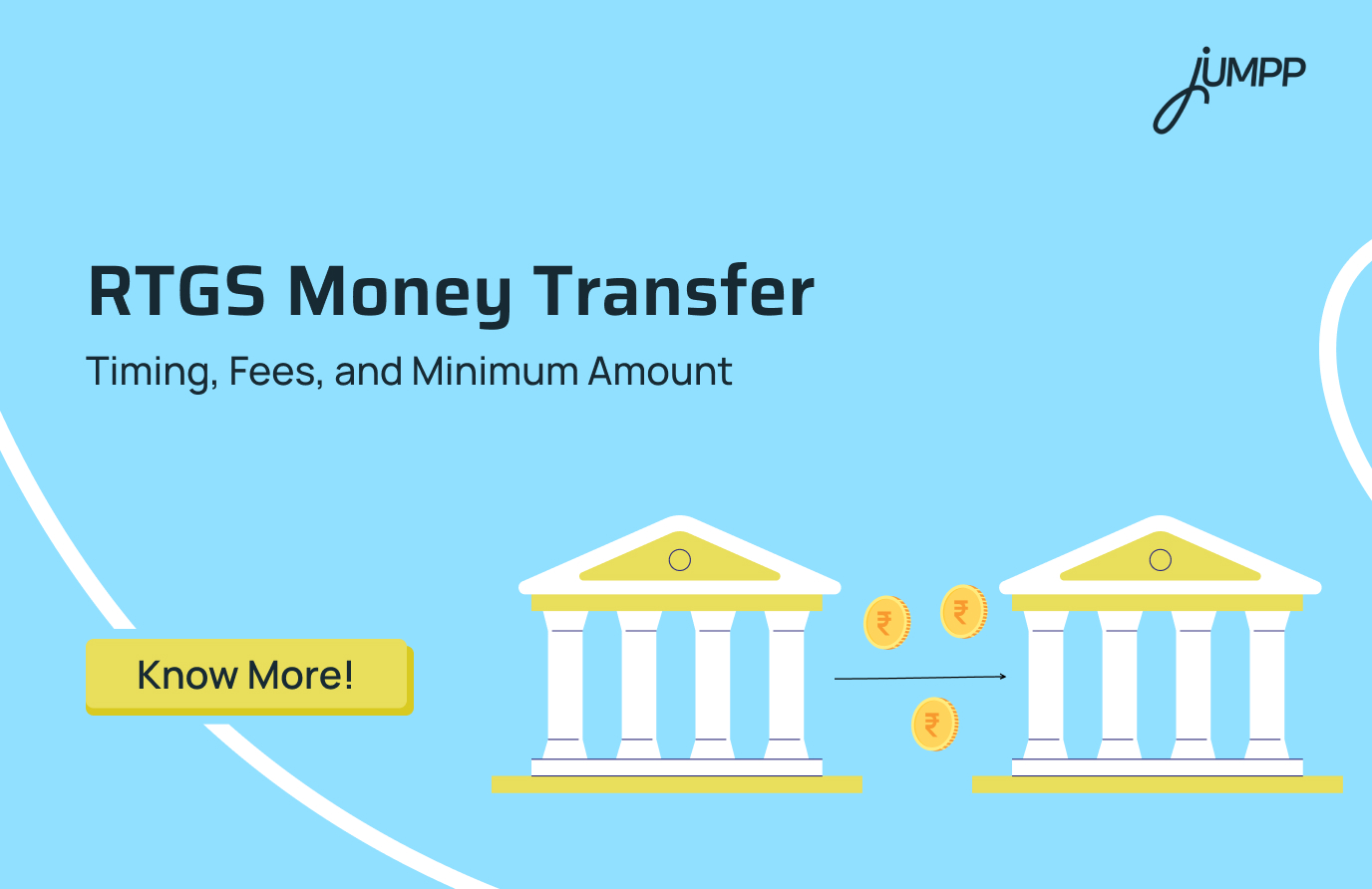
RTGS full form in banking – Real Time Gross Settlement. It is a banking system used to transfer money from one bank account to another instantly. RTGS is mainly used for large-value payments.
How RTGS Works
In RTGS, each transaction is processed separately. The money is not grouped with other transfers. Once the bank sends the instruction, the amount is settled immediately between banks.
The system is regulated by the Reserve Bank of India.
Key Features of RTGS
- Money is transferred in real time
- Each transaction is settled individually
- Used mainly for high-value transfers
- Very secure and reliable
- Available 24 hours a day, including weekends and holidays
RTGS Transfer Timings
RTGS transfer timings in India are available 24 hours a day, 7 days a week, including weekends and holidays, for online transfers.
However, RTGS done through bank branches is allowed only during branch working hours, usually on weekdays between morning and late afternoon, depending on the bank.
How Much Time Does RTGS Takes
RTGS transfers are processed in real time, so money is usually credited instantly or within a few minutes.
As per the Reserve Bank of India guidelines, the beneficiary bank must credit the amount within 30 minutes of receiving the transfer.
If the amount is not credited within this time, you should contact the sender’s bank using the UTR number. Failed RTGS transactions are typically reversed within two hours, and delays beyond the prescribed limit may attract compensation as per regulatory rules.
RTGS Charges in India
- Inward RTGS (receiver): Free; no charges apply.
- Outward RTGS (sender): Charges depend on the bank and channel used.
As per the Reserve Bank of India guidelines, banks can charge up to:
- ₹25 plus GST for ₹2 lakh to ₹5 lakh
- ₹50 plus GST for amounts above ₹5 lakh
Most banks offer free RTGS through net banking or mobile apps, while branch-based RTGS usually attracts charges.
RTGS Limits in India
- Minimum RTGS amount: ₹2 lakh
- Maximum RTGS amount: No upper limit set by the Reserve Bank of India
Banks may apply their own maximum limits for net banking or mobile banking, while branch RTGS usually has no upper cap. RTGS is available 24×7, including weekends and holidays.
Minimum Amount in RTGS
RTGS is meant for large payments. In India, the minimum amount is usually ₹2 lakh. There is no upper limit.
When Should You Use RTGS
- When you need to send a large amount of money
- When the payment is urgent
- For business payments, property transactions, or important personal transfers
How to Transfer Money Using RTGS
RTGS can be done in a few steps. But before that, you need to keep a few things in mind-
Understand When RTGS Can Be Used
RTGS can only be used for transfers of ₹2 lakh or more. There is no upper limit on the amount. The facility is available 24 hours a day, all days of the year, including weekends and holidays.
Both the sender’s bank and the receiver’s bank must be RTGS-enabled, as authorised by the Reserve Bank of India. Once the money is credited, the transaction is final and cannot be reversed.
Information Needed for RTGS Transfer
To make an RTGS transfer, you need:
- Beneficiary name
- Beneficiary account number
- Bank name and branch
- IFSC code
- Transfer amount
RTGS Through Bank Branch (Offline Method)
This method is useful if you are not registered for online banking or prefer in-person assistance.
Step 1: Visit your bank branch during working hours.
Step 2: Ask for the RTGS transfer form and fill in all required details carefully.
Step 3: Submit the form along with cash or a cheque, depending on your bank’s rules.
Step 4: The bank processes the transaction immediately after verification.
You will receive a UTR number, which acts as proof and can be used to track the transfer. Banks may charge a small fee for outward RTGS transactions, while inward credits are generally free.
RTGS Through Net Banking (Online Method)
This is the most commonly used and convenient option.
Step 1: Log in to your bank’s net banking account.
Step 2: Go to the fund transfer or payments section and choose to add a new beneficiary.
Step 3: Select RTGS or other bank transfer and enter the beneficiary details.
Step 4: Confirm the beneficiary addition using the one time password sent to your registered mobile number.
Once the beneficiary is activated:
Step 5: Select RTGS transfer.
Step 6: Choose the debit account and enter the transfer amount.
Step 7: Review all details carefully and submit the request.
The amount is usually credited within minutes. The UTR number generated can be used for tracking.
RTGS Through Mobile Banking App
RTGS can also be done easily using your bank’s official mobile app.
Step 1: Open the app and log in securely.
Step 2: Go to the payments or fund transfer section.
Step 3: Add or select an existing RTGS beneficiary.
Step 4: Enter the amount and confirm the details.
Step 5: Authenticate the transaction using a one time password or biometric verification, depending on the app.
RTGS through mobile apps also follows real time settlement. If the amount is not credited within thirty minutes, you should contact your bank immediately.
RTGS Advantages and Disadvantages
When money cannot wait, RTGS steps in, but speed always comes with responsibility
Advantages of RTGS
RTGS offers real-time settlement, high security, and instant confirmation, making it ideal for large and urgent payments.
- Instant transfer
Money is credited in real time, usually within minutes, making it ideal for urgent payments. - High value friendly
There is no upper limit on the amount, which suits large business or personal transfers. - Available all the time
RTGS works 24 hours a day, including weekends and bank holidays. - Highly secure
The system is regulated by the Reserve Bank of India, ensuring strong safety and reliability. - Paperless process
No cheques or demand drafts are required, keeping transactions simple and digital.
Disadvantages of RTGS
RTGS has a high minimum transfer limit and may not be suitable for small or everyday transactions.
- Minimum amount required
RTGS can only be used for transfers of ₹2 lakh or more, making it unsuitable for small payments. - No reversal option
Once the money is credited, the transaction cannot be cancelled or reversed. - Error sensitive
Any mistake in the account number or IFSC can lead to delays or permanent issues. - System dependency
Transfers rely on both banks’ systems, so technical issues can occasionally cause delays.
To overcome these limitations, many people prefer IMPS for smaller and more frequent transfers. Know what IMPS is and IMPS transfer limits in 2026!
Difference Between RTGS and IMPS
RTGS and IMPS are built for very different needs
| Basis | RTGS | IMPS |
| Full form | Real Time Gross Settlement | Immediate Payment Service |
| Minimum amount | ₹2 lakh | No minimum limit |
| Maximum amount | No upper limit | Usually capped by banks |
| Settlement speed | Real time, instant | Instant |
| Best used for | High-value and urgent transfers | Daily and small value transfers |
| Availability | 24×7, all days | 24×7, all days |
| Reversibility | Cannot be reversed once credited | Cannot be reversed once credited |
- Use RTGS when the amount is large and final settlement is critical.
- Use IMPS for quick, everyday transfers where flexibility and lower amounts matter.
To explore more options, you can also understand the benefits of NEFT and learn the key differences between RTGS and NEFT.
Disclaimer– The rankings and figures in this article have been compiled from multiple verified reports, credible news sources, and public financial data available as of 2026.
All values are approximate and may vary with newer updates, revisions, or changes in official records.
What is RTGS – FAQs
RTGS transfer is a real-time bank fund transfer method used to send ₹2 lakh or more, where money is settled instantly without batch processing.
RTGS in banking refers to a system that enables immediate and irreversible transfer of high-value funds between banks, regulated by the Reserve Bank of India.
RTGS payment is an electronic payment made in real time directly from one bank account to another for large-value transactions.
The minimum RTGS transfer amount is ₹2 lakh, and there is no upper limit on how much money you can send.
RTGS transfers are processed in real time and are meant for high value transactions, while NEFT transfers are processed in batches and are suitable for smaller amounts.
RTGS transfers are usually credited instantly or within a few minutes. As per Reserve Bank of India guidelines, the beneficiary bank must credit the amount within 30 minutes.
RTGS charges vary by bank. Inward RTGS transfers are usually free, while outward transfers may attract a small fee of up to 50₹
An RTGS transaction is a single, real-time settlement of funds that is processed instantly and cannot be reversed once credited.