What Is NEFT in Banking: Full Form, Charges, Timings, and Transfer Limits
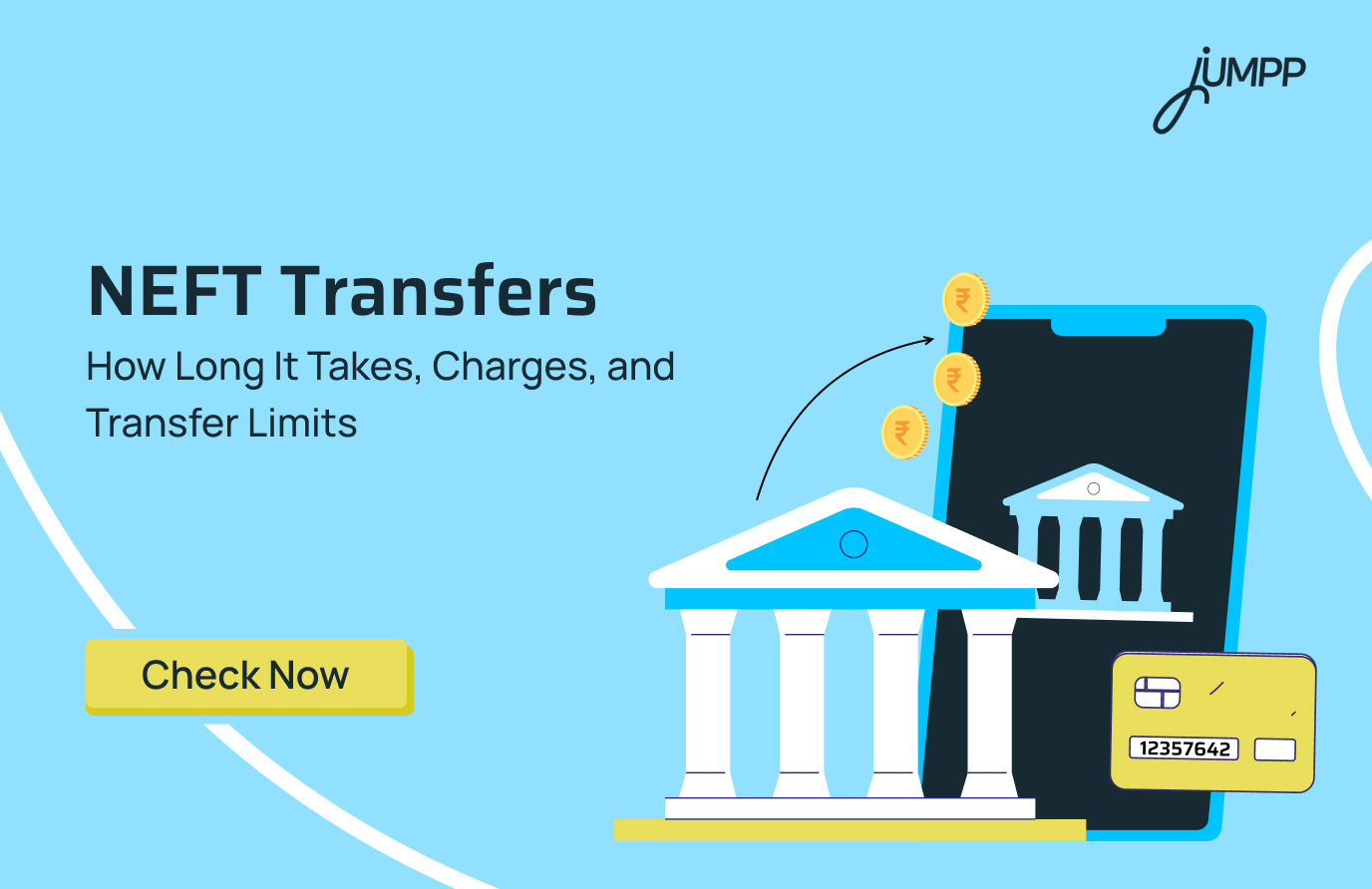
NEFT remains one of the most trusted banking systems in India, handling millions of transactions daily through a regulated, batch-based process. But what is NEFT, and what are the NEFT transfer limits in 2026?
Let’s see!
What is NEFT?
NEFT full form in banking – National Electronic Funds Transfer. It is a nationwide digital payment system regulated by the Reserve Bank of India. NEFT allows you to transfer money securely from one bank account to another within India.
Read about RBI’s latest monetary policy!
To send money through NEFT, you only need the beneficiary’s name, bank account number, bank name, branch, and IFSC code.
There is no minimum or maximum limit on the amount you can transfer through NEFT, making it suitable for both small and large payments. It is widely used for salaries, rent, bill payments, and other routine bank transfers.
How much time does NEFT take to transfer money
NEFT transfers are not instant, but they are usually completed fairly quickly under normal conditions.
- NEFT works on a batch system, where transactions are processed every 30 minutes. Because of this, money is generally credited to the beneficiary’s account within 30 minutes to 2 hours.
- For most online NEFT transfers, the amount is credited within an hour.
- First-time transfers, branch-initiated requests, or transactions made close to a bank’s internal cut-off time may take slightly longer.
NEFT Transfer Limits
National Electronic Funds Transfer (NEFT) does not have a fixed transfer limit set at the system level.
The Reserve Bank of India has not defined any minimum or maximum amount for NEFT transfers. This means you can technically send any amount through NEFT.
However, your bank decides the actual limit. Most banks set their own per-transaction and daily caps based on account type and risk policy.
For individual savings accounts, the NEFT limit usually ranges from ₹10 lakh to ₹1 crore per day. Some banks may allow higher limits through net banking after verification. Corporate and business accounts often have much higher limits, and in some cases, no upper cap.
To know your exact NEFT limit, it is best to check your bank’s net banking dashboard or contact customer support.
NEFT Charges 2026
In most cases, NEFT transfers done through internet banking or mobile banking are free.
As per the Reserve Bank of India guidelines, banks are encouraged to offer online NEFT transactions at zero cost for savings account holders. This is why many banks do not charge anything for online NEFT.
However, branch-based NEFT transfers may attract charges, and these vary from bank to bank.
The typical charges are
- Up to ₹10,000: around ₹2.50 plus GST
- Above ₹10,000 to ₹1 lakh: around ₹5 plus GST
- Above ₹1 lakh to ₹2 lakh: around ₹15 plus GST
- Above ₹2 lakh: around ₹25 plus GST
These charges are indicative and may differ depending on your bank. It is always best to check your bank’s official website or speak to bank staff for the exact NEFT charges that apply to your account.
Features of NEFT You Should Know Before Using It
NEFT offers a balance of accessibility and reliability for routine banking needs.
- Works all day, every day- You can send money anytime through online banking, even on weekends and holidays.
- Batch-based system- Transfers are processed every 30 minutes, so the money is credited after the next batch.
- No transfer limit- You can send a small amount or a large amount. RBI has not fixed any minimum or maximum limit.
- Works across India- You can transfer money to any NEFT-enabled bank account in the country.
- Multiple ways to send money- You can use net banking, mobile banking, or visit a bank branch.
- Safe and regulated- NEFT is managed by the Reserve Bank of India, which makes it secure.
- Low or zero charges- Most online NEFT transfers are free, while branch transfers may have a small fee.
- Transaction confirmation- You receive an SMS or email once the transfer is completed.
NEFT Advantages and Disadvantages
National Electronic Funds Transfer (NEFT) is widely used for everyday bank transfers, but like any payment method, it comes with both strengths and limitations that are worth knowing.
Benefits of NEFT
When instant transfers are not necessary, NEFT offers stability, traceability, and wide acceptance across banks and institutions.
- Good for non-urgent payments- Best suited for planned transfers where instant credit is not required.
- Easy to manage records- NEFT creates a proper bank trail, which helps with accounting and tax records.
- Useful for all types of users- Individuals, businesses, and companies can all use NEFT comfortably.
- Reduces cash usage- Helps move away from cash and paper-based payments.
- Trusted for official payments- Commonly used for salaries, vendor payments, and institutional transfers.
- More stable during high traffic- Batch processing reduces the chances of failures during peak hours.
- Accepted for regular expenses- Widely used for rent, school fees, insurance premiums, and loan payments.
Disadvantages of NEFT
Here are certain things you should keep in mind while using NEFT facility.
- Not instant- NEFT transactions are processed in batches, so money is not credited immediately.
- Needs correct details- Any mistake in the account number or IFSC can lead to delays or failed transfers.
- Possible bank charges- While online transfers are usually free, some banks may charge for branch-based NEFT.
- Mainly for domestic transfers- NEFT is primarily meant for transfers within India, with very limited cross-border use.
- Less suitable for urgent payments- If immediate transfer is required, options like IMPS may work better.
NEFT vs RTGS: Which Bank Transfer Should You Use
Choosing between NEFT and RTGS is less about which one is better and more about how urgent your payment is and how much money you are moving.
| Basis | NEFT | RTGS |
| Full form | National Electronic Funds Transfer | Real Time Gross Settlement |
| Transfer speed | Not instant | Instant |
| Processing method | Batch-based settlement | Real-time, transaction by transaction |
| Best suited for | Regular, non-urgent payments | Urgent, high-value payments |
| Minimum transfer limit | No minimum limit | ₹2 lakh |
| Maximum transfer limit | No upper limit set by RBI | No upper limit set by RBI |
| Typical usage | Rent, salaries, bills, EMIs | Property payments, large business transfers |
| Charges | Usually free for online transfers | May involve charges depending on bank |
| Availability | 24 hours a day, including holidays | 24 hours a day, including holidays |
NEFT is best for everyday payments where timing is flexible. RTGS is ideal when you need to move a large amount of money immediately.
Know the difference between IMPS, NEFT, and RTGS to choose the right transfer method the next time you make a payment.
Disclaimer– The rankings and figures in this article have been compiled from multiple verified reports, credible news sources, and public financial data available as of 2026.
All values are approximate and may vary with newer updates, revisions, or changes in official records.
NEFT Transfers – FAQs
NEFT payment is a digital way to transfer money from one bank account to another within India. It is regulated by the Reserve Bank of India and works through scheduled batch processing.
A NEFT transaction is a bank transfer where funds are sent in batches at regular intervals. The money is usually credited within a few minutes to a couple of hours, depending on the batch cycle.
NEFT in banking refers to the National Electronic Funds Transfer system used for domestic fund transfers. It is operated by the Reserve Bank of India and is available 24 hours a day, including holidays.
NEFT processes transactions in batches and is not instant. RTGS transfers money in real time and is mainly used for large-value payments.
NEFT usually takes 30 minutes to 2 hours. Most online transfers are completed within an hour.
Yes, NEFT is safe as it is regulated by the Reserve Bank of India. All transactions are secure and traceable.
Online NEFT transfers are generally free. Branch-based transfers may have small charges depending on the bank.
NEFT is not instant and requires the correct bank details. It is not suitable for urgent payments.
You receive an SMS or email confirmation once the money is credited. The transaction status can also be checked in net banking.
It depends on urgency. NEFT is best for planned payments, while IMPS or RTGS are better for instant transfers.
People use NEFT because it is safe, widely accepted, and cost-effective. It is ideal for regular and official bank transfers.