How a Down Payment Changes Your Loan, EMI, and Total Cost
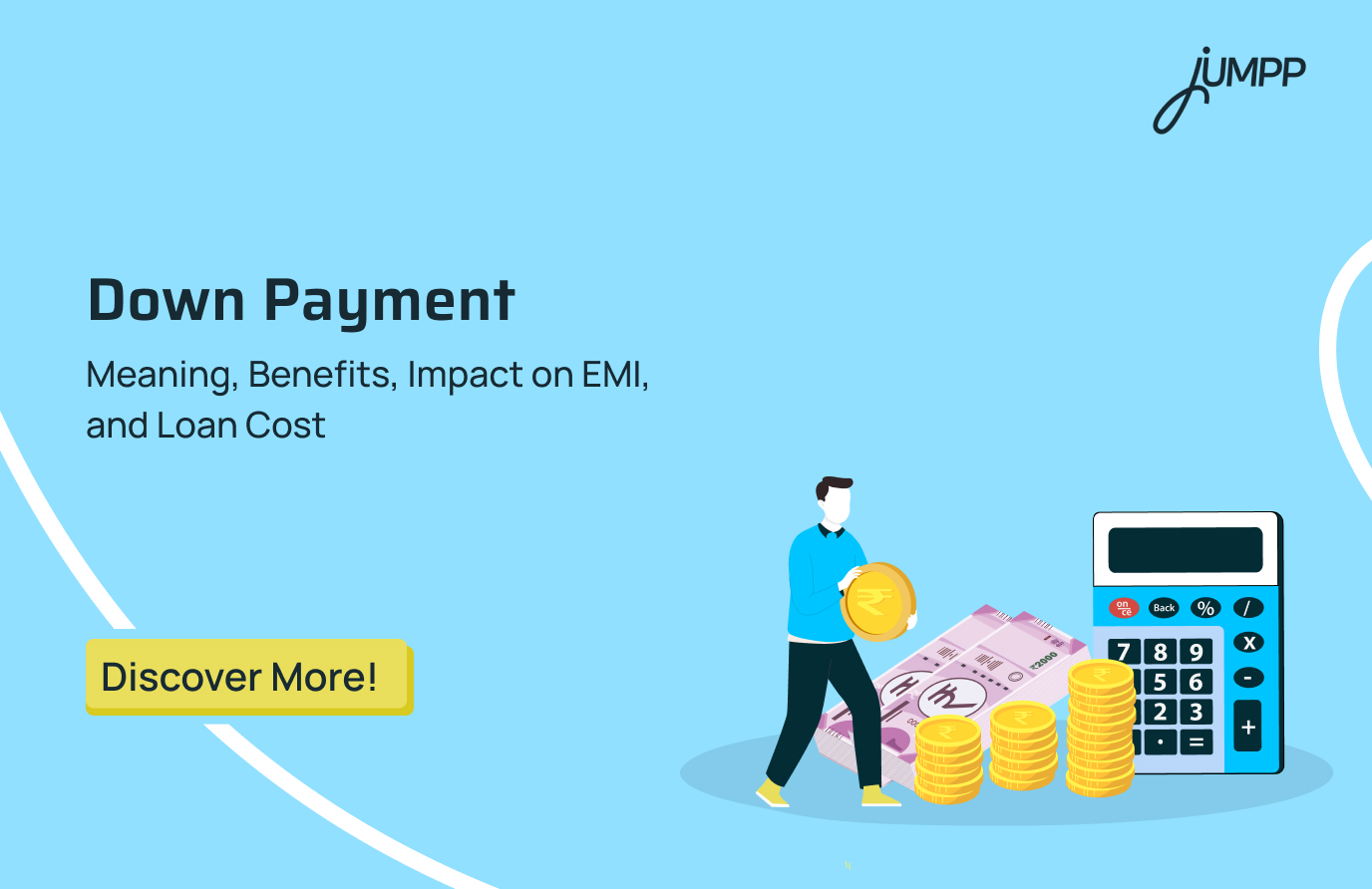
Before any loan is taken, whether it is for a home, construction, or a car, the same discussion repeats itself in most families. How much can we actually pay upfront? Should we touch our savings? What if something goes wrong after taking the loan? Paying less upfront feels safer in that moment, but it quietly stretches the pressure into the coming years through higher EMIs and interest. The down payment sits right at the centre of this tension. Pay more now and feel exposed, or pay less now and carry the weight every single month.
What is a Down Payment?
A down payment is the upfront amount paid in cash when purchasing a high-value asset, such as a house or car, with the remaining amount financed through a loan. It is usually calculated as a percentage of the total cost and helps reduce the loan amount, interest burden, and lender risk.
How Does a Down Payment Work?
When you buy an asset using a loan, the down payment is paid directly to the seller or builder at the time of purchase. The lender then finances the remaining amount after assessing eligibility, credit profile, and loan-to-value limits.
For example, if a property costs ₹50 lakh and you make a 20% down payment, you pay ₹10 lakh upfront. The bank finances the remaining ₹40 lakh, and your EMI is calculated on this amount, not on the full property value.
Down Payment vs EMI: The One Decision That Shapes Your Loan Cost
What you pay upfront and what you repay monthly are not the same decision, but together they decide how expensive your loan becomes over time.
| Basis | Down Payment | EMI (Equated Monthly Instalment) |
| Meaning | Upfront amount paid at the time of purchase | Monthly payments are made to repay the loan |
| Timing | Paid once before the loan starts | Paid regularly over the loan tenure |
| Purpose | Reduces the loan amount and lender risk | Repays the remaining loan amount with interest |
| Impact on Loan | Lowers the total principal borrowed | Gradually clears principal and interest |
| Interest | No interest is charged on the down payment | Each EMI includes interest and principal |
| Flexibility | Usually, a fixed percentage is decided by the lender | Tenure or prepayments can sometimes be adjusted |
Managing a down payment often starts with keeping your savings disciplined and separate. A zero balance savings account can help you park your down payment funds without the pressure of minimum balance requirements.
Benefits of Down Payment: Why Paying More Upfront Helps
A down payment does more than just help you qualify for a loan. Paying more upfront immediately brings down how much you need to borrow, which means lower interest costs over time and EMIs that feel easier to manage every month.
Advantages of Down Payment You Feel Over the Loan Tenure
- It reduces the total loan amount, making the debt easier to manage
- It lowers the overall interest paid across the loan tenure
- A loan down payment results in smaller and more manageable monthly EMIs
- If you make a down payment on a loan, it can help improve loan approval chances by reducing lender risk
- A down payment helps secure better interest rates and loan terms
- It builds ownership or equity in the asset from the very beginning
- It reflects financial discipline and strengthens lender confidence
A higher down payment often means less financial pressure in the long run, even if it feels heavy at the start.
Are there Any Disadvantages of a Down Payment
A down payment can affect your finances before the loan even begins.
- Large down payments can drain savings meant for emergencies or daily stability
- Reduced liquidity limits flexibility for investments or unexpected expenses
- Time spent saving can delay important purchase decisions
- Smaller down payments increase EMIs and total interest paid
- Lower upfront equity increases financial pressure in the early years
Impact of Down Payment on Interest and EMIs
The size of your down payment directly affects how much you borrow, how much interest you pay, and how heavy your monthly EMI feels. A higher down payment lowers the loan amount, reduces lender risk, and often results in lower interest outgo over time.
The table below shows how different down payment levels impact the loan amount and EMI for a ₹50 lakh home, assuming a 20 year home loan at 9 percent interest.
| Down Payment (%) | Down Payment (₹) | Loan Amount (₹) | Approx EMI (₹) | Total Interest Paid (₹) |
| 10% | 5,00,000 | 45,00,000 | 40,500 | 52,20,000 |
| 20% | 10,00,000 | 40,00,000 | 36,000 | 46,40,000 |
| 25% | 12,50,000 | 37,50,000 | 33,800 | 43,00,000 |
| 30% | 15,00,000 | 35,00,000 | 31,600 | 39,80,000 |
For example, with a 10 percent down payment, the EMI remains higher, and the total interest paid over the loan tenure increases significantly. As the down payment rises, the EMI comes down, and the overall interest burden reduces, even though the upfront payment is larger.
This is why lenders often encourage higher down payments.
Want to understand why loan interest rates rise or fall over time?
The answer often lies in government finances. Learn the fiscal deficit meaning, how it affects inflation, interest rates, and why it directly impacts home loans and EMIs in India.
Disclaimer– The rankings and figures in this article have been compiled from multiple verified reports, credible news sources, and public financial data available as of 2026.
All values are approximate and may vary with newer updates, revisions, or changes in official records.
Down Payment Meaning – FAQs
A down payment is the initial amount paid upfront when buying an asset like a home or car using a loan. It reduces the total loan amount and lowers interest and EMI burden.
Down payments usually range between 10% and 25%. In India, banks typically require 20% for most home loans, while higher-value properties may require 25%.
The buyer pays the down payment directly to the seller or builder at the time of purchase. The bank finances the remaining amount through a loan.
A down payment is generally non-refundable if the buyer withdraws without a valid reason. It may be refunded in limited cases, such as loan rejection or seller default, subject to terms.
In EMI-based purchases, the down payment is the amount paid before the loan starts. A higher down payment results in a lower loan principal and smaller EMIs.
A 20% down payment on ₹5,00,000 is ₹1,00,000. The remaining ₹4,00,000 is financed through a loan.
Some lenders offer zero down payment schemes for consumer durables or promotional car loans. For home loans, regulations set by the Reserve Bank of India generally require a minimum down payment.