Repo Rate Meaning, Importance, and Impact on Loans, Savings, and the Economy
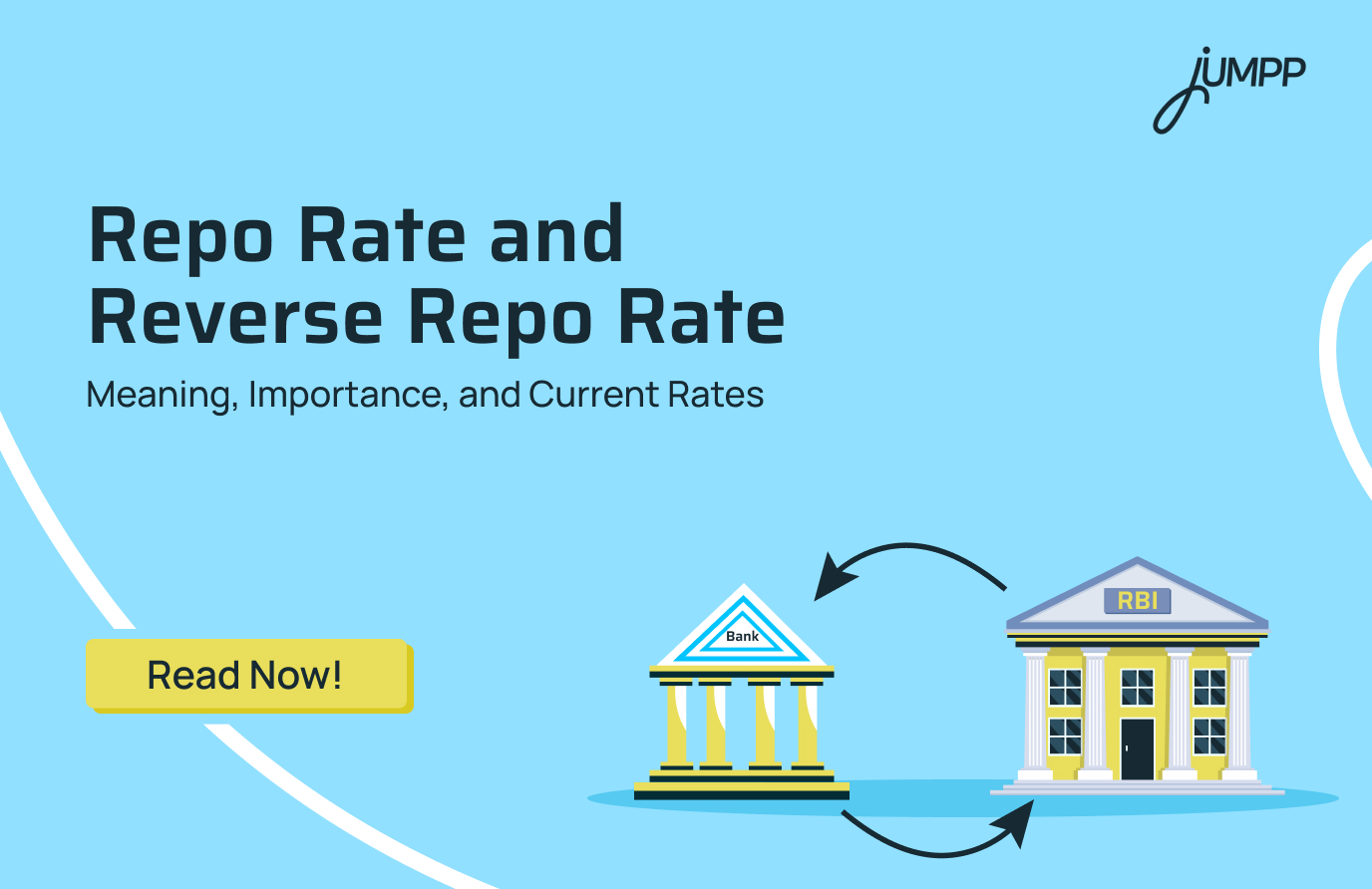
Every time loan EMIs change, the repo rate is usually the reason. From home loans to personal loans, its impact is real and immediate. The repo rate decides how expensive borrowing becomes, how attractive savings feel, and how money moves across the economy. Let us understand the Repo rate meaning in detail.
Repo Rate Meaning
The repo rate is the interest rate at which the central bank lends short-term money to commercial banks against government securities. In India, this rate is set by the Reserve Bank of India to control inflation, liquidity, and overall borrowing costs in the economy.
Current Repo Rate and Reverse Repo Rate in India (2026)
As of early January 2026, the Reserve Bank of India has set the repo rate at 5.25 percent, reduced from 5.50 percent in December 2025. The reverse repo rate remains unchanged at 3.35 per cent.
How the Repo Rate Works
- Commercial banks face a short-term shortage of funds and approach the central bank for borrowing.
- Banks sell government securities to the central bank in exchange for funds.
- An agreement is made to repurchase the same securities at a future date.
- The repurchase price includes interest calculated at the repo rate.
- The central bank holds the securities as collateral until repayment.
- Once the bank repays the borrowed amount along with interest, the securities are returned.
- By increasing or decreasing the repo rate, the central bank controls liquidity and borrowing costs in the economy.
Why is Repo Rate Important?
The repo rate plays a central role in how an economy is managed. In India, it is one of the most important tools used by the Reserve Bank of India to maintain economic stability.
Controls Inflation
When inflation rises, an increase in the repo rate makes borrowing costlier for banks. This reduces lending and spending, helping to control rising prices.
Regulates Economic Growth
During periods of slow growth, a lower repo rate encourages banks to lend more. Cheaper loans boost spending, investment, and overall economic activity.
Manages Liquidity in the Banking System
The repo rate helps control how much money is available with banks. This ensures that the financial system remains stable and does not face excess cash shortages or oversupply.
Influences on Loan Interest Rates
Changes in the repo rate directly affect home loan, car loan, and personal loan interest rates. When the repo rate changes, borrowing costs for consumers usually change as well.
Impact Savings and Fixed Deposit Returns
A higher repo rate often leads to better interest rates on savings accounts and fixed deposits. This encourages people to save rather than spend.
Acts as a Core Monetary Policy Tool
The repo rate is one of the primary instruments through which the central bank guides inflation, growth, and financial discipline in the economy.
Read about RBI’s latest monetary policy!
Impact of the Repo Rate Cut on the Economy
The repo rate has a direct and visible impact on the economy, banks, and individual borrowers. In India, changes in the repo rate are decided by the Reserve Bank of India and affect money flow across the system.
Impact When the Repo Rate Increases
- Repo Rate Impact on Loan
Loans Become Costlier. Banks borrow at a higher cost and pass this on to customers. Home loan, car loan, and personal loan EMIs increase.
Repo rate changes affect different loans in different ways. Read about the common types of loans in India to understand how interest rate movements impact each one.
- Inflation Comes Under Control
Higher interest rates reduce borrowing and spending, which helps slow down rising prices. - Savings Become More Attractive
Fixed deposits and savings accounts usually offer higher interest rates, benefiting savers. - Economic Growth Slows Down
Higher borrowing costs discourage investment and consumption. - Currency May Strengthen
Higher rates can attract foreign investment, supporting the domestic currency.
Impact When the Repo Rate Decreases
- Loans Become Cheaper
Banks lower lending rates, reducing EMIs and making borrowing more affordable. - Spending and Investment Increase
Lower rates encourage businesses and individuals to spend and invest. - Savings Returns Reduce
Interest rates on fixed deposits and savings accounts may fall. - Economic Growth Gets a Boost
Increased lending supports expansion and job creation. - Currency May Weaken
Lower returns can reduce foreign investment inflows.
In simple terms, the repo rate influences how expensive money is, shaping borrowing behaviour, savings decisions, and overall economic direction.
Repo Rate vs Reverse Repo Rate
| Basis | Repo Rate | Reverse Repo Rate |
| Meaning | The interest rate at which the central bank lends money to commercial banks | The interest rate at which the central bank borrows money from commercial banks |
| Direction of money flow | Money flows from the central bank to banks | Money flows from banks to the central bank |
| Liquidity impact | Injects liquidity into the banking system | Absorbs excess liquidity from the banking system |
| Purpose | Encourages lending and economic growth | Controls inflation and excess money supply |
| When it is used | During a cash shortage or slow economic growth | When there is excess money in the system |
| Impact on banks | Banks get funds to lend | Banks earn interest by parking surplus funds |
| Effect on borrowers | Loan interest rates and EMIs may change | No direct impact on borrower EMIs |
| Policy role | Stimulates economic activity | Maintains financial stability |
In simple terms, the repo rate adds money to the system, while the reverse repo rate removes excess money to keep the economy balanced.
Disclaimer– The rankings and figures in this article have been compiled from multiple verified reports, credible news sources, and public financial data available as of 2026.
All values are approximate and may vary with newer updates, revisions, or changes in official records.
Repo Rate Meaning – FAQs
The repo rate is the interest rate at which the Reserve Bank of India lends short-term funds to commercial banks against government securities. It is used to control liquidity, inflation, and borrowing costs in the economy.
Repo is when banks borrow money from the RBI by selling securities with an agreement to repurchase them later. A reverse repo is when the RBI borrows excess funds from banks, helping absorb surplus liquidity.
When the repo rate increases, borrowing becomes costlier for banks, and loan interest rates usually rise. This reduces spending and helps control inflation but can slow economic growth.
The RBI repo rate is the policy rate announced by the Monetary Policy Committee in its latest review. It may change over time, so it should always be checked from the most recent RBI policy announcement.
CRR is the portion of bank deposits that must be kept as cash with the RBI and cannot be lent. Repo rate is the rate at which banks borrow short-term funds from the RBI, and both are tools to manage the money supply.
A 7% interest rate means the cost of borrowing or return on investment is 7% per year. Higher rates benefit savers, while lower rates reduce borrowing costs.
A fixed rate remains unchanged throughout the loan tenure, offering stability. A floating rate changes with repo rate movements and may be cheaper when interest rates fall.
When the RBI cuts the repo rate, loans become cheaper, and EMIs may reduce. This encourages borrowing, spending, and economic growth.