Hard Inquiry vs Soft Inquiry: Meaning, Impact and Differences
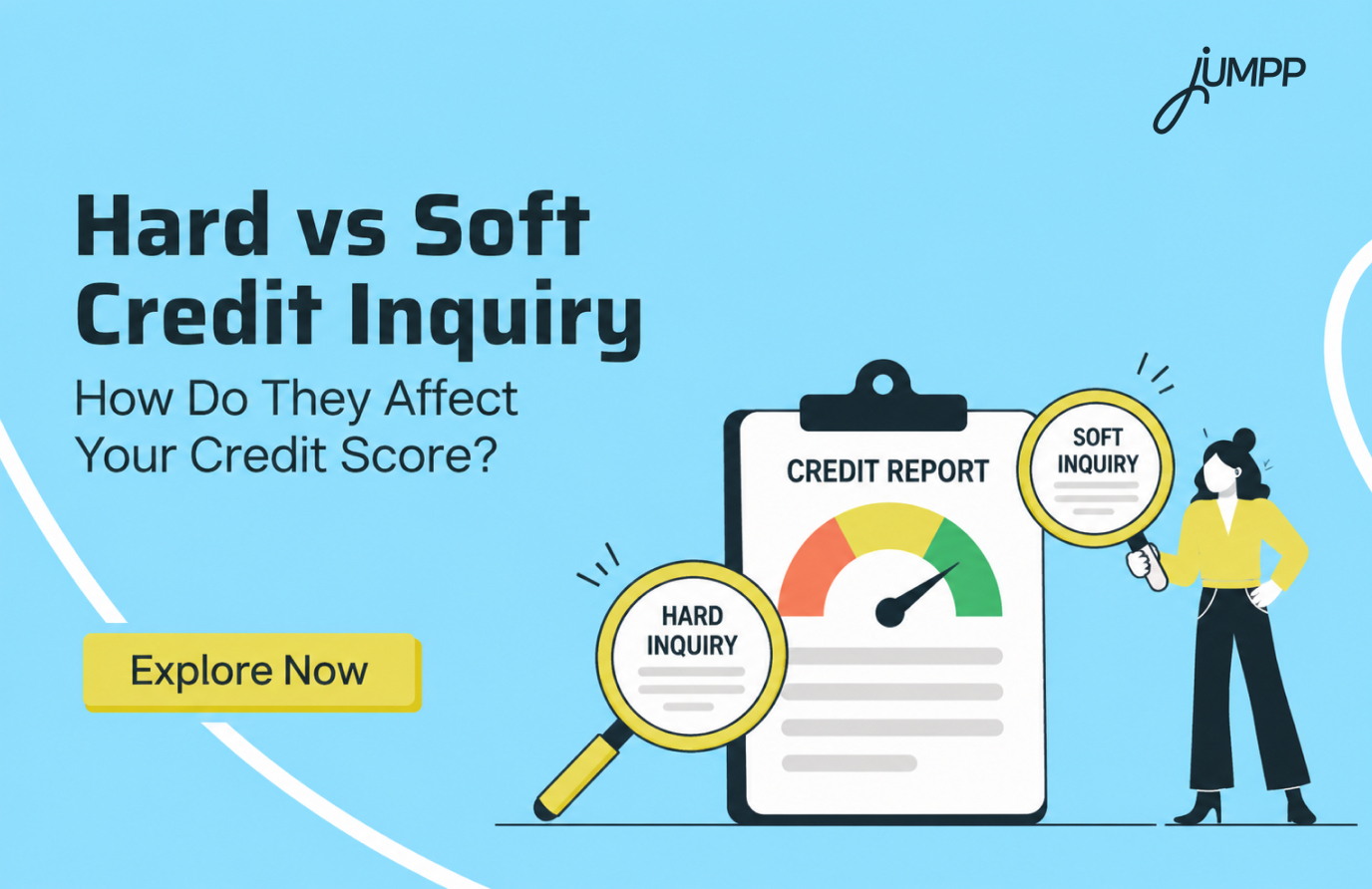
You check your credit score today. Tomorrow, a lender checks it when you apply for a loan. Both involve accessing your credit information, but they don’t necessarily affect your credit profile in the same way.
This is because one may be a hard inquiry, while the other may be a soft inquiry.
In this blog, you will understand hard inquiry vs soft inquiry, how each works and the difference they can make to your credit profile.
Hard Inquiry vs Soft Inquiry: What Is the Difference?
A hard inquiry generally happens when a lender checks your credit information after you apply for a loan, credit card or another form of credit.
A soft inquiry usually occurs for purposes that are not connected to a new formal credit application.
Here is the detailed difference between a hard and a soft inquiry :
| Basis | Hard Inquiry | Soft Inquiry |
| Meaning | Detailed credit check generally connected to a credit application | Credit check generally not connected to a formal credit application |
| Common situation | Applying for a loan or credit card | Checking your own score or certain pre-approved offers |
| Initiated by | Usually a lender or credit institution | You, a lender or another authorised organisation |
| Credit score impact | May temporarily affect the score, depending on the credit bureau/scoring model | Does not affect the credit score |
| Credit report | Hard inquiry is recorded on the credit report | Treatment/visibility can differ depending on the credit bureau |
| Consent | Customer consent is generally required | Consent requirements depend on the nature and purpose of the inquiry |
| Lending decision | Commonly associated with a formal credit assessment | Generally used for purposes other than a formal new-credit decision |
What Is a Hard Inquiry on a Credit Report?
A hard credit inquiry is a credit check generally carried out by a lender when you formally apply for credit. It allows the lender to review your credit history and assess your creditworthiness before deciding on the application.
When Does a Hard Inquiry Happen?
A hard inquiry usually occurs when you actively apply for new credit or request certain changes to an existing credit facility.
Common situations include:
- Applying for a personal loan.
- Applying for a home loan.
- Applying for an education loan.
- Applying for a new credit card.
- Applying for an auto loan.
- Requesting a higher credit limit where the issuer performs a hard credit check.
What Is the Impact of a Hard Inquiry on Credit Score?
A hard inquiry can temporarily lower your credit score by a few points, although a single inquiry usually has only a minor impact.
- A hard inquiry can temporarily lower your credit score by a few points.
- A single hard inquiry usually has only a small impact on your score.
- Multiple hard inquiries in a short period can have a greater negative effect.
- The impact is usually higher for people with a short or limited credit history.
- A hard inquiry may stay on your credit report for up to two years.
- Its effect on your credit score generally reduces over time and is typically considered for around 12 months.
Your credit report contains more than just inquiries. Learn what DPD in CIBIL means, how it is shown on your credit report, and why it can matter when lenders assess your creditworthiness.
What Is a Soft Inquiry on a Credit Report?
A soft credit inquiry is a credit check generally carried out for reasons other than evaluating a new formal credit application. It can occur when you check your own credit information or when an authorised organisation reviews it for certain other purposes.
When Does a Soft Inquiry Happen?
A soft inquiry can occur in several situations where your credit information is reviewed without a formal application for new credit. The exact use case and consent requirements can depend on the organisation and purpose.
Examples may include:
- Checking your own credit score.
- Checking your own credit report.
- Certain pre-approved or pre-qualified credit offers.
- Certain promotional credit offers.
- Periodic account or portfolio reviews by credit institutions.
- Certain background checks where permitted and applicable.
Does a Soft Inquiry Affect Credit Score?
No, a soft inquiry does not affect your credit score. Checking your own credit information is therefore different from formally applying for a new loan or credit card.
Does Checking Your Own Credit Score Cause a Hard Inquiry?
No. Checking your own credit score is treated as a soft inquiry rather than a hard inquiry. It does not lower your credit score simply because you viewed it.
Regularly reviewing your credit information can also help you:
- Track changes in your credit profile.
- Check whether account information is accurate.
- Identify unfamiliar activity.
- Understand your current credit position before applying for credit.
Credit Card Usage Tips: How to Use Your Credit Card Smartly
How Can You Limit Unnecessary Hard Credit Inquiries?
You cannot always avoid a hard inquiry when you genuinely need to apply for credit, but you can avoid creating unnecessary applications. Being selective about when and where you apply can help keep your credit report from accumulating avoidable inquiries.
You can consider:
- Checking eligibility before submitting a formal application where a soft-check option is available.
- Avoiding several unnecessary credit card applications within a short period.
- Understanding whether a lender will conduct a hard or soft check before proceeding, where this information is available.
- Reviewing your credit report periodically for unfamiliar inquiries.
- Applying for credit based on an actual financial requirement rather than making repeated applications.
Can You Remove a Hard Inquiry from Your Credit Report?
A legitimate hard inquiry generally cannot simply be removed because it resulted from an authorised credit application. However, an unfamiliar or inaccurate inquiry should be investigated.
If you notice an inquiry you do not recognise:
- Check the lender or institution associated with the inquiry.
- Confirm whether it relates to an application you made.
- Contact the relevant institution if you still do not recognise it.
- Follow the applicable credit bureau’s dispute process if the information is inaccurate.
An unfamiliar inquiry can also be worth investigating because it may indicate an unauthorised credit application.
If you notice unusual activity on your financial accounts, it is important to understand what different account restrictions mean. Learn the account frozen meaning, common reasons for a freeze, and what you can do next.
FAQs
Yes, hard inquiries can impact your credit. However, the impact is usually small and for a limited time only.
A hard inquiry occurs when a lender checks your credit report after you apply for a loan or credit card. However, a soft inquiry can occur when you check your own credit or for certain non-lending purposes.
A credit inquiry means that your credit information has been accessed by you or an authorised organisation for a specific purpose. It may be classified as a hard or soft inquiry depending on why the information was accessed.
No. Checking your own credit score is treated as a soft inquiry and does not affect your credit score.
A hard inquiry generally stays on your credit report for up to two years. However, it only affects your credit score for a few months to a year
There is no universal fixed number. CIBIL describes the impact of an individual enquiry as minimal but does not specify a fixed point deduction.
You can check your own credit report directly through a credit bureau without creating a hard inquiry.
Lenders perform hard inquiries to review your credit history and assess your creditworthiness when processing a credit application.
A credit check is generally considered a hard inquiry when a lender accesses your credit information as part of a formal application for new credit, such as a loan or credit card. It may also occur for certain requests such as an increase in an existing credit-card limit.