Difference Between Direct and Indirect Tax – Smart Tax Planning Starts Here
Every time you earn, you pay tax. Every time you spend, you pay tax again. Yet most people never fully understand the difference between direct and indirect taxes, and that confusion quietly affects how they plan, save, and invest their money.
What is the Difference Between Direct and Indirect Tax in 2026
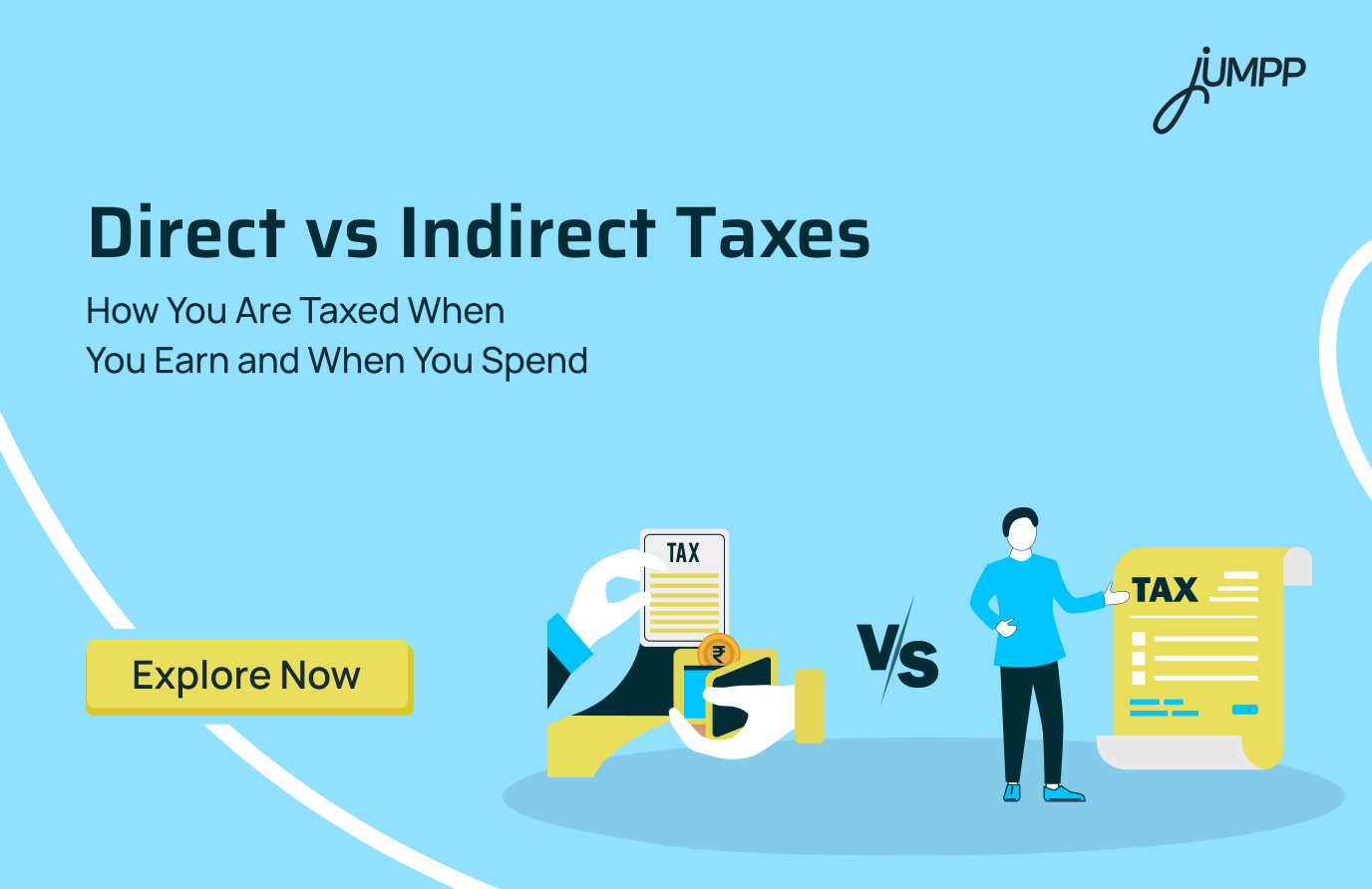
Direct taxes are paid directly to the government by the taxpayer. Indirect taxes, on the other hand, are collected by sellers and passed on to consumers.
| Feature | Direct Tax | Indirect Tax |
| Meaning | Charged on income or profit | Charged on goods and services |
| Who pays | Paid directly by individuals or businesses | Paid by consumers but collected by sellers |
| Burden of tax | Cannot be shifted to others | Passed on to the final consumer |
| Examples | Income tax, corporate tax, capital gains tax | GST, customs duty, excise duty |
| Visibility | Clearly visible as it is paid separately | Included in price, less noticeable |
| 2026 context | Continues under the updated income tax structure | Focus remains on GST with ongoing simplification |
Direct taxes are based on the ability to pay, while indirect taxes depend on consumption, making both essential parts of India’s tax system.
Curious how high-income individuals manage taxes and wealth? Discover the richest person in Uttar Pradesh and learn how income scale influences tax planning strategies.
What is Direct Tax
Direct tax is a tax charged directly on the income, profit, or wealth of an individual or business. It is paid straight to the government, and the burden cannot be shifted to anyone else.
If you want understand how tax payments are scheduled, read What is Advance Tax and Who Should Pay It? to see how timing affects your tax liability.
What are the Types of Direct Tax
In India, the major types of direct taxes include Income Tax (on individual earnings), Corporate Tax (on business profits), Capital Gains Tax (on asset sales), Securities Transaction Tax (STT), and Property Tax.
- Income tax: Paid by individuals and HUFs on the income they earn during the year
- Corporate tax: Paid by companies on the profits from their business activities
- Capital gains tax: Charged on the profit made from selling assets like property, shares, or gold
- Securities transaction tax (STT): Applied when buying or selling shares and other securities on stock exchanges
- Property tax: Paid by property owners to local authorities on land or buildings
- Gift tax (in specific cases): Applicable when the value of gifts received crosses the allowed limit
What are the Merits and Demerits of Direct Tax
Direct taxes promote fairness and transparency since people pay tax based on their income, but they can feel burdensome as the payment comes directly from earnings. They also face issues like tax evasion, and may reduce motivation to earn or invest more.
| Merits of Direct Tax | Demerits of Direct Tax |
| People with higher incomes pay more, which helps reduce income gaps | Some people try to hide income, so tax evasion becomes a real issue |
| You know exactly how much tax you need to pay | Paying directly from your income can feel heavy and unavoidable |
| It makes people more aware of how their money is being used by the government | Higher tax rates can discourage extra earnings or investment |
| Government revenue increases as people earn more | A large section of low-income earners may not be part of the tax system |
| It can help control inflation by reducing excess spending | Managing and enforcing direct taxes requires strong systems and effort |
What is an Indirect tax?
An indirect tax is a tax that is charged on goods and services rather than directly on a person’s income. It is collected by a seller or service provider and then paid to the government, but the actual burden is borne by the consumer.
What are the Types of Indirect Taxes in India?
The main types of indirect taxes in India include GST, customs duty, excise duty, VAT, stamp duty, and securities transaction tax.
- Goods and Services Tax (GST): Tax on the supply of goods and services
- Customs Duty: Tax on imported and exported goods
- Excise Duty: Tax on the manufacture of specific goods like fuel and alcohol
- Value Added Tax (VAT): Applicable on items like petrol and alcohol
- Stamp Duty: Charged on legal documents and property transfers
- Securities Transaction Tax (STT): Levied on stock market transactions
What are the Merits and Demerits of Indirect Tax
Indirect tax can help the government earn steady revenue and promote responsible behaviour. However, it can be unfair to low-income people and often makes everyday goods more expensive.
| Merits of Indirect Tax | Demerits of Indirect Tax |
| Easy to pay: Included in price, no separate filing for consumers | Regressive nature: The poor pay a higher share of their income |
| Wide coverage: Everyone contributes through spending | Inflationary impact: Higher taxes increase prices |
| Difficult to evade: Collected at the point of sale | Hidden burden: People may not realise how much tax they pay |
| Steady revenue: The government earns regularly from consumption | Depends on demand: Revenue falls if spending reduces |
| Discourages harmful goods: A higher tax on tobacco and alcohol reduces usage | Complex for businesses: Compliance and filing can be complicated |
How Does Understanding the Difference Between Direct and Indirect Taxes Help in Tax Planning and Financial Decisions?
Understanding the difference between direct and indirect taxes helps in tax planning by showing where you can reduce liability through deductions and investments versus where taxes are built into spending.
- Makes it clear that indirect taxes are included in everyday spending
- Improves budgeting by accounting for hidden taxes in expenses
- Supports better cash flow planning
- Encourages more informed and mindful spending decisions
Taxes are only one part of your financial picture. Explore Financial Health Indicators You Should Track Regularly to understand how taxation connects with your overall money management.
How do direct taxes support better tax planning?
Direct taxes, such as Income Tax and Corporate Tax, are paid directly to the government based on income, which makes them highly controllable with structured planning.
Here is how direct taxes improve financial decisions:
- Deductions and exemptions: Sections such as 80C, 80D, and 80CCD reduce taxable income through eligible investments, insurance, and retirement contributions
- Investment planning: Instruments like PPF, NPS, and ELSS support long-term wealth creation while offering tax benefits
- Salary structuring: Components such as House Rent Allowance and Leave Travel Allowance can legally reduce taxable income
- Capital gains management: Timing the sale of assets helps optimise tax liability, depending on short term and long term classification
How do indirect taxes influence financial decisions?
Indirect taxes are included in the price of goods and services, which means they influence behaviour rather than being directly planned. Every purchase decision is indirectly shaped by these taxes.
Financial impact of indirect taxes:
- Consumer choices: Higher GST on luxury goods encourages spending on essential or lower-taxed items
- Budgeting: Since taxes are embedded in prices, they increase overall monthly expenses without being separately visible
- Business cash flow: Proper use of Input Tax Credit reduces the effective tax burden and improves liquidity
- Pricing strategy: Businesses must include GST rates in pricing decisions to remain competitive and protect margins
What are the key differences between direct and indirect taxes that affect financial planning?
- Tax burden: Direct taxes are paid by the taxpayer, while indirect taxes are passed on to the final consumer
- Nature of tax: Direct taxes are progressive and increase with income, whereas indirect taxes apply uniformly regardless of income level
- Compliance: Direct taxes require structured filings such as annual returns, while indirect taxes are collected at the point of transaction
Still unsure how taxes impact your overall financial stability? Read How to Check Loan on PAN Card to understand how your financial records, borrowing, and tax profile are all connected.
Disclaimer– The rankings and figures in this article have been compiled from multiple verified reports, credible news sources, and public financial data available as of 2026.
All values are approximate and may vary with newer updates, revisions, or changes in official records.
Difference Between Direct and Indirect Tax in India – FAQs
From April 1, 2026, the Income Tax Act, 2025, replaces the 1961 law, introducing a simplified “Tax Year” concept. It also expands exemptions, updates compliance forms, and strengthens digital reporting and audit systems.
Direct tax is paid by individuals and entities earning taxable income, including salaried employees, professionals, firms, HUFs, and companies. The liability is borne by the same person or entity on whom it is imposed.
The main indirect taxes in India include GST, Customs Duty, Excise Duty, Stamp Duty, and Securities Transaction Tax. While GST covers most goods and services, others apply to specific transactions like imports or property transfers.
Yes, Goods and Services Tax (GST) is an indirect tax because it is collected by businesses from consumers and then paid to the government. The tax burden ultimately falls on the end consumer.
TDS (Tax Deducted at Source) is a direct tax. It is deducted directly from an individual’s income, such as salary, interest, or rent, before the income is received.
Yes, a ₹12 lakh annual salary can be effectively tax-free under the new tax regime for FY 2025–26 (AY 2026–27).
Dr. Raja Chelliah is known as the father of direct tax reforms in India for his significant role in restructuring the country’s tax system.
The four types of GST are CGST, SGST, IGST, and UTGST. CGST and SGST apply to intra-state transactions, IGST applies to inter-state transactions and imports, and UTGST is levied in Union Territories without a legislature.
The seven common types of taxes are Income Tax, Corporate Tax, Capital Gains Tax, GST, Customs Duty, Excise Duty, and Securities Transaction Tax. These are broadly classified into direct and indirect taxes based on who ultimately bears the burden.