Credit Card Without CIBIL Score in India: Eligibility, & Easy Ways to Apply
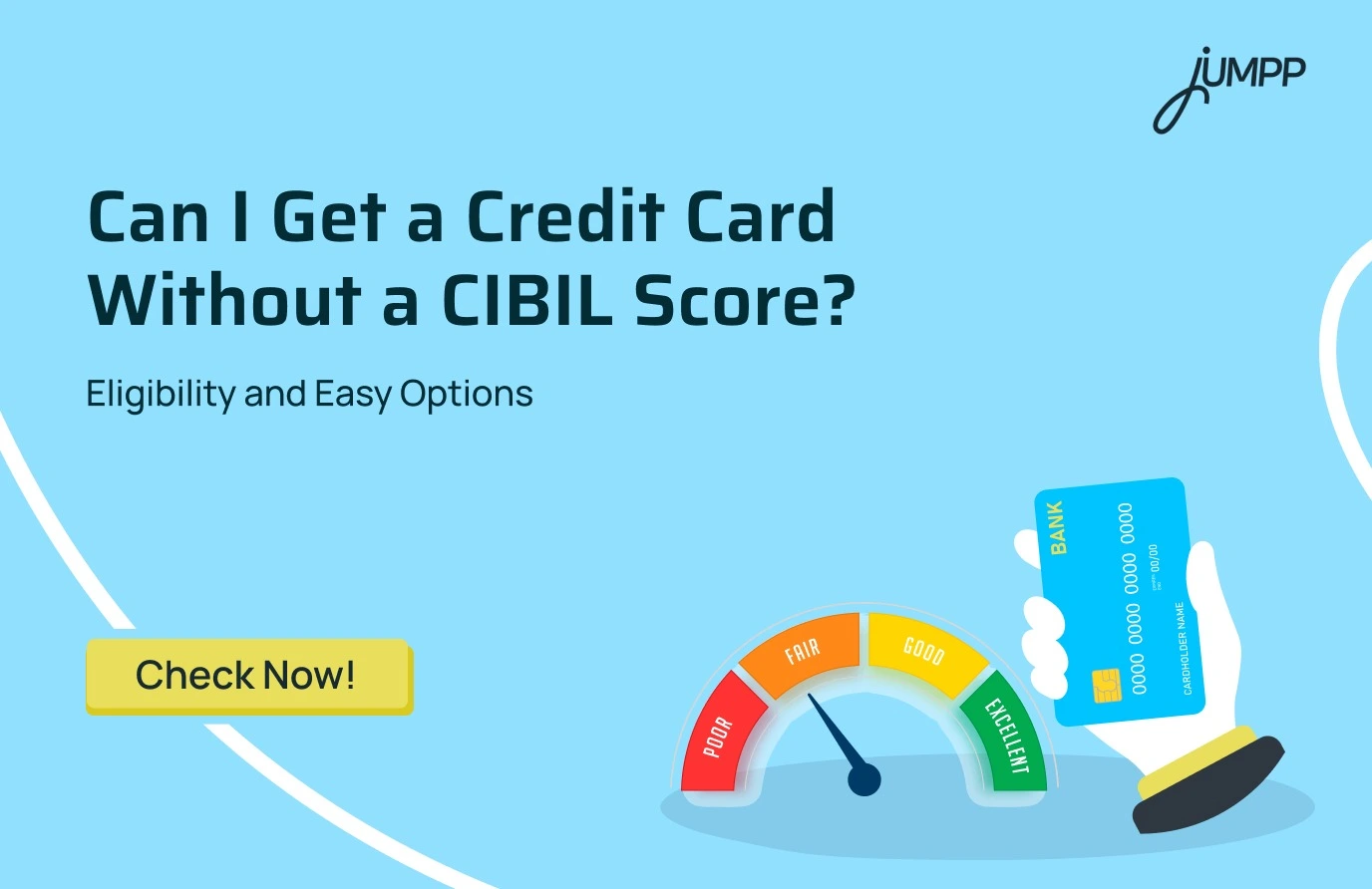
Many first-time borrowers believe it is impossible to get a credit card without a CIBIL score. This usually happens when a person has never taken a loan or used any form of credit before, so there is no credit history available.
However, several banks and financial institutions in India now offer ways to get a credit card without a CIBIL score.
This guide explains what a CIBIL score is, the minimum CIBIL score for credit card approval, how to apply for a credit card without a CIBIL score, and which banks offer such options in India.
What Is CIBIL Score?
CIBIL score is a three-digit number that represents a person’s creditworthiness. It ranges between 300 and 900 and is calculated based on borrowing behaviour and repayment history.
Banks and lenders use this score to evaluate the risk involved in approving loans or credit cards.
Typical interpretation of CIBIL scores:
| CIBIL Score | Meaning |
| 750 – 900 | Excellent credit profile |
| 700 – 749 | Good credit score |
| 650 – 699 | Average credit profile |
| 600 – 649 | High risk for lenders |
| Below 600 | Very difficult to get credit |
Individuals who have never taken a loan or credit card may not have a score. This is known as NH or No Credit History.
Can You Get a Credit Card Without a CIBIL Score?
Yes, banks may issue a credit card without a CIBIL score to applicants who do not have a credit history.
Financial institutions recognise that many individuals, such as students, fresh salaried professionals, and new earners, may not have used credit before. To accommodate such customers, banks provide beginner credit cards and secured credit cards.
Common options include:
- Secured credit cards against fixed deposits
- Entry level credit cards with lower limits
- Student credit cards
- Fintech issued credit cards
- Add on credit cards linked to a family member’s card
Not sure which credit card suits your needs?
Explore the different types of credit cards and choose the one that matches your spending habits.
Minimum CIBIL Score for Credit Card Approval
Most banks prefer applicants with a minimum CIBIL score for credit card approval between 700 and 750. Higher scores indicate responsible repayment behaviour and increase the chances of approval.
Typical score expectations are shown below:
| Type of Credit Card | Typical Minimum CIBIL Score |
| Premium credit cards | 750 or above |
| Standard credit cards | Around 700 |
| Entry level credit cards | Around 650 |
| Secured credit cards | No score required |
Applicants who do not meet the credit card minimum CIBIL score can still consider secured credit cards to begin building credit.
Using the wrong card for payments? Compare debit cards and credit cards to decide wisely.
How to Get a Credit Card Without a CIBIL Score
Several methods can help first-time borrowers obtain a credit card.
Apply for a Secured Credit Card
A secured credit card is one of the easiest ways to obtain a credit card without a CIBIL score.
The bank issues the card against a fixed deposit, and the credit limit is usually 80 percent to 90 percent of the deposit value.
Example:
- Fixed deposit: ₹50,000
- Credit limit: ₹40,000 to ₹45,000
Advantages include: - Higher approval chances
- Helps build credit history
- May convert into an unsecured credit card later
Use a Bank Where You Have an Existing Relationship
Banks often prefer customers who already maintain salary accounts or savings accounts with them.
If regular income is visible in the account, the bank may offer pre-approved credit cards even when the customer does not have a CIBIL score.
Apply for Entry-Level Credit Cards
Many banks provide beginner credit cards designed for first-time users.
These cards usually include:
- Lower credit limits
- Basic reward programs
- Simpler eligibility requirements
Apply Through Fintech Platforms
Several fintech companies provide credit card products designed for individuals without a credit history.
These platforms may evaluate additional factors such as:
- Monthly income
- Bank statement analysis
- Spending behaviour
This approach allows approval even when there is no credit score available.
Thinking of applying for multiple credit cards?
Learn how many credit cards a person can have and how it affects their credit score.
Become an Add-On Credit Cardholder
An add-on card allows another person to use a credit card under the primary cardholder’s account.
This option is often used by students or young professionals whose family members already have credit cards.
Using the add-on card responsibly helps build an early credit history.
Can You Get a Credit Card With 500 Credit Score?
A 500 credit score is considered very low, which reduces approval chances for unsecured credit cards.
However, approval may still be possible through alternative options such as:
- Secured credit cards backed by fixed deposits
- Credit builder cards
- Small limit credit cards issued by fintech lenders
Responsible usage of such cards can gradually improve the credit score.
What Is the Lowest CIBIL Score?
The lowest possible CIBIL score is 300.
Scores close to this level often indicate serious repayment issues, such as:
- Loan defaults
- Multiple missed payments
- High credit utilisation
- Settled or written off loans
Such scores significantly reduce the chances of loan or credit card approval.
Individuals can check their free CIBIL score once every year through the official CIBIL website or through several financial platforms that provide free credit reports.
What Is the Biggest Killer of Credit Scores?
Late payments have the strongest negative impact on credit scores.
When borrowers miss credit card bill payments or loan EMIs, lenders report the delay to credit bureaus, which reduces the credit score.
Other factors that damage credit scores include:
- High credit utilisation above 30 percent
- Applying for multiple loans within a short period
- Loan settlements instead of full repayment
- Defaulted accounts
Maintaining timely payments is one of the most effective ways to protect a credit score.
Does CIBIL Reset After 7 Years?
CIBIL scores do not completely reset after seven years.
Negative records, such as defaults or settlements, may remain in the credit report for about seven years, although their impact reduces gradually over time.
Consistent repayment behaviour during this period can significantly improve the score.
How to Increase CIBIL Score From 600 to 750
Improving a credit score requires disciplined financial behaviour over time.
Important steps include:
- Paying credit card bills and EMIs on time
- Keeping credit utilisation below 30 percent
- Avoiding multiple loan applications
- Maintaining older credit accounts
- Using secured credit cards responsibly
Significant improvements typically occur over three to six months of consistent repayment behaviour.
How to Build a Credit Profile Without a Credit Score
People with no credit history are often marked as NH (No History) or NA in credit reports. Building a credit profile requires creating a formal borrowing record that lenders report to credit bureaus such as CIBIL.
The following methods help individuals start building a credit history.
- Secured credit cards – Secured credit cards are one of the most reliable ways to start building credit history. The applicant deposits a small amount, usually around ₹5,000 to ₹10,000, as a fixed deposit with the bank. The bank issues a credit card with a limit linked to the deposit amount. Responsible usage and timely repayment help generate a credit score.
- Consumer durable loans – Purchasing items such as smartphones, televisions, or appliances on EMI through retail store financing can help establish credit history. These loans are commonly approved for first-time borrowers and are reported to credit bureaus.
Need funds quickly? Download a reliable wealth management app in India and apply for a personal loan in just a few minutes.
- Buy Now Pay Later services – Services such as Amazon Pay Later or Flipkart Pay Later allow users to make purchases and repay the amount later or through monthly instalments. Responsible repayment of these credit lines may help establish a credit profile.
- Salary account relationship with a bank – Banks where individuals maintain a salary account with regular income deposits may offer entry-level credit cards based on income stability instead of credit score.
- Credit builder loans – Some lenders provide credit builder loans designed for individuals with no credit history. In these loans, the lender keeps the loan amount in a savings account while the borrower makes monthly payments. After the repayment period ends, the accumulated amount is released to the borrower, and the repayment history is reported to credit bureaus.
Consistent repayment behaviour over several months helps individuals move from no credit history to an established credit profile, improving eligibility for credit cards and loans in the future.
Obtaining a credit card without a CIBIL score is possible through secured credit cards, entry-level cards, and fintech credit solutions. These options allow individuals with no credit history to begin building a credit profile.
Maintaining timely repayments and responsible credit usage helps improve the credit score and increases access to better financial products over time.
Disclaimer– The rankings and figures in this article have been compiled from multiple verified reports, credible news sources, and public financial data available as of 2026.
All values are approximate and may vary with newer updates, revisions, or changes in official records.
How to Get a Credit Card without a CIBIL Score – FAQs
Yes. Banks may offer secured credit cards, beginner credit cards, or add-on credit cards even if an applicant does not have a CIBIL score.
Some fintech-based credit cards evaluate income and financial behaviour instead of relying only on credit scores, so approval may still be possible.
Most banks prefer a CIBIL score of around 700 or higher for standard credit cards.
Approval chances are low for unsecured cards, but secured credit cards backed by fixed deposits may still be available.
Large improvements in credit scores typically take several months. Paying bills on time, reducing credit utilisation, and maintaining responsible credit behaviour can gradually increase the score.
Some banks offer secured or entry-level credit cards without a CIBIL score, usually against a fixed deposit or existing bank relationship. Examples include Kotak, ICICI Bank, Axis Bank, IDFC FIRST Bank, etc.