DPD in CIBIL: Meaning, Codes, Calculation, Impact & How to Improve It
A payment can be late for all sorts of reasons. You may miss an EMI because you forgot the due date, or a credit card bill may slip your mind during a busy month. The problem is that a delayed payment can affect how lenders view your repayment behaviour.
This is where DPD in CIBIL becomes important.
In this blog, understand DPD calculation in CIBIL, its codes and how it can affect your credit profile.
What is DPD in CIBIL?
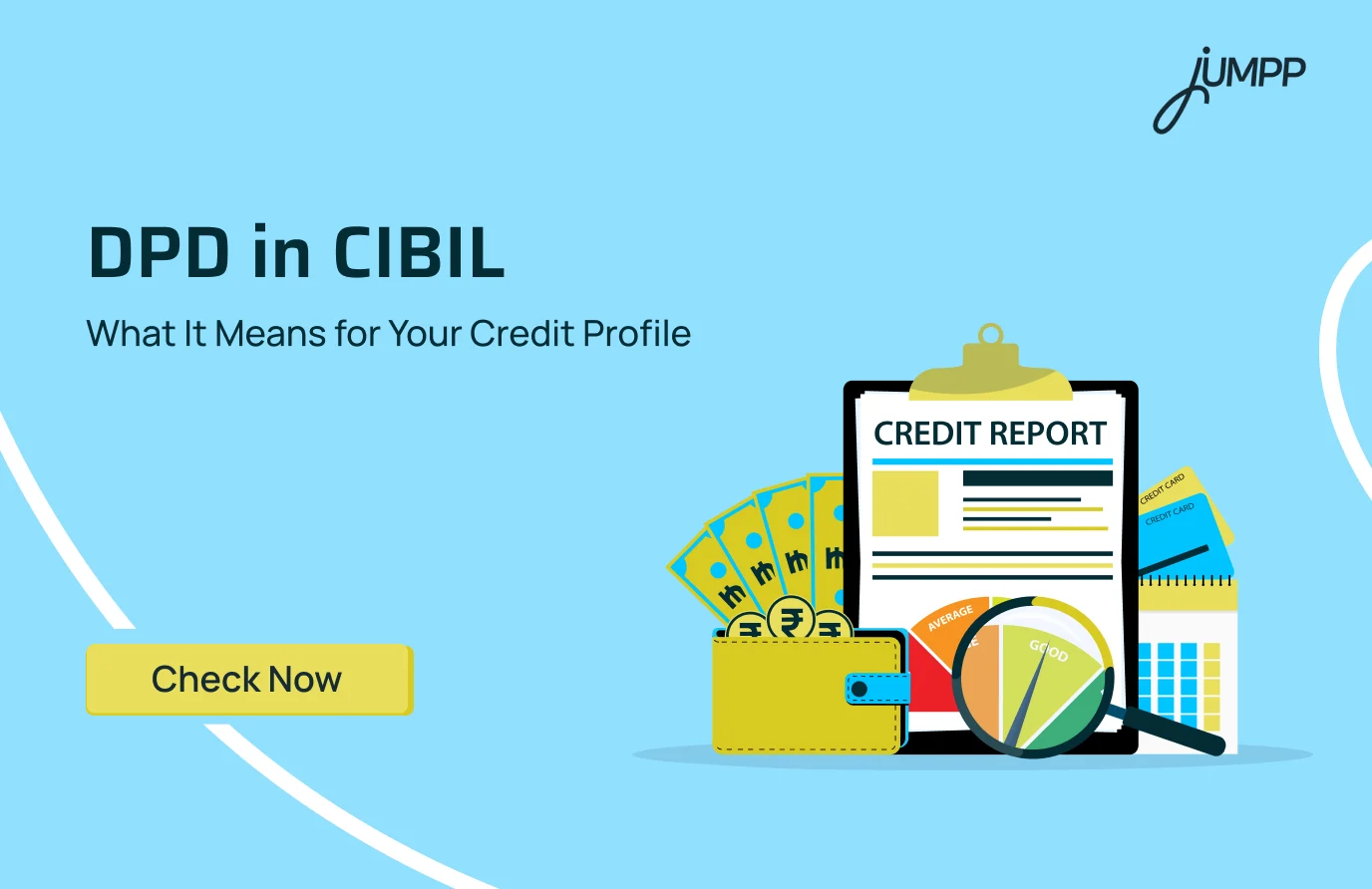
DPD Full Form: Days Past Due. It indicates the number of days by which a payment on a loan or credit card account was delayed beyond its due date.
DPD in a credit report shows your month-wise payment behaviour for a particular credit account. It helps lenders understand whether you have been making your loan EMIs or credit card payments on time.
DPD Codes in CIBIL Report
DPD codes in a CIBIL Report can include both numerical values and account-status codes.
Their interpretation depends on the information reported by the lender.
| DPD Code | Meaning |
| 000 | Payment made as per the due date |
| 001–089 | Payment reported as late by the corresponding number of days |
| 090 | Payment reported as 90 days late |
| STD | Standard account |
| SMA | Special Mention Account |
| SUB | Sub-Standard account |
| DBT | Doubtful account |
| LSS | Loss account |
| XXX | Information was not reported for that month |
Here in:
STD: Regular repayment status.
SMA: Early signs of repayment stress.
SUB: Payments overdue for more than 90 days.
DBT: Sub-Standard status continuing for 12 months.
LSS: Amount identified as a loss and remains uncollectible.
DPD Calculation in CIBIL
DPD is calculated by comparing the scheduled payment due date with the date on which the payment is considered made or cleared for reporting purposes.
For a simple example:
- Payment due date: 5 May
- Payment made: 25 May
- Delay: 20 days
- Reported DPD: 020
The actual reporting of payment information is done by the lender, so the entry in your CIBIL Report depends on the data submitted by that credit institution.
DPD Impact on CIBIL Score
A DPD can negatively affect your CIBIL Score because it reflects a delayed payment in your credit history. CIBIL considers payment history one of the key factors when calculating the score, and late payments or defaults can work against your credit profile.
- The impact depends on the delay: A longer or repeated payment delay can signal greater repayment risk than an isolated, shorter delay. However, CIBIL does not publish a fixed number of points that will be deducted for a specific DPD such as 030 or 090.
- Recent delays matter: CIBIL has stated that missed payments in the recent past can negatively affect your score, while responsible repayment behaviour over time can help you build a healthier credit profile.
- DPD remains part of your payment history: CIBIL Reports currently show payment history for the last 36 months, so borrowers should focus on maintaining timely repayments consistently rather than trying to erase an accurate historical entry.
Check out the steps to remove a closed loan from a CIBIL report.
DPD Impact on Loan Approval
A DPD entry can affect your chances of getting a loan because lenders use your repayment history to assess your creditworthiness. A history of delayed payments may make a lender more cautious, particularly when the delay is recent or repeated.
- 000 DPD: A clean payment history indicates that payments have been made on time and can support a stronger credit profile.
- 1 to 30 Days Past Due: A short delay may still attract attention from lenders, particularly if it is recent. The final decision depends on the lender’s credit policy and your overall financial profile.
- 31 to 90 Days Past Due: Longer payment delays can indicate greater repayment risk and may make it harder to qualify for credit or favourable terms.
- 90+ Days Past Due: A prolonged overdue payment is a serious credit concern and can significantly affect how lenders assess a loan application. The account status and lender’s policies will determine the eventual impact.
How Do Lenders Evaluate DPD for Loan Approval?
Lenders do not look at DPD in isolation. They may consider how recent the delay was, how long the account remained overdue, whether there are repeated delays, your CIBIL Score, existing debt, income and overall repayment history.
Check out the steps to pay one credit card bill from another!
How to Improve DPD in CIBIL
You cannot change a genuine DPD entry simply because it is hurting your credit profile. If the delay was accurately reported, the focus should be on building a clean repayment history going forward.
- Pay all current dues on time: Set reminders or use automatic payment facilities to reduce the chances of missing future due dates.
- Clear overdue amounts: If an account has an outstanding amount, repay the dues according to the lender’s terms and keep records of the payment.
- Keep credit utilisation under control: High credit utilisation can also affect your CIBIL Score, so avoid relying excessively on your available credit limit.
- Avoid repeated loan applications: Applying for new credit too frequently can have a negative effect on your credit profile through multiple enquiries.
- Monitor your CIBIL Report: Regularly checking your report can help you identify incorrect payment entries, unfamiliar accounts or other inaccuracies early.
How to Remove DPD from CIBIL Report
A genuine and accurately reported DPD cannot simply be deleted from your CIBIL Report. If the entry is incorrect, you can raise a dispute with CIBIL and the relevant lender.
CIBIL explains that it cannot independently modify or delete information in your report. Changes require confirmation from the concerned bank or financial institution.
If you believe a DPD entry is incorrect:
- Check the payment records: Keep your bank statement, payment receipt or other evidence showing when the payment was made.
- Raise a dispute: Submit the disputed account information through CIBIL’s dispute process.
- The lender verifies the information: CIBIL routes the dispute to the concerned credit institution for verification.
- The report is updated if the lender confirms an error: Once CIBIL receives corrected information from the lender, the relevant information can be updated.
CIBIL says a dispute may take approximately 30 days to resolve, depending on the time taken by the credit institution. Under the RBI’s compensation framework, eligible complaints that remain unresolved beyond 30 calendar days can attract compensation of ₹100 per day, subject to the applicable framework.
Can You Improve Your Credit Profile After a DPD?
Yes, you can improve your credit profile by maintaining consistent repayment behaviour after a DPD.
An accurately reported past delay cannot be erased simply by making future payments. Instead, timely repayments can help create a stronger recent payment history over time.
CIBIL recommends paying dues on time, keeping balances low, maintaining a healthy credit mix, applying for new credit in moderation and reviewing your credit history regularly.
Disclaimer- The rankings and figures in this article have been compiled from multiple verified reports, credible news sources, and public financial data available as of 2026.
All values are approximate and may vary with newer updates, revisions, or changes in official records.
FAQs
DPD stands for Days Past Due. In simple terms, it tells you how many days late you were in paying a loan EMI or credit card bill after its due date.
000 is considered the ideal DPD status. It means you have made your payment on time and there is no reported delay in your payment history.
A DPD can bring down your CIBIL Score, particularly if the delay is recent, repeated or extends over several days. Lenders also look at your overall repayment history before making a lending decision.
You can check it in your CIBIL Report under the Account Information section. Your payment history is shown month by month for individual loan and credit card accounts.
If the DPD has been reported correctly, you cannot simply ask CIBIL to remove it. But if you believe the entry is incorrect, you can raise a dispute and ask the lender to verify the information.
A DPD entry can remain visible in your credit history for several years. The exact period can depend on the information reported and maintained by the lender.
Seeing 000 is good news. It means the lender has reported that you made the payment on time, with no days past due.
These numbers indicate the length of the payment delay. DPD 30 means the payment was reported as 30 days late, while DPD 60 and DPD 90 indicate longer delays of 60 and 90 days, respectively.
It can. When you apply for a loan, lenders look at your repayment history along with your CIBIL Score and other financial details. Frequent or long payment delays can make your application less favourable.
Start by clearing any outstanding dues and make sure future payments are made on time. Setting up automatic payments, keeping your credit utilisation under control and maintaining a clean repayment record can help strengthen your credit profile over time.
000 means that the payment was made as per the due date and there was no reported delay. It is generally the entry borrowers want to see in their payment history.
XXX means that the lender did not report payment information for that particular month. It does not mean that you missed a payment or that the payment was late.