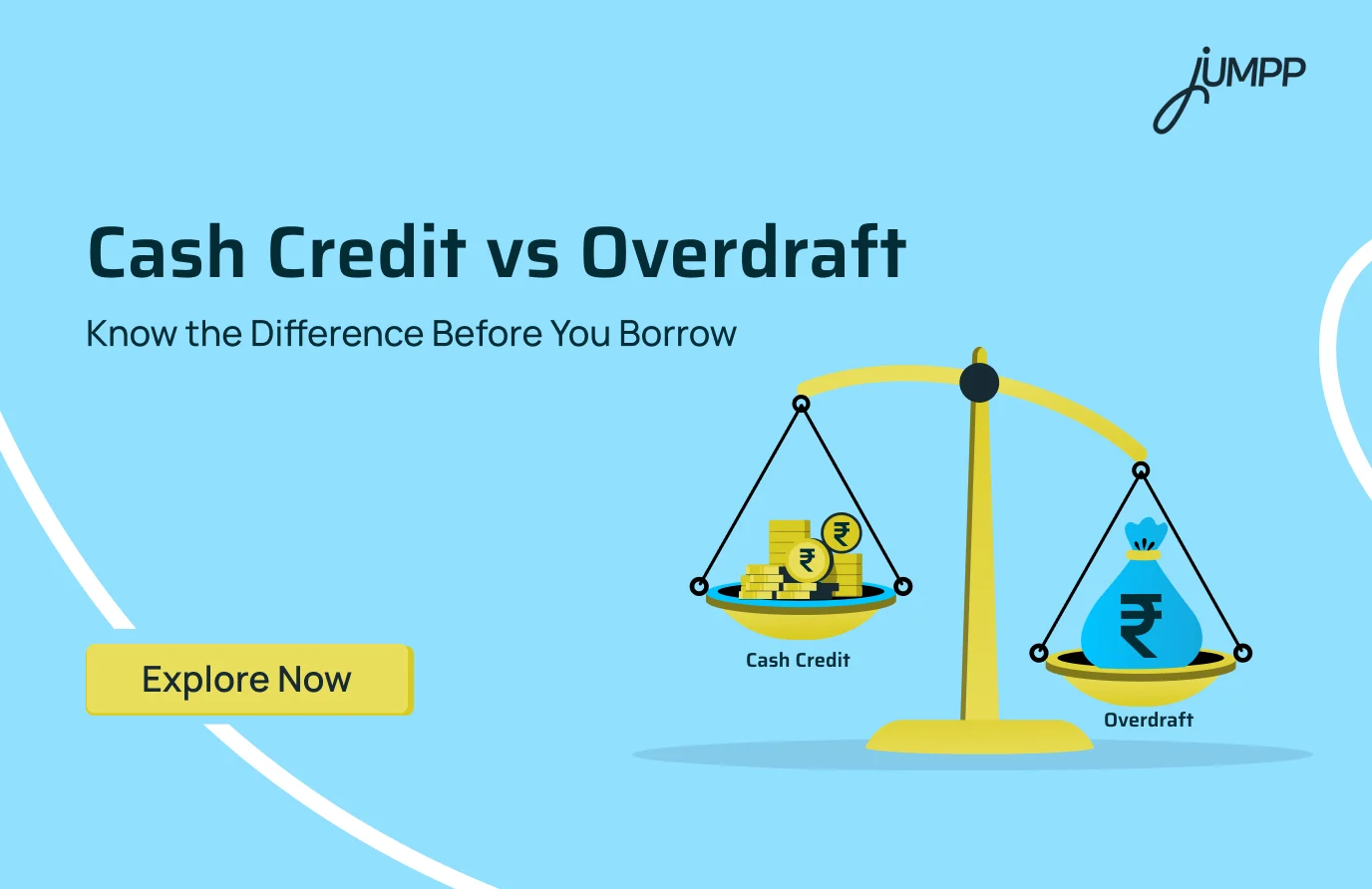
Cash Credit vs Overdraft: What Is the Difference and Which Should You Choose?
Sometimes, money goes out before it comes in. A business may have bills and suppliers to pay while waiting for customer payments, or a person may need extra funds to manage a short-term expense before the next income arrives.
That is where cash credit and overdraft facilities can help. Both provide access to extra funds when you need them, but they work differently and suit different financial needs.
In this article, explore everything about cash credit vs overdraft facility.
What is an Overdraft?
An overdraft is a short-term credit facility that allows an account holder to withdraw or make payments beyond the available balance, up to a bank-approved limit.
Overdraft Advantages
An overdraft provides flexibility when an account holder needs short-term access to additional funds.
- Quick Access to Funds: It can help manage urgent expenses when the account balance is insufficient.
- Flexible Borrowing: The borrower can use funds within the approved overdraft limit as required.
- Can Use Existing Account: An overdraft can often be operated through an existing savings or current account.
Want to understand common banking terms better? Learn about the PDC full form and how post-dated cheques are used in financial transactions.
Overdraft Disadvantages
An overdraft can be convenient, but its flexibility may come with certain costs and limitations.
- Higher Interest Costs: Overdraft interest rates may be higher than those charged on secured cash credit facilities.
- Additional Charges: Banks may levy applicable fees when an account is overdrawn.
- Limited Credit: The borrower cannot withdraw beyond the sanctioned overdraft limit.
What is Cash Credit?
Cash credit is a short-term borrowing facility primarily offered to businesses to meet their working capital requirements.
Cash Credit Advantages
Cash credit can be useful for businesses that need regular access to working capital.
- Helps Manage Cash Flow: Businesses can use the facility to manage temporary gaps between expenses and incoming payments.
- Supports Working Capital: It can help meet expenses related to inventory, operations and other day-to-day business requirements.
- Asset-backed Borrowing: Eligible assets can be used as security to obtain the facility.
Cash Credit Disadvantages
Cash credit can involve additional requirements because it is generally designed as a secured business facility.
- Security May Be Required: Businesses may need to pledge eligible assets to access the facility.
- Primarily for Businesses: It is generally not intended for personal borrowing needs.
- Drawing Power Conditions: The amount available for withdrawal may change based on applicable drawing power requirements.
Cash Credit vs Overdraft: Key Differences
Cash credit and overdraft differ in terms of their purpose, users, security, borrowing limits and account structure.
| Basis | Cash Credit | Overdraft |
| Purpose | Mainly used by businesses for working capital needs | Used to manage short-term funding requirements |
| Users | Primarily, businesses and firms | Individuals and businesses may use it |
| Security | Generally secured against stock, inventory or other assets | May be secured or unsecured, depending on the facility |
| Borrowing Limit | Based on the sanctioned limit and applicable drawing power | Available up to the pre-approved overdraft limit |
| Interest Rate | Generally lower due to security | Usually higher than cash credit |
| Account | Usually requires a dedicated cash credit account | Can operate through an existing bank account |
| Repayment | Typically structured around the facility terms | Flexible, with borrowing and repayment within the approved limit |
| Main Use | Business working capital and operating expenses | Short-term cash flow gaps and immediate funding needs |

Cash Credit vs Overdraft: Which Is Better?
Neither cash credit nor overdraft is universally better. The right choice depends on the borrower’s financial needs, purpose, security available and repayment requirements.
- Cash credit may be better for: Businesses that need regular working capital to manage inventory, raw materials and day-to-day operations. It is generally secured against stock or receivables and may offer comparatively lower interest rates.
- Overdraft may be better for: Individuals, professionals or businesses that need flexible access to funds for short-term cash flow gaps. It can often be linked to an existing account and may require less documentation.
Before choosing between the two, borrowers should compare the interest rate, borrowing limit, collateral requirements, fees and repayment terms offered by the lender.
Looking for an easy to use investment app?
Explore jUMPP – choose from 1000+ direct mutual funds, invest in digital gold, make payments and get AI powered insights about your daily and monthly spendings!
FAQs
Cash credit is mainly for businesses and is generally secured against assets such as stock. An overdraft offers flexible borrowing through a bank account and may be secured or unsecured.
Cash credit may suit businesses needing regular working capital against eligible assets. An overdraft may be better for flexible, short-term funding needs.
Businesses can borrow against eligible assets such as stock or receivables up to an approved limit. The available borrowing may depend on the drawing power set by the bank.
An overdraft allows account holders to withdraw more than their available balance up to an approved limit. It provides access to additional funds for short-term financial requirements.
Cash credit generally has comparatively lower interest rates because it is usually secured. Overdraft rates may be higher, depending on the bank, borrower and security offered.
Cash credit is generally designed for businesses to meet their working capital requirements. Overdraft facilities can be available to both individuals and businesses.
An overdraft can offer greater flexibility and may operate through an existing bank account.
It may also involve less monitoring than cash credit facilities backed by stock.
Cash credit generally requires security such as stock, inventory or receivables. An overdraft may be secured or unsecured, depending on the facility and lender.
Interest is generally calculated on the amount actually utilised rather than the entire sanctioned limit. The applicable rate and calculation method can vary between lenders and facilities.
Choose an overdraft when you need flexible access to funds for temporary or irregular cash flow gaps. Cash credit may be more suitable for businesses with ongoing working capital requirements.