Treasury Bills (T-Bills): Meaning, Types, Features and How They Work in India
Whether it is an emergency fund, short-term savings, or surplus money that you do not want to expose to market volatility, finding a relatively safe investment option can be challenging. While many investors turn to fixed deposits or savings accounts, another government-backed investment often goes unnoticed: Treasury Bills.
In this article, we will explore everything about T- Bills in India.
Treasury Bills Meaning
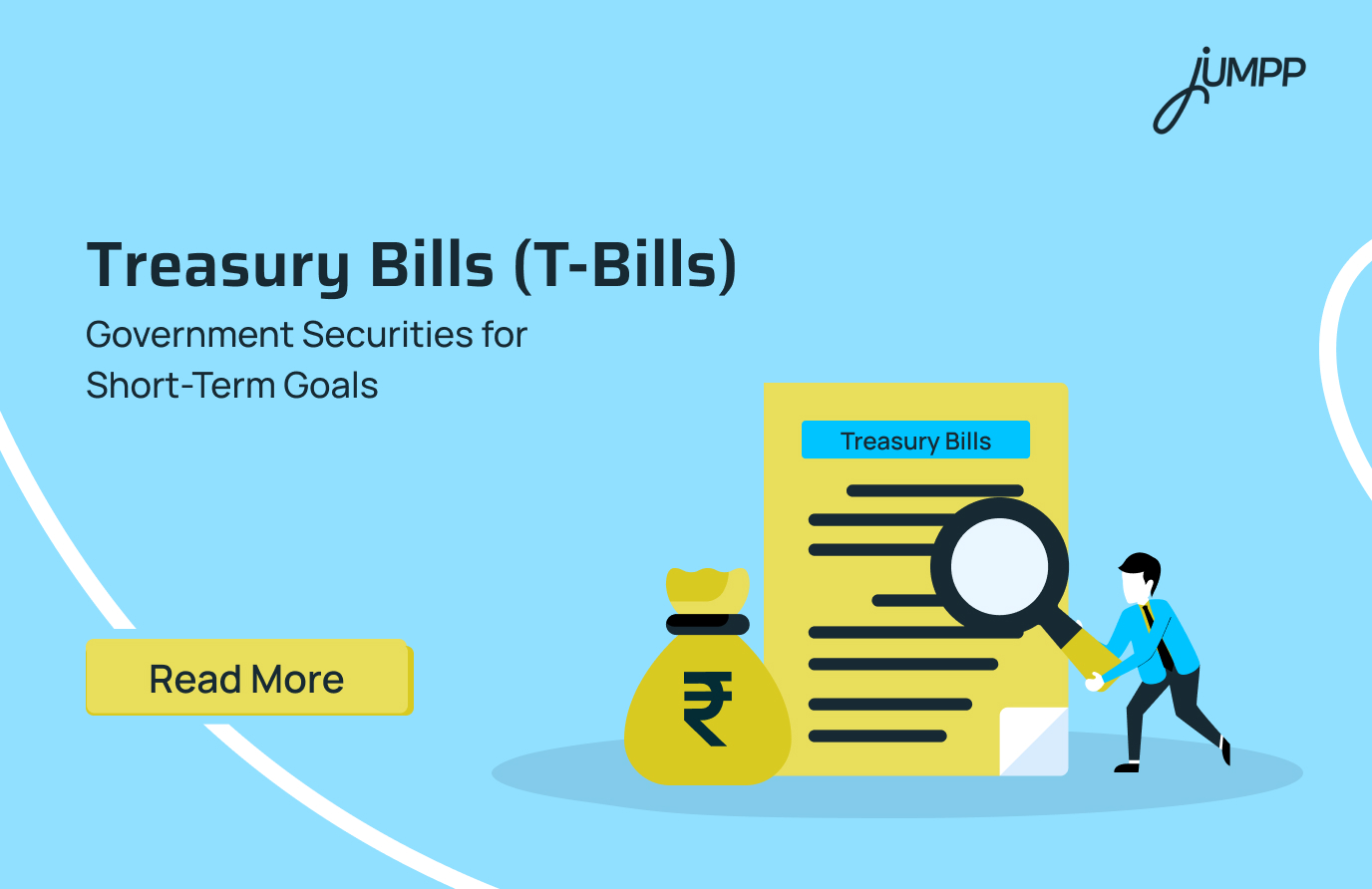
Treasury Bills or T-Bills are short-term money market instruments issued by the Government of India to meet its temporary funding requirements.
- They have a maturity period of less than one year.
- T-Bills are issued at a discount and redeemed at their face value on maturity.
- The difference between the purchase price and face value becomes the investor’s return.
For example, if a Treasury Bill with a face value of ₹100 is issued at ₹97, the investor earns ₹3 when it matures.
How Do Treasury Bills (T-Bills) Work?
Treasury Bills (T-Bills), as zero-coupon government securities do not pay regular intervals, earn a return by purchasing them at a discount and receiving the full face value at maturity.
Here is how the process works:
- No periodic interest payments: Unlike Fixed Deposits or bonds, T-Bills do not pay monthly, quarterly, or annual interest.
- Issued at a discount: Investors buy T-Bills at a price lower than their face value.
- Redeemed at par: On maturity, the government pays the investor the full face value of the T-Bill.
- Return earned from the price difference: The investor’s profit is the difference between the purchase price and the face value received at maturity.
Suppose you buy a 91-day T-Bill with a face value of ₹50,000 for ₹48,800. After 91 days, the government repays ₹50,000. Your earnings are ₹1,200, which is the difference between the purchase price and the face value.

What are the Features of Treasury Bills in India
Treasury Bills (T-Bills) have several features that make them a popular short-term investment option for conservative investors and institutions alike.
- Short-Term Maturities: Treasury Bills are issued for periods of less than one year. In India, they are currently available in three tenures: 91 days, 182 days, and 364 days.
- Low Minimum Investment Requirement: Retail investors can invest in Treasury Bills with a minimum amount of ₹10,000 through the RBI Retail Direct platform. Additional investments can be made in multiples of ₹10,000.
- Government Backing: Treasury Bills are issued by the Government of India through the Reserve Bank of India and carry practically no default risk, making them one of the safest investment instruments available.
- Regular Auction-Based Issuance: The Reserve Bank of India conducts regular electronic auctions for Treasury Bills, generally on a weekly basis, allowing participation from both institutional and retail investors.
- Retail-Friendly Investment Option: Individual investors can participate through the non-competitive bidding route and receive securities at the weighted average yield determined during the auction.
- High Liquidity: Treasury Bills are tradeable securities that can be bought and sold in the secondary market before maturity, providing investors with flexibility and easier access to funds.
- No TDS on Returns: Returns earned from Treasury Bills are not subject to Tax Deducted at Source (TDS), making them relatively more cash-flow friendly at maturity.
- Taxable Gains: Although TDS is not applicable, the gains earned from Treasury Bills are taxable and are generally taxed according to the investor’s applicable income tax slab.
Since Treasury Bill gains are taxable according to your income tax slab, understanding tax timelines is important. Read our detailed guide on assessment year vs financial year to learn how investment income is reported and taxed in India.
Types of Treasury Bills in India
The Reserve Bank of India (RBI) currently issues three types of Treasury Bills (T-Bills), each categorised according to its maturity period.
- 91-Day Treasury Bills: These T-Bills mature 91 days from the date of issuance and are suitable for investors seeking very short-term investment opportunities. They are auctioned regularly by the RBI.
- 182-Day Treasury Bills: These Treasury Bills mature after 182 days and offer a medium-term investment horizon of approximately six months.
- 364-Day Treasury Bills: These T-Bills mature after 364 days and have the longest tenure among currently available Treasury Bills in India.
Treasury Bill Market in India
The Treasury Bill market is a segment of the money market where short-term government securities are issued and traded.
It consists of two major segments:
1. Primary Market:
New Treasury Bills are issued through regular auctions conducted by the RBI, generally every week. Banks, financial institutions, mutual funds, and retail investors can participate in these auctions.
Retail investors can apply through the non-competitive bidding route and receive allotments at the weighted average auction yield.
2. Secondary Market:
After issuance, Treasury Bills can be bought and sold before maturity in the secondary market. This allows investors to exit their investments early if they require liquidity.
Trading takes place through platforms such as the RBI’s Negotiated Dealing System-Order Matching (NDS-OM) and other authorised market channels.
Treasury Bills Minimum Amount
The minimum investment amount for Treasury Bills (T-Bills) in India is ₹10,000. Investors can increase their investment in multiples of ₹10,000 thereafter.
For example:
- Minimum investment: ₹10,000
- Next investment slabs: ₹20,000, ₹30,000, ₹40,000, and so on.
Treasury Bill Interest Rate in India
Treasury Bills (T-Bills) do not offer a fixed interest rate or periodic coupon payments like Fixed Deposits or bonds. Instead, they are zero-coupon securities that are issued at a discount and redeemed at their full face value upon maturity.
The return earned by investors is the difference between the purchase price and the face value received at maturity. Therefore, the yield on Treasury Bills is market-linked and changes based on factors such as liquidity conditions, investor demand, and the outcomes of RBI auctions.
As of late June 2026, the indicative annualised yields on Treasury Bills were:
- 91-Day Treasury Bills: Approximately 5.26%
- 182-Day Treasury Bills: Approximately 5.50%
- 364-Day Treasury Bills: Approximately 5.79%
Not sure how much of your portfolio should go into relatively safe assets? Discover How Much Gold to Invest in Your Portfolio and learn the importance of diversification.
What are the Advantages of Treasury Bills
Treasury Bills (T-Bills) offer several benefits to investors looking for relatively safe and short-term investment options.
- High Safety: Treasury Bills are backed by the Government of India and carry practically no default risk, making them one of the safest investment instruments available.
- Predictable Returns: Since T-Bills are issued at a discount and redeemed at their face value, investors know the maturity value and can estimate their returns in advance.
- High Liquidity: Treasury Bills can be bought and sold in the secondary market before maturity, offering flexibility to investors who may need access to their funds.
- No TDS on Returns: Returns earned from Treasury Bills are not subject to Tax Deducted at Source (TDS), which can improve cash-flow efficiency until tax filing.
- Low Minimum Investment Requirement: Retail investors can start investing in Treasury Bills with as little as ₹10,000 through the RBI Retail Direct platform.
- Lower Volatility Compared with Equities: Treasury Bills are generally less volatile than stocks and are not exposed to company-specific risks such as credit downgrades or poor business performance.
- Accepted as High-Quality Collateral: Due to their sovereign backing and low risk, Treasury Bills may be accepted by certain financial institutions as collateral for specific lending arrangements.
- Reinvestment Flexibility: Their short maturities of 91, 182, and 364 days allow investors to reinvest their money relatively quickly if interest rates change.
What are the Disadvantages of Treasury Bills in India
Treasury Bills in India have certain drawbacks, including lower returns, inflation risk, and taxable gains, which can limit their wealth-creation potential.
- Lower Returns: T-Bills typically offer lower returns than equities, corporate bonds, and some Fixed Deposits, making them less suitable for aggressive wealth creation.
- Inflation Risk: If inflation exceeds the T-Bill yield, your real returns and purchasing power may decline over time.
- Interest Rate Risk: Selling T-Bills before maturity can lead to capital losses if interest rates rise and newer securities offer higher yields.
- Not Suitable for Long-Term Goals: Since T-Bills have tenures of only 91, 182, and 364 days, they may not align with long-term financial objectives.
- Reinvestment Risk: Frequent maturities mean investors may have to reinvest at lower interest rates if market yields decline.
- Taxable Returns: The gains earned from T-Bills are taxed as per the investor’s applicable income tax slab, which can reduce post-tax returns.
Should You Invest in Treasury Bills?
Treasury Bills may be suitable for investors who:
- Want relatively safe investment avenues.
- Have short-term financial goals.
- Prefer government-backed instruments.
- Want to diversify their portfolio with low-risk assets.
- Need a place to park surplus funds temporarily.
However, investors seeking potentially higher long-term returns may consider complementing T-Bills with other investment options based on their financial goals and risk appetite.
How to Buy Treasury Bills in India
Retail investors can purchase Treasury Bills (T-Bills) in India through multiple channels, making these short-term government securities relatively accessible to individual investors.
- Through the RBI Retail Direct Portal: Investors can open an RBI Retail Direct account and participate directly in Treasury Bill auctions conducted by the Reserve Bank of India.
- Through Stockbrokers and Demat Accounts: Several stockbrokers offer access to government securities, including Treasury Bills, through their trading platforms and demat accounts.
- Through Net Banking Services: Some banks also facilitate investments in Treasury Bills through their net banking platforms, enabling investors to participate in government security auctions digitally.
Retail investors usually participate through the Non-Competitive Bidding (NCB) route. Under this mechanism, investors do not need to quote a price or compete with institutional bidders. Instead, they receive an allotment at the weighted average yield determined during the RBI auction.
Steps to Invest in Treasury Bills
- Choose your preferred investment platform, such as RBI Retail Direct, a stockbroker, or your bank.
- Select the type of Treasury Bill you wish to invest in, namely 91-day, 182-day, or 364-day T-Bills.
- Enter the investment amount, subject to the minimum investment requirement of ₹10,000 and its multiples.
- Submit your application through the non-competitive bidding route.
- Upon allotment, the Treasury Bills are credited to your account and redeemed at face value on maturity.
Looking for other low-risk investment options? Explore Fixed Deposit vs Life Insurance and understand how different instruments fit into your financial plan.
Final Thoughts
For investors looking for a relatively safe, liquid, and short-term investment option, Treasury Bills can serve as an effective tool for preserving capital while earning market-linked returns.
Disclaimer- The rankings and figures in this article have been compiled from multiple verified reports, credible news sources, and public financial data available as of 2026.
All values are approximate and may vary with newer updates, revisions, or changes in official records.
FAQs
Yes, Treasury Bills (T-Bills) are issued by the Reserve Bank of India (RBI) on behalf of the Government of India. The RBI manages its auctions, issuance, and settlement process.
It depends on your financial goals. RBI Bonds offer sovereign backing and may provide higher returns, while Fixed Deposits offer greater liquidity and flexible tenures.
You can buy Treasury Bills through the RBI Retail Direct portal, stockbrokers, or certain banks’ net banking platforms. Retail investors can participate through the Non-Competitive Bidding (NCB) route.
Treasury Bills do not pay a fixed interest rate or coupon payments. Their yields are market-linked and are determined through RBI auctions.
T-Bills may be suitable for short-term, government-backed investments with high liquidity, while FDs may be better for investors seeking fixed returns over longer periods. The better option depends on your investment objectives.
As of June 2026, no major commercial bank in India offers a 9.5% interest rate to regular retail depositors. Some Small Finance Banks may offer higher promotional rates, particularly for senior citizens.