AI in Loan Management – What Banks Know About You Before Approving a Loan
Choosing a loan today is not about walking into one bank and taking whatever they give you. With AI tools, you can compare interest rates, lenders, and even spot hidden charges that are not clearly shown.
That small difference can save you lakhs over time, and that is exactly how AI in the loan management process is doing today.
AI in the Loan Management System: The New Way Loans Are Approved
It refers to the use of machine learning, data analytics, and automation to handle the entire loan lifecycle, from application to repayment and even collections.
AI systems analyse thousands of data points in seconds to arrive at faster and often more accurate outcomes.
This includes:
- Loan approvals
- Credit risk assessment
- Fraud detection
- Customer support
- Repayment tracking
You would be glad to know that now, AI in loan management is not just limited to large banks anymore. NBFCs, fintech platforms, and even digital-first lenders are actively using AI to scale faster and serve more customers.
Explore jAI – get personalised insights about your monthly expenses with this wealth management app!
How AI Is Used in Loan Management in India
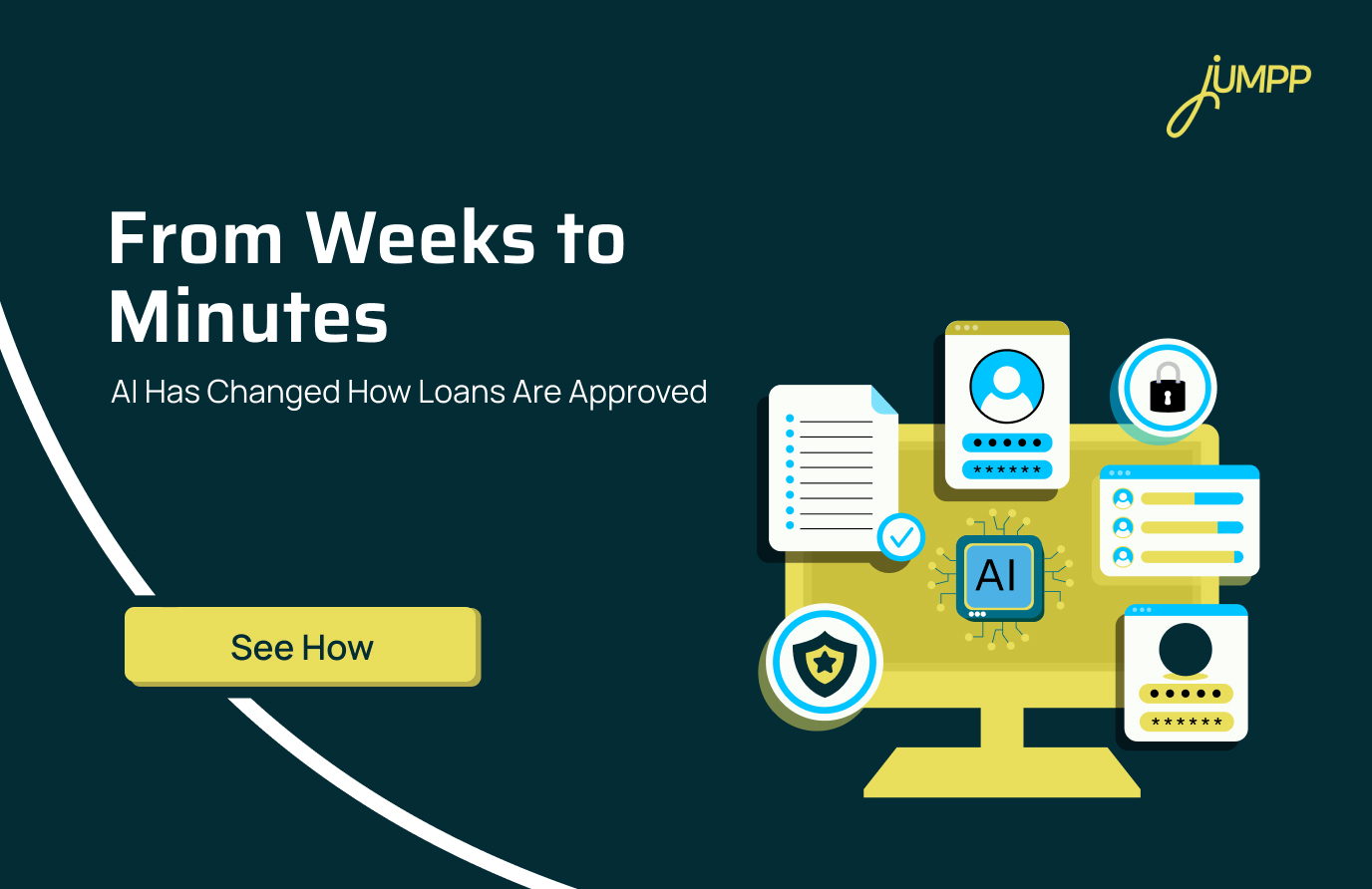
AI is transforming loan management in India by reducing processing time from weeks to minutes, and lowering default rates by over 33 percent.
- AI has enabled near-instant onboarding and approvals.
- AI-driven models can predict loan defaults with up to 90 percent accuracy. This is improving risk management significantly.
- Lenders using AI have reported up to 93 percent higher loan approval rates. This helps expand credit access.
- AI-based underwriting can increase approvals by up to 44 percent without increasing risk levels.
- AI is enabling access to credit for over 350 million new-to-credit borrowers in India.
- AI adoption has helped reduce default rates by over 33 percent through early risk detection.
- Digital lending platforms powered by AI account for nearly 90 percent of small-ticket personal loan originations.
- AI-driven MSME lending is growing up to 5 times faster than traditional lending models.
- AI-powered eKYC and automation have reduced onboarding costs from around 12 dollars to 0.50 dollars per customer.
- AI enables real-time fraud detection by analysing behavioural and transactional anomalies instantly.
How AI Compares Loan Interest Rates
AI compares loan interest rates by analysing your financial profile and matching it with lender-specific pricing models.
Instead of showing generic rates, it helps estimate the rate you are most likely to receive.
What does AI check when comparing loan interest rates?
- Credit profile and repayment history: Shows how reliably you have managed past loans and credit cards
Here are some credit score myths you need to stop believing!
- Income stability and existing liabilities: Evaluates your repayment capacity based on earnings and current obligations
- Market-linked rate changes: Tracks movements in repo-linked and floating interest rates
- Lender risk pricing models: Considers how different banks and NBFCs assess borrower risk
AI in Automated Loan Origination
AI systems process loan applications instantly using OCR to read PAN, Aadhaar, and income documents. This reduces manual errors. It also speeds up onboarding from days to minutes.
AI in Credit Risk Assessment
AI analyses alternative data such as GST filings, utility payments, and digital transactions. This helps evaluate borrowers even without a traditional credit history.
AI for Loan Approval and Instant Disbursal
AI not only approves loans instantly but also enables quick disbursal directly into bank accounts. This makes the entire process seamless for borrowers.
AI Loan Automation Across Processes
AI automates KYC verification, eligibility checks, underwriting, and documentation. This reduces operational costs. It also improves consistency across processes.
AI in the Lending Process Lifecycle
From onboarding to repayment tracking, AI supports every stage of the lending journey. This ensures better efficiency and scalability.
AI in Banking Loans, and Financial Institutions
Banks and NBFCs use AI to offer personalised loan products. It improves underwriting accuracy. It also helps them compete with digital-first lenders.
AI in Loan Management, Collections, and Customer Support
AI predicts potential defaults early. It automates repayment reminders. It also uses chatbots to handle customer queries. This improves recovery rates and overall user experience.
Can AI Really Predict Loan Defaults?
Yes, AI can significantly improve the ability to predict loan defaults.
AI models analyse historical data and behavioural trends to identify patterns that indicate potential defaults. Studies and industry implementations suggest that prediction accuracy can go up to nearly 80 – 90 percent in certain use cases.
However, it is important to understand that AI does not eliminate risk. It improves decision-making by providing better insights.
Is AI-Based Lending Safe in India?
Yes, AI-based lending is safe in India when used through RBI-regulated lenders that follow data security and consent norms. However, users must avoid unverified apps, check permissions, and understand loan terms to stay protected.
RBI has already introduced guidelines around:
- Digital lending practices
- Data privacy and consent
- Transparency in loan terms
So while AI improves efficiency, compliance ensures that borrowers are protected.
Benefits of AI in Loan Management in India
AI improves lending in India by automating the entire credit lifecycle, reducing approval times from days to minutes, and improving risk assessment accuracy. It also lowers operational costs, expands financial inclusion, and enables personalised, data-driven lending decisions.
Key Benefits of AI in Lending and Loan Management
- Faster Loan Processing and Approval
AI automates document verification and KYC. This enables loan approvals within seconds. It also improves turnaround time significantly.
- Improved Credit Risk Assessment
AI analyses both structured and alternative data, such as transaction history and digital behaviour. It can achieve up to 90 percent accuracy in predicting repayment behaviour.
- Increased Financial Inclusion
AI allows lenders to assess first-time borrowers, gig workers, and underserved populations. This helps expand credit access across rural and semi-urban India.
- Advanced Fraud Detection and Prevention
AI systems detect anomalies in real time. This helps prevent identity fraud and fake applications. It also reduces non-performing assets.
- Lower Operational Costs and Higher Efficiency
AI automates manual processes. This reduces processing costs and improves productivity. It also allows lenders to scale without increasing their workforce.
- Personalised Loan Products and Pricing
AI enables lenders to offer customised loan products. It also supports risk-based pricing based on individual customer profiles and behaviour.
- Proactive Debt Management and Collections
AI predicts potential defaults early. It enables targeted communication strategies. This improves recovery rates while maintaining customer relationships.
As lending becomes faster and more accessible, protecting your financial liabilities is equally important. Here is how mortgage life insurance helps secure your loans and your family’s financial future
The smartest borrowers are no longer asking, “What is the interest rate?”
They are asking, “What is the total cost, and what am I not seeing?”
That shift in thinking, supported by AI, is what saves real money.
Artificial intelligence can now detect fraud across banking, shopping, and more. See how AI detects fraud in seconds.
AI in Loan Management – FAQs
AI plays a key role in loan management by automating processes such as application verification, credit risk assessment, fraud detection, and repayment tracking.
The main types of AI used in loan management include machine learning for credit scoring and risk prediction, natural language processing for chatbots and customer support, and computer vision for document verification through OCR.
Because AI evaluates your full financial behaviour, including income stability, spending patterns, and existing liabilities, not just your credit score.
No, lenders are required to provide reasons for rejection, even if the decision is made using AI models.
Yes, AI analyses transaction patterns, income flow, and spending behaviour to assess repayment capacity more accurately.
Not always, but many lenders are now moving towards transparency as regulations around AI usage become stricter.
Yes, AI depends on data quality and algorithms, so incorrect or incomplete data can lead to wrong decisions, which is why human oversight is still important.