Digital Gold vs Physical Gold: Best Gold Investment Option for Indian Investors
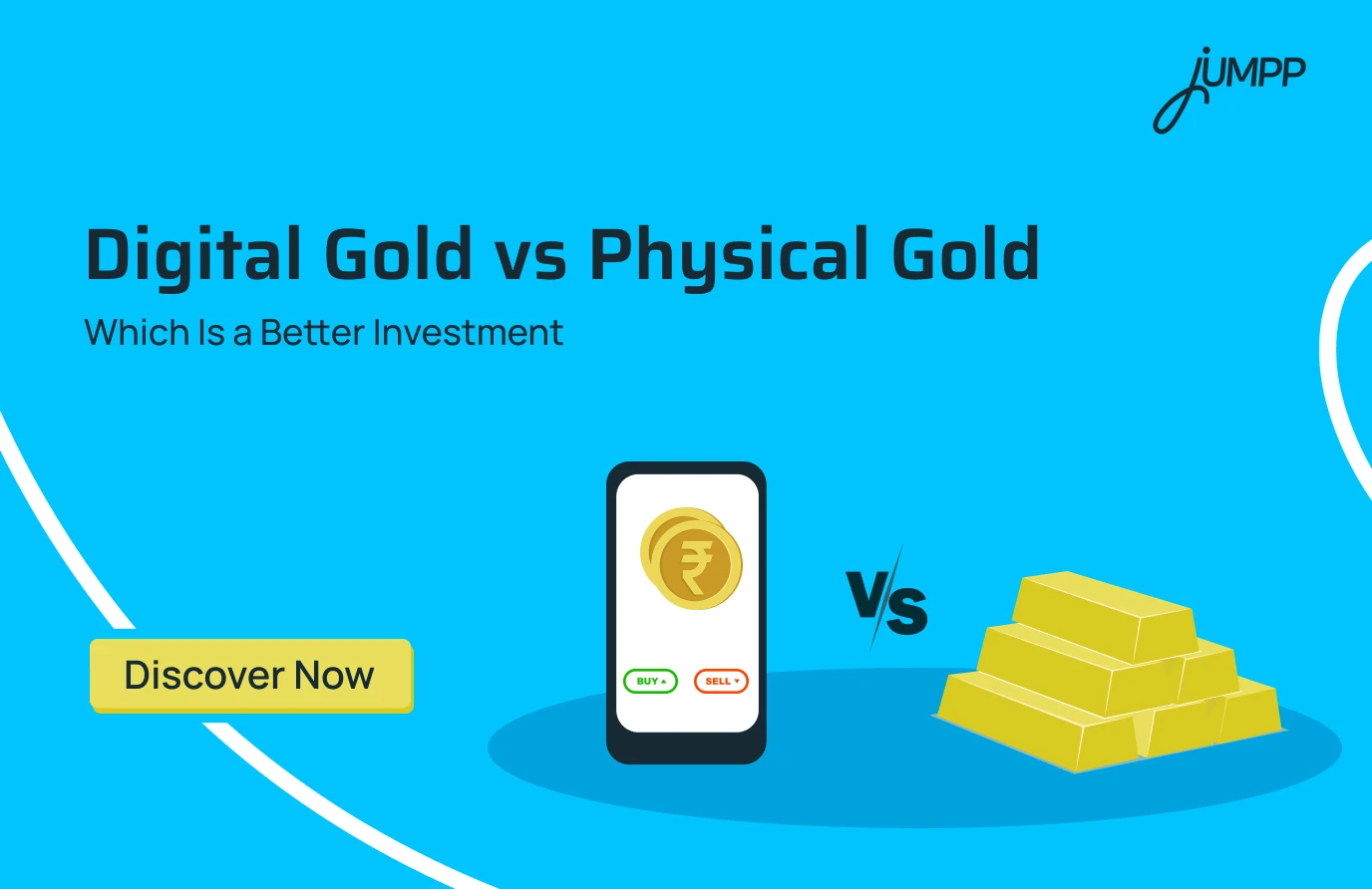
Gold has always been more than an investment in India. It is emotion, security, and tradition. But in 2026, the way people invest in gold is changing fast. You can now buy gold for as little as ₹1 on your phone, without ever touching it. That raises a real question: digital gold vs physical gold, what should you choose?
Should you choose digital gold for convenience and liquidity, or stick to physical gold for ownership and trust?
The answer depends on what you actually want from your investment.
Understanding Gold Investments in India: Digital Gold vs Physical Gold
Digital gold is ideal for small, liquid, and secure investments starting as low as ₹1. It is stored in insured vaults, offers 24K purity, and can be bought or sold instantly online without storage or making charges.
Physical gold is better for traditional ownership, jewellery use, and cultural purposes. It provides tangible possession but involves making charges, storage risks, and lower resale value.
What is the actual difference between digital gold and physical gold?
| Basis | Digital Gold | Physical Gold |
| Form | Online gold stored in secure vaults | Jewellery, coins, bars |
| Storage | Free, insured storage by the provider | Personal storage, risk of theft |
| Purity | Usually 24K (99.9%) | Varies, jewellery often 22K |
| Minimum Investment | Starts from ₹1 | Requires a higher upfront amount |
| Liquidity | Instant online selling at live prices | Requires visiting a jeweller, deductions apply |
| Making Charges | None | 5 to 10 percent or more on jewellery |
| Safety | No physical risk | Risk of loss or theft |
| Usage | Investment only | Can be worn or gifted |
| Taxation | Same as physical gold | Same as digital gold |
Pros and Cons of Physical Gold vs Digital Gold
| Basis | Digital Gold | Physical Gold |
| Pros | Easy to buy and sell instantly online | Tangible ownership and full control |
| Start with small amounts (₹1) | High cultural and emotional value | |
| No storage or theft risk | Can be used for jewellery and gifting | |
| 24K purity (99.9%) assured | No dependency on digital platforms | |
| Accessible 24 by 7 via apps | Can be pledged for loans easily | |
| Cons | Not regulated by SEBI or RBI | High making charges (especially jewellery) |
| 3 percent GST on purchase | Storage and safety risks | |
| Buy and sell price gap reduces returns | Lower resale value due to deductions | |
| Platform and counterparty risk | Purity concerns if not certified | |
| Possible storage fees after free period | Requires higher upfront investment |
What is a Digital Gold Investment?
Digital gold investment means buying 24K (99.9 percent pure) gold online in small amounts, without physically holding it. For every rupee you invest, an equivalent quantity of real gold is purchased and stored in secure, insured vaults on your behalf.
It combines the value of physical gold with the convenience of digital investing, making it accessible even if you only have ₹1 to start.

How Does Digital Gold Work?
Digital gold works by linking your online purchase to actual physical gold stored securely in your name.
Here is how the process works step by step:
- Authorised sellers: In India, digital gold is offered by providers like MMTC-PAMP, SafeGold, and Augmont.
- Instant purchase: When you invest, gold is bought instantly at live market prices.
- Vault storage: The equivalent gold is stored in high-security, insured vaults managed by professional custodians.
- Holdings in grams: Your investment is shown in grams (even up to 0.0001 gram) in your account.
- Real-time tracking: Value changes based on current gold prices.
- Exit options:
- Sell anytime online and receive money in your bank account
- Or request physical delivery (coins or bars), usually with additional charges
So, is digital gold a good investment?
It is suitable for small, flexible investing but not ideal as a core long-term asset.
Just like digital gold, financial systems today rely heavily on structured verification and safety protocols. If you want to understand how banking systems ensure secure transactions, explore how the Positive Pay System works
What are the Pros and Cons of Digital Gold Investment?
Digital gold offers convenience, affordability, and secure storage, but it comes with regulatory risks, additional costs, and platform dependency.
What are the advantages of digital gold investment?
Digital gold offers an affordable, secure, and highly liquid gold investment with easy online access.
- Start with small amounts (as low as ₹1)
- High purity (24K, 99.9 percent)
- No storage or safety concerns
- Instant buying and selling at live prices
- No making charges
- Easy access through apps
What are the disadvantages of digital gold investment?
Digital gold has regulatory gaps, added costs, and depends on the reliability of the platform.
- Not regulated by SEBI or RBI
- 3 percent GST on purchase
- The buy and sell price gap reduces returns
- Limited free storage period
- Extra charges for physical delivery
- Platform and counterparty risk
Also check – Digital gold vs gold ETFs!
What is a Physical Gold Investment?
Physical gold is gold you buy, hold, and store in tangible forms like jewellery, coins, or bars, giving you direct ownership without relying on any platform.
Pros and Cons of Physical Gold
Physical gold, such as bars, coins, and jewellery, provides tangible ownership, acting as a direct hedge against inflation and economic instability without counterparty risk.
However, it carries significant disadvantages, such as high storage/security costs (bank lockers), 10–25% making charges on jewellery, theft risk, and lower liquidity compared to digital options.
What are the Advantages of Physical Gold?
Physical gold offers tangible ownership, cultural value, and immediate liquidity without platform dependency.
- Full physical control and ownership
- No digital or platform risk
- High cultural and emotional value for weddings and gifting
- Can be sold easily at local jewellers
- Universally accepted asset
What are the disadvantages of physical gold?
Physical gold has drawbacks like storage risk, making charges, lower liquidity, and no regular income, making it less efficient as a pure investment.
- Requires secure storage such as home safes or bank lockers, which adds cost
- Risk of theft or loss if not stored properly
- High making charges, especially on jewellery, reduce overall returns
- Lower resale value due to deductions and price cuts by jewellers
- Does not generate passive income like interest or dividends
- Selling is not instant and may require visiting a jeweller or finding a buyer
- Purity concerns if the gold is not properly certified
- Additional costs like insurance and locker fees increase the total expense
- The price spread between buying and selling reduces profit margins
Investment Decision Guidance: Digital Gold vs Physical Gold vs Gold ETFs
Choosing between digital gold, physical gold, and gold ETFs depends on your goal, time horizon, and liquidity needs.
If your goal is a long-term, regulated investment
You should consider Gold ETFs.
They are SEBI-regulated, cost-efficient, and suitable for portfolio diversification. Also, gold ETFs don’t have a storage cost and there’s no GST on purchase.
If your goal is small and frequent investing, you can choose Digital Gold.
You can start from ₹1, invest anytime, and avoid storage hassle.
However, it is less regulated and better for short to medium-term use.
If your goal is usage or emotional value, you could choose Physical Gold.
It is ideal for jewellery and gifting.
Best Strategy (2026)
You can use digital gold for small accumulation, shift to gold ETFs for long-term wealth, and keep physical gold only for personal use.
Digital Gold vs Physical Gold (India 2026) – FAQs
Digital gold is better for investment as it avoids making charges and storage risks. On the other hand, Physical gold is better for usage, gifting, and tangible ownership.
Digital gold is not regulated by SEBI or RBI. This is increases platform risk. It also has holding limits and additional costs like GST and price spread.
The biggest benefit is that you can start investing with very small amounts like ₹1. It also offers instant liquidity with 24 by 7 buying and selling.
Digital gold includes a price spread to cover storage, insurance, and operational costs. It also attracts 3 percent GST at the time of purchase.
Profit comes from price appreciation when gold prices increase over time. Investing regularly and holding for a few years helps offset costs and improve returns.
You can choose digital gold for convenient, small investments and wealth accumulation. However, you can choose physical gold for jewellery, gifting, and traditional purposes.
No, digital gold is not approved or regulated by the RBI or SEBI. It operates through private fintech platforms.
Yes, digital gold attracts 3 percent GST at purchase and capital gains tax on sale, with 12.5 percent for long-term (above 24 months) and slab rates for short-term.
Yes, most platforms allow redemption into physical gold coins or bars, but making and delivery charges apply.
Gold ETFs are better for long-term investing as they are SEBI-regulated, have no GST, and offer more tax efficiency.
Digital gold allows investing from as low as ₹1 but carries counterparty risk since it is not regulated.
There is no fixed holding limit, but some platforms may charge storage fees after a free period of 2 to 5 years.
FDs offer fixed, guaranteed returns with safety, while digital gold is market-linked and better as an inflation hedge.
Equity SIPs generally provide higher long-term returns, while digital gold is more suitable for short-term stability.
Sovereign Gold Bonds are the cheapest option as they have no GST, no storage cost, and offer 2.5 percent annual interest.
Yes, digital gold can be sold anytime at live market prices, and the amount is credited directly to your bank account.