E-Mandate Meaning, Registration, and Everything You Need to Know
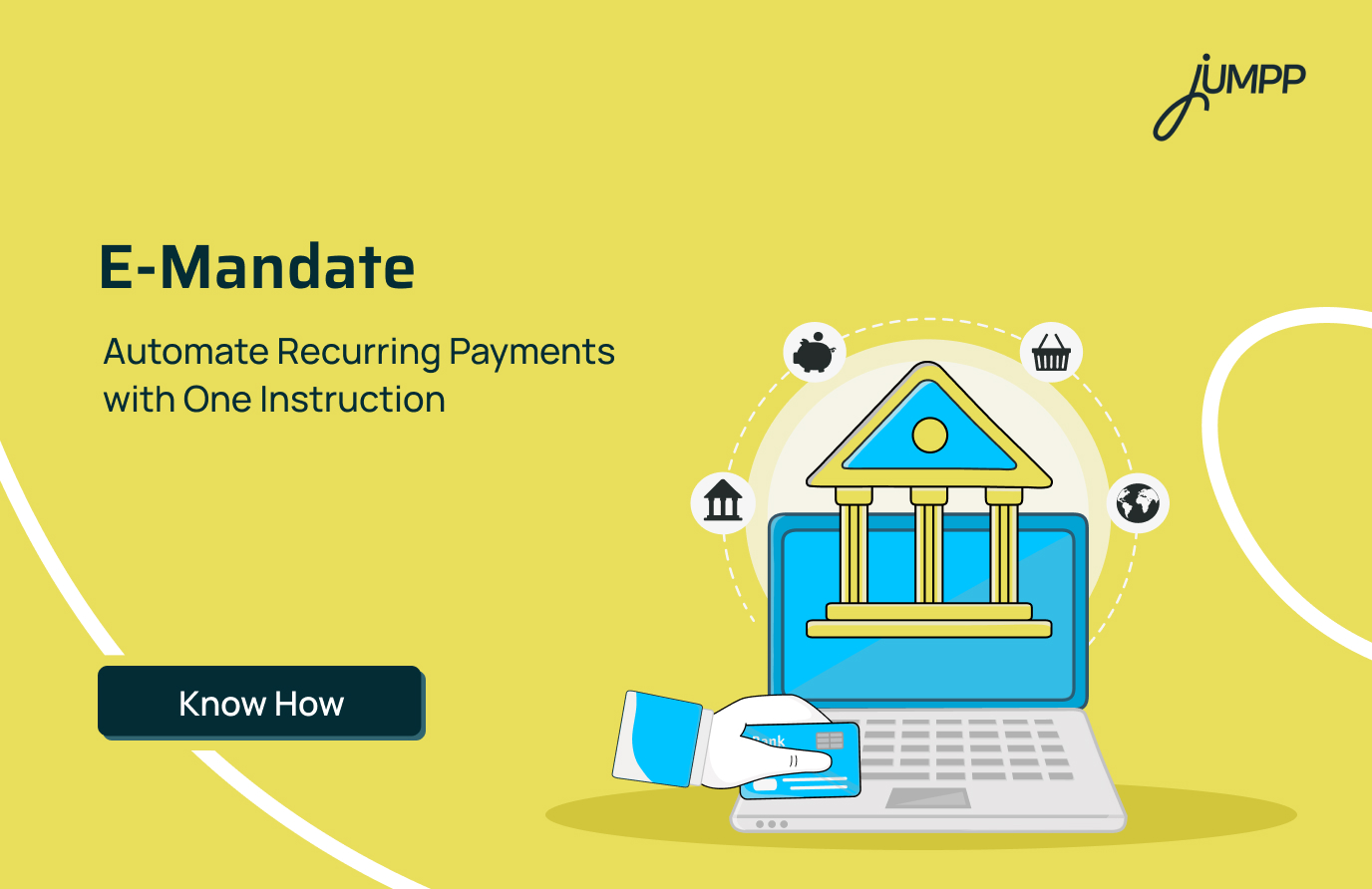
In the past decade, we have seen multiple changes that have made banking more digital, faster, and far more convenient for everyday users. One of the most important developments in this shift is the introduction of e-mandates, which simplify the handling of recurring payments.
An e-mandate helps you avoid missing bill payments, loan EMIs, SIP investments, and other regular financial commitments by automating them directly from your bank account after a one-time approval.
Let us understand the meaning of e-mandate in detail and how it works in real life.
E-Mandate Meaning
An e-mandate in banking is a digital payment service that allows individuals and businesses to authorise recurring payments directly from their bank accounts, enabling automatic deductions for loan instalments, subscription services, and utility bills. It replaces the older paper-based NACH (National Automated Clearing House) mandate and eliminates the need for physical forms or branch visits entirely.
What is the difference between e-mandate and e-NACH?
E-NACH is a service provided by NPCI used specifically for bulk electronic transactions across banks. E-mandate is a broader term that includes various electronic authorisation methods for recurring payments, of which e-NACH is one component.
What is Mandate Amount Meaning?
Mandate amount meaning refers to the maximum amount you authorise your bank to debit automatically from your account for recurring payments such as SIPs, EMIs, or subscriptions. This limit acts as a control mechanism, ensuring that no transaction exceeds the approved amount without your consent.
For example, if you set a mandate amount of Rs. 20,000, the bank can process automatic payments up to this limit, but anything beyond it will require a new authorisation.
What Are Mandate Charges Meaning and Cost?
Mandate charges meaning refers to the fees, if any, charged by banks or financial institutions for setting up or processing an e-mandate for recurring payments such as EMIs, etc.
In most cases, e-mandate registration is free, especially under current RBI guidelines. However, banks may charge a return fee if a transaction fails due to insufficient balance, which typically ranges between Rs. 250 and Rs. 500 depending on the bank.
What Is the Maximum Mandate Amount?
The e-mandate limit depends on payment type, typically up to Rs. 1,00,000 for investments and Rs. 15,000 for card or UPI mandates.
The e-mandate transaction limit is Rs. 1,00,000 per transaction for mutual fund subscriptions, insurance premium payments, and credit card bill payments.
| Mode | Limit |
| Mutual funds/insurance/credit cards | Rs. 1,00,000 per transaction |
| UPI / debit card mandates | Rs. 15,000 per transaction (above this needs additional authentication) |
Bank-specific limits may vary, so it is worth checking with your bank before setting up a mandate for higher amounts.
How Does E-Mandate Work?
An e-mandate works by allowing you to authorise automatic recurring payments through a one-time digital setup and verification. E-mandate registration is a fully digital process.
It involves setting up a mandate once, after which payments are automatically debited as per the defined schedule. Once registered, your bank processes payments automatically on scheduled dates without manual action.
The e-mandate process involves setup, authentication, validation, and automatic execution.
- Customer Setup: You select the e-mandate option on a bank or merchant platform for services like SIPs, EMIs, or subscriptions.
- Authentication: You approve the mandate using net banking, debit card, or Aadhaar OTP verification.
- NPCI Validation: The request is sent to NPCI, which verifies the details and forwards it to your bank for approval.
- Mandate Activation: Once approved, the bank registers the recurring payment instruction.
- Auto-Debit Execution: The bank automatically debits the specified amount on the scheduled date.
- Notifications: You receive pre-debit alerts as per RBI rules, with the option to cancel or modify the mandate.
Before proceeding with e-mandate registration, ensure your PAN card is linked to your bank account. Here are the quick steps to link your PAN with bank account!
What Are the Documents Required for E-Mandate?
E-mandate registration requires minimal documents as the process is fully digital and based on authentication rather than paperwork.
Most requirements are basic banking and identity details needed for verification.
- Aadhaar card: Must be linked to your bank account for identity verification
- Registered mobile number: Required for OTP authentication and alerts
- Bank account details: Account number and IFSC code for setting up the mandate
- Net banking or debit card: Needed to authorise the mandate digitally
- Mandate details: Includes maximum amount, frequency, and validity entered during setup
Where Is E-Mandate Used?
E-mandates are commonly used for recurring financial commitments and subscriptions.
- Loan EMIs: Automatic monthly repayments
- Mutual fund SIPs: Regular investments without manual effort
- Insurance premiums: Timely policy payments
- Utility bills: Electricity, water, and internet payments
- Subscriptions: OTT platforms and app services
Want to understand how your salary deductions and retirement savings actually work? Read our detailed guide on EPF vs EPS to learn the key differences and make smarter financial decisions.
What are the Types of E-Mandate
E-mandates are classified based on payment method and transaction type, enabling automated recurring payments across different platforms. E-mandates can be broadly divided into two categories: based on authorisation method and based on payment nature.
| Type | How It Works | Best For |
| UPI AutoPay | User-authorised via apps like Google Pay or PhonePe, real-time activation | Monthly subscriptions, SIPs |
| Debit/Credit Card-Based | Pre-authorised automated debits using saved card details | Recurring subscriptions, insurance premiums |
| Net Banking-Based | Bank credentials used to authorise automatic payments | EMIs, loan repayments |
| eNACH | Digital mandate platform for bulk and periodic transactions via NPCI | High-value or bulk recurring payments |
| Fixed Amount Mandate | Debit amount stays constant every cycle | EMIs, fixed SIP amounts |
| Variable Amount Mandate | Debit amount changes based on actual dues | Utility bills, credit card payments |
What Are the Benefits of E-Mandate for Recurring Payments?
- No missed payments: Automated deductions ensure SIPs, EMIs, and premiums are never missed
- Paperless process: No physical forms, no branch visits, no post-dated cheques
- Faster registration: E-mandate reduces SIP registration time from 25-30 days to just 2-3 days
- Full control: You can modify or cancel the mandate anytime through your bank’s app or portal
- Transparency: Comprehensive records of all transactions are available through bank statements, making financial management clear and accurate
- Flexibility: Supports fixed and variable payment amounts across multiple instruments, including UPI, debit cards, and net banking
What Is E-Mandate Eligibility?
To be eligible for e-mandate registration, your Aadhaar must be linked to your bank account, and your bank must be registered to provide NACH services.
Additionally:
- The financial institution collecting the payment must be registered with NPCI
- Your bank account must be active and in good standing
- You must have either net banking access or a valid debit card for authentication
Is E-Mandate Safe?
Yes. The RBI has established strict guidelines for e-mandates to ensure secure transactions. Features like multi-factor authentication and real-time payment notifications keep transactions protected. You can cancel the mandate at any time through your bank or service provider’s portal.
The RBI also mandates additional safeguards such as pre- and post-debit notifications and an opt-out facility to enhance user control and transparency. Every transaction is recorded and traceable, which means there are no hidden deductions.
What if there is an insufficient balance on the debit date?
The transaction will fail, and your bank may levy a return charge. It is advisable to maintain a buffer in your account before the scheduled debit date to avoid this.
Are There Any New E-Mandate Rules for 2026 in India?
Yes, new RBI rules effective April 1, 2026, require stronger two-factor authentication for digital payments, but existing e-mandates remain unaffected.
The RBI released the Authentication Mechanisms for Digital Payment Transactions Directions, 2025, which comes into effect on April 1, 2026. The new directions require every digital payment to clear a two-factor authentication check, with at least one factor being dynamic, such as an OTP or biometric scan, and place full liability on banks and card issuers for any loss arising from weak authentication or non-compliance.
For cross-border card transactions, compliance is extended to October 1, 2026.
Additionally, no charges can be levied on customers for creating or modifying e-mandates under the updated framework. In simple terms, your recurring payments will continue without disruption after April 2026.
Looking to open a new bank account? Open a zero-balance savings account online in just a few minutes.
E-Mandate: FAQs
No. A mandate is not mandatory for investing in mutual funds. Investors can choose to make one-time investments or manually invest through lump sum payments.
Yes, but the number of e-mandates you can register depends on your bank’s policy. Each bank sets its own limit for the number of active mandates per account.
Log in to your net banking or mobile banking app, go to the e-mandate or recurring payments section, select the active mandate, and choose the cancel or deactivate option. You can also contact the merchant or your bank directly to cancel it.
A debit mandate allows banks to debit money regularly for recurring payment plans. A credit mandate ensures that all recurring payments are credited to a business on time and automatically.
An e-mandate is a digital standing instruction given by a customer to their bank, authorising automatic debits from their account for recurring payments such as SIP instalments, loan EMIs, insurance premiums, and utility bills.
The mandate amount is the maximum amount you authorise your bank to debit for a specific recurring instruction. If you register a mandate for Rs. 5,000 and later increase your SIP to Rs. 10,000, you will need to register a new mandate for the higher amount..
In SIP, an e-mandate allows automatic monthly investment deductions without manual payment each time.
An e-mandate in a bank is a digital instruction that allows you to authorise your bank to automatically debit money from your account for recurring payments such as EMIs, SIPs, insurance premiums, and utility bills.