Reinsurance Meaning in Insurance: Concept, Types, and Examples
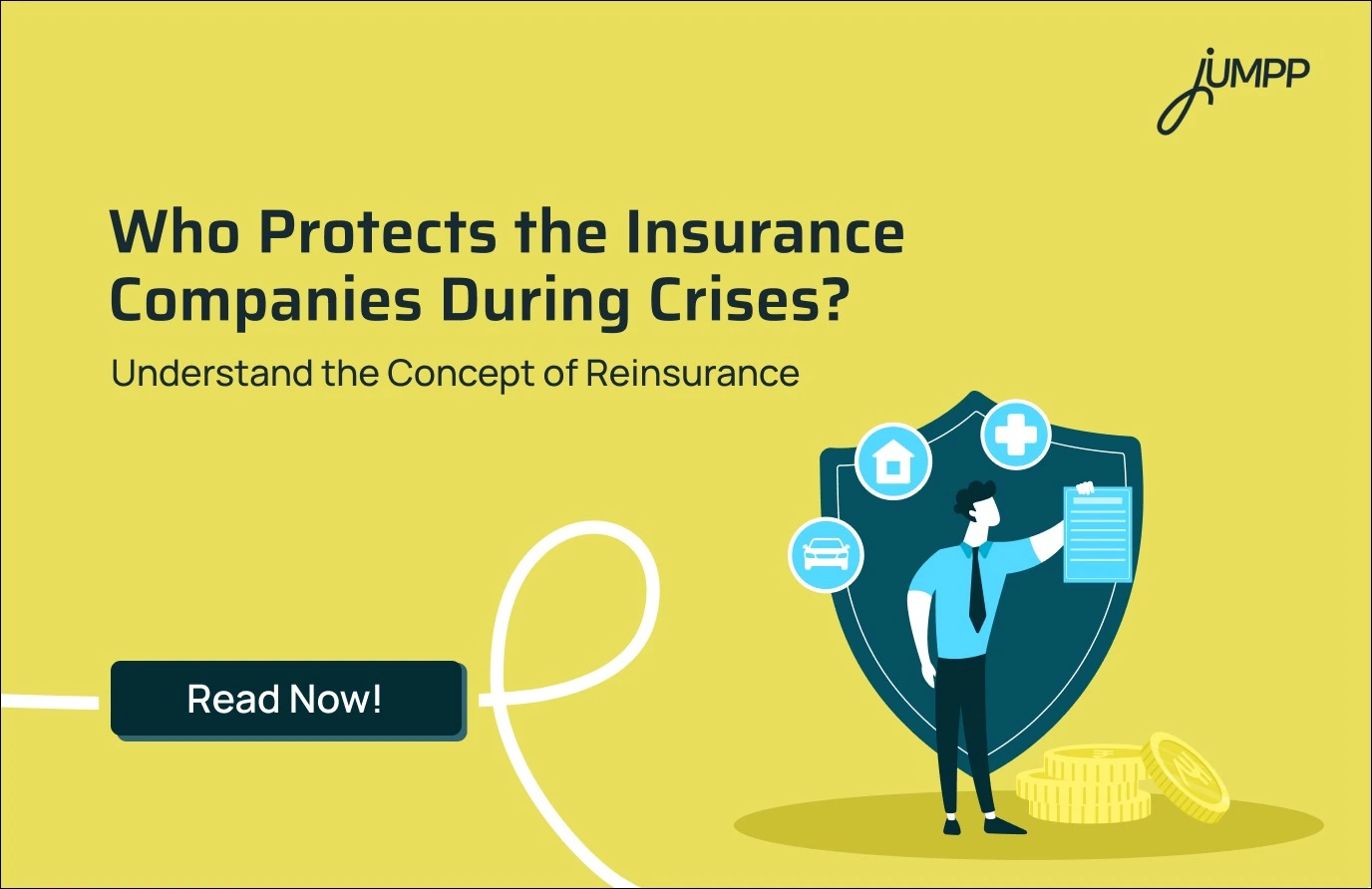
When floods, earthquakes or massive industrial fires occur, insurance companies face claims worth hundreds or even thousands of crores. The question is simple. How do they survive such financial shocks without collapsing? The answer lies in reinsurance, a system that quietly protects insurers so they can continue protecting you.
Most people understand insurance. You pay a premium, and the insurer pays you if something goes wrong. But very few people know that insurance companies also buy protection for themselves. That protection is called reinsurance, and it plays a critical role in keeping the entire financial system stable.
What is Reinsurance?
Reinsurance is insurance for insurance companies.
It is when an insurance company transfers part of its risk to another insurer, called a reinsurer, so that it does not suffer massive financial losses from large claims such as natural disasters or major accidents.
Why do insurers use reinsurance?
Insurers use reinsurance to prevent insolvency after large or unexpected losses. It also helps maintain credit ratings and allows insurers to write more business without locking up excessive capital.
In simple terms, it helps insurance companies remain stable and continue paying policyholders even during major crises.
Concept of Reinsurance
Reinsurance is a risk management arrangement where an insurance company transfers a portion of its risk to another insurance company, known as the reinsurer. It is commonly described as insurance for insurers.
The basic idea is simple. When an insurance company issues policies, it takes on financial risk. If claims are very large or too many claims arise at the same time, the insurer may face financial strain. To prevent this, the insurer shares part of that risk with a reinsurer.
While insurers manage risk through reinsurance, your claim eligibility depends on policy conditions. Check how the waiting period in insurance works before purchasing or renewing your policy.
How Reinsurance Works
- The primary insurer, also called the cedent, sells policies to individuals or businesses and collects premiums.
- To manage its exposure, the insurer transfers part of the risk to a reinsurer.
- The insurer pays a portion of the premium to the reinsurer in exchange for protection.
- If a large claim occurs, the reinsurer compensates the insurer for the agreed share of the loss.
This arrangement protects the insurer from severe financial shocks and ensures that policyholders’ claims can still be paid.
Reinsurance Example
An insurance company insures thousands of homes in a coastal city. A severe cyclone causes total claims of ₹200 crore.
The insurer had arranged reinsurance earlier.
- The insurer retains ₹50 crore.
- The reinsurer covers losses above ₹50 crore.
- Out of ₹200 crore claims, the insurer pays ₹50 crore, and the reinsurer pays ₹150 crore.
This protects the insurer from financial strain.
Another reinsurance example: An insurer provides ₹1,000 crore cover to a large refinery.
- The insurer keeps ₹200 crore risk.
- ₹800 crore risk is transferred to reinsurers.
If a major loss occurs, reinsurers pay their agreed share.
In both cases, reinsurance helps insurers handle very large losses without affecting their stability.
Types of Reinsurance in India
In India, reinsurance is broadly classified based on how risk is shared between the insurance company and the reinsurer. The structure is practical and risk-focused, especially in a market exposed to natural disasters, large infrastructure projects, and growing health portfolios.
Here are the main reinsurance types:
| Category | Sub-Type | How It Works | Best Used For |
| Agreement-Based | Treaty | Covers a full class of policies automatically | Large portfolios like motor or health |
| Facultative | Covers one specific policy or risk | High-value industrial or aviation risks | |
| Risk-Sharing Structure | Proportional | Shares premium and claims in a fixed ratio | Capital support and steady risk sharing |
| Quota Share | Fixed percentage of every policy shared | New insurers stabilising balance sheets | |
| Surplus | Covers risk above insurer retention | High-sum insured policies | |
| Loss-Based Structure | Non-Proportional | Pays only after losses cross limit | Catastrophe protection |
| Excess of Loss | Covers claim above threshold | Floods, earthquakes, large disasters | |
| Stop Loss | Protects annual portfolio beyond set loss ratio | Profit protection and volatility control |
What Is the Difference Between Insurance and Reinsurance?
Insurance and reinsurance both deal with risk, but they operate at different levels of the financial system.
- Insurance is what individuals and businesses buy to protect themselves from financial loss.
- Reinsurance is what insurance companies buy to protect themselves from very large losses.
In simple terms, reinsurance is insurance for insurance companies.
| Basis of Difference | Insurance | Reinsurance |
| Meaning | A contract where individuals or businesses transfer risk to an insurance company | A contract where an insurance company transfers part of its risk to another insurer |
| Who Is Involved | Policyholder and insurance company | Insurance company and reinsurer |
| Purpose | Provides financial protection against specific losses | Protects insurers from large, unexpected, or catastrophic losses |
| Risk Transfer | Risk moves from customer to insurer | Risk moves from insurer to reinsurer |
| Example | Health, motor, life, or property insurance | An insurance company covering flood risk transfers part of that exposure to a reinsurer |
| Scale of Risk | Individual or business-level risk | Large, aggregated, or catastrophe-level risk |
| Premium Size | Relatively smaller premiums | Significantly larger premiums due to high exposure |
Reinsurance ensures insurers can honour large claims, but choosing the right policy remains your responsibility. Read our complete guide on term insurance to understand coverage, benefits, and how to select the right sum assured.
Many risks in daily life can create legal or financial liabilities. Learn the complete personal liability insurance meaning and how this coverage protects you from third-party claims and accidental damages.
What is the Difference Between Double Insurance and Reinsurance
Double insurance occurs when a policyholder insures the same risk with more than one insurance company, while reinsurance is when an insurance company transfers part of its risk to another insurer.
Double insurance protects the policyholder directly, whereas reinsurance protects the insurance company from large or catastrophic losses.
| Basis | Double Insurance | Reinsurance |
| Meaning | Same risk insured with more than one insurance company | An insurer transfers part of its risk to another insurer |
| Who Is Protected | Policyholder | Insurance company |
| Parties Involved | Policyholder and multiple insurers | Insurance company and reinsurer |
| Purpose | Additional coverage for the same risk | Risk management and financial stability for insurers |
| Claim Process | Policyholder can claim from all insurers, but total payout cannot exceed actual loss | Policyholder claims only from primary insurer; insurer later recovers from reinsurer |
| Relationship Between Contracts | Separate policies with different insurers | Separate contract between insurer and reinsurer |
Advantages of Reinsurance
- Risk transfer – Insurance companies pass part of their risk to reinsurers, reducing exposure to very large claims.
- Protection against catastrophic losses – Covers extreme events such as floods, earthquakes, or major industrial losses.
- Increased underwriting capacity – Allows insurers to issue more policies or higher-value policies without overextending themselves.
- Financial stability – Protects the insurer’s balance sheet during years with heavy claims.
- Capital relief – Reduces the amount of capital insurers need to hold, freeing funds for growth.
- Earnings stability – Helps smooth profit fluctuations across financial years.
- Access to expertise – Reinsurers provide global risk knowledge, underwriting support, and technical guidance.
Reinsurance Meaning – FAQs
Reinsurance is insurance for insurance companies, where a primary insurer transfers part of its risk to another insurer called a reinsurer. It protects the insurance company from very large losses and ensures financial stability after major claims.
If an insurance company insures thousands of homes in a flood prone area, it may buy reinsurance to cover losses above a certain amount. If claims exceed that limit after a flood, the reinsurer pays the excess portion.
Facultative reinsurance covers a specific individual risk, such as a single factory or aircraft. Treaty reinsurance is a broader agreement where the reinsurer automatically accepts a defined category of risks from the insurer.
The Big Four global reinsurers operating in India are Munich Re, Swiss Re, Hannover Re, and SCOR SE. Alongside them, General Insurance Corporation of India (GIC Re) is the leading domestic reinsurer and the largest in the country.
Reinsurance increases underwriting capacity, stabilises financial results, protects against catastrophic losses, and provides capital relief. It helps insurers manage volatility while meeting regulatory capital requirements.
The primary insurer pays the reinsurance premium to the reinsurer from the premiums collected from policyholders. Policyholders do not directly pay the reinsurer.
For the primary insurer, reinsurance recoverables are recorded as an asset because they represent amounts due from the reinsurer. However, the obligation to pay policyholders remains a liability on the insurer’s balance sheet.