What is IMPS, and How Can You Transfer Money When Banks Are Closed?
UPI has become a popular way to send money in India. Most people rely on apps like Google Pay for all their payments. However, there are moments when a UPI transaction fails or a payment does not go through. In such situations, IMPS becomes the trusted backup. It is one of India’s most reliable banking systems for instant transfers. So, what is IMPS and how does it work?
What is IMPS Transfer?
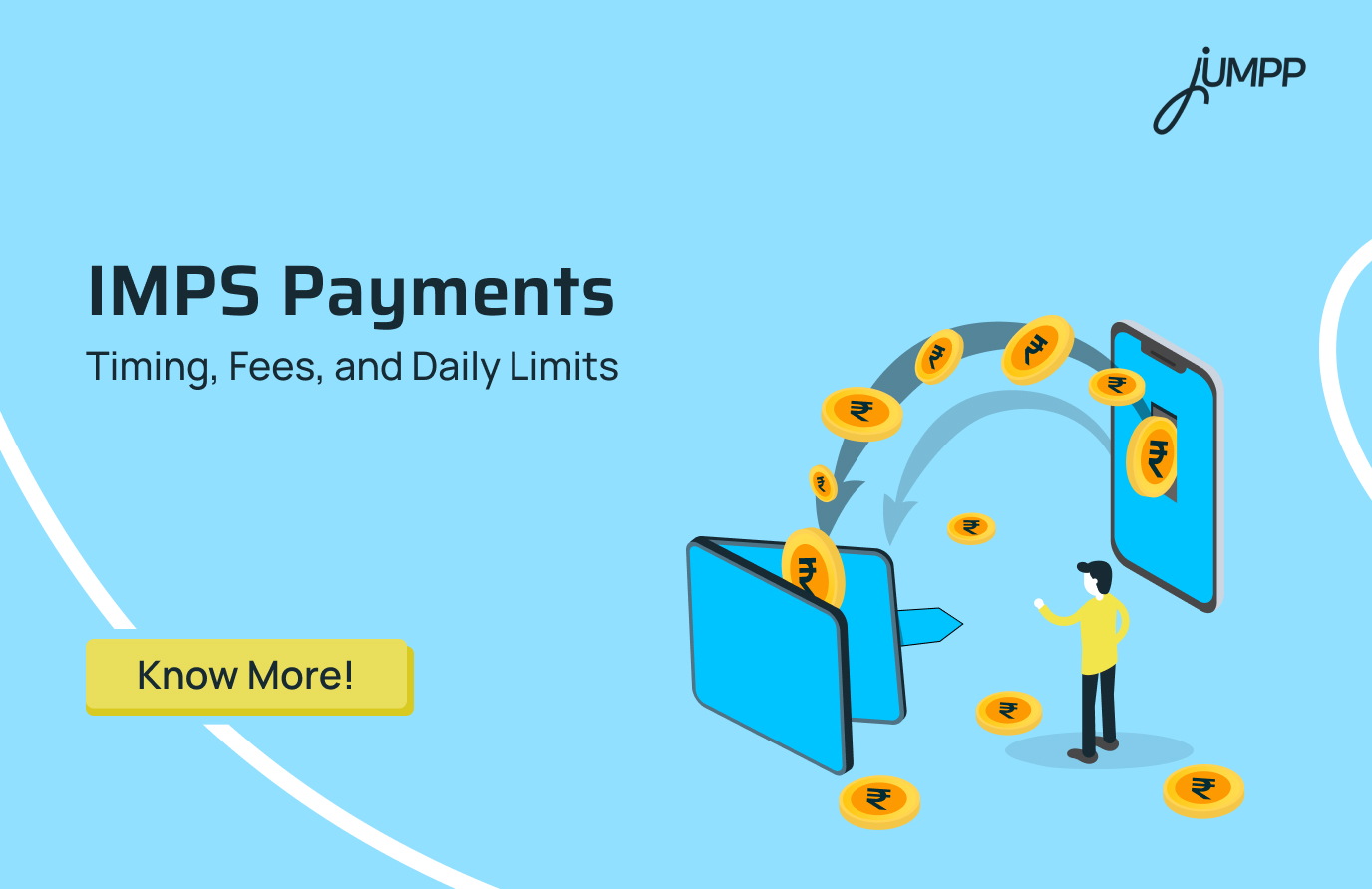
IMPS (Immediate Payment Service) is a real-time electronic money transfer system in India that lets you send and receive money instantly. You can do it 24 hours a day, including weekends and holidays.
It allows transfers between different banks using mobile banking, internet banking, or ATMs. IMPS is operated by the National Payments Corporation of India (NPCI).
It has a daily transfer limit of up to ₹5 lakh, depending on the bank.
Open a zero-balance savings account to start using instant bank transfers without waiting for banking hours.
What is IMPS P2A Transfer?
IMPS P2A (Person-to-Account) transfer allows you to send money instantly using the recipient’s bank account number and IFSC code.
What is IMPS P2P Transfer?
IMPS P2P (Person-to-Person) transfer lets you send money instantly to another person using their mobile number and MMID. It is useful when bank account details are not available.
How Much Time Does IMPS Take to Transfer Money?
IMPS transfers money instantly in real time. In most cases, the amount is credited to the recipient’s bank account within a few seconds to a few minutes.
While IMPS enables instant digital transfers, cheque-based payments still rely on MICR codes for accurate clearing.
IMPS vs UPI
- IMPS: You have to add a beneficiary in advance using bank details or mobile number and MMID.
- UPI: It only requires a Virtual Payment Address or mobile number.
IMPS Features You Should Know Before Sending Urgent Payments
These features explain why money moves instantly, even when banking hours, holidays, or apps fail you.
- IMPS processes payments in real time, which means the money is transferred instantly between banks.
- It works across different banks in India through a central payment network managed by NPCI.
- IMPS supports both person-to-person and person-to-account transfers, giving users flexibility.
- You can send money using an account number and IFSC or by using a mobile number with MMID.
- IMPS is accessible through mobile banking apps, internet banking, ATMs, and in some cases, SMS banking.
- The service is available twenty-four hours a day, including weekends and bank holidays.
Benefits of IMPS: Why is it Preferred for Last-Minute Transfers
These benefits show why IMPS is still the preferred choice!
- Money reaches the recipient immediately, making it ideal for urgent payments.
- The service is always available, even at night or during bank holidays.
- It is easy to use and does not always require full bank account details.
- Transactions are secure and protected through OTP and MPIN authentication.
- IMPS is suitable for emergencies such as medical bills or last-minute transfers.
- Users can transfer up to five lakh rupees per day for personal or business needs.
- Charges are generally low, making IMPS a cost-effective payment option.
IMPS Transfer Limits (2025–2026)
IMPS transfer limits define how much money you can send instantly using the Immediate Payment Service, and these limits are set by NPCI and followed by banks with minor variations.
General IMPS Limits
- Maximum limit: Up to ₹5 lakh per transaction or per day for most banks and digital channels.
- Minimum limit: Usually ₹1, depending on the bank.
- New beneficiary limit: Many banks cap transfers to ₹25,000 to ₹50,000 during the first 24 hours after adding a beneficiary.
- Wallet or app-based IMPS: Limits may be lower, often around ₹10,000 per day.
Channel-wise IMPS Limits
- Mobile banking and internet banking: Up to ₹5 lakh.
- ATM-based IMPS: Commonly limited to ₹50,000 to ₹2 lakh.
- SMS or IVR banking: Usually has lower limits.
IMPS Limits by Major Banks
- State Bank of India (SBI): Up to ₹5 lakh per day.
- HDFC Bank: Up to ₹5 lakh per transaction, subject to third-party transfer limits.
- ICICI Bank: Up to ₹5 lakh per transaction, with higher daily caps in some cases.
- Axis Bank: Up to ₹5 lakh per day.
- IndusInd Bank: Often limited to ₹50,000 per day.
IMPS Charges
IMPS charges are usually low.
Check IMPS vs NEFT vs RTGS charges in 2026!
| Transaction Amount | IMPS Charges (Indicative) |
| Up to ₹25,000 | Usually free or nominal |
| ₹25,001 to ₹1 lakh | ₹2 to ₹5 + GST |
| ₹1 lakh to ₹2 lakh | ₹6 to ₹15 + GST |
| ₹2 lakh to ₹5 lakh | ₹15 sto ₹25 + GST |
IMPS Charges by Major Bank
| Bank | IMPS Charges |
| SBI | ₹2 + GST (₹25k–₹1 lakh), ₹6 + GST (₹1–₹2 lakh) |
| HDFC Bank | ₹5–₹15 + GST (amount-based) |
| ICICI Bank | Around ₹5 + GST |
| Axis Bank | ₹5–₹15 + GST |
| PNB | Similar to SBI slabs |
Note: IMPS limits and charges may vary from bank to bank. Always check your bank’s official website or mobile banking app for the most accurate and updated details before making a transfer.
How to Transfer Money Using IMPS?
IMPS allows you to send money instantly from one bank account to another, any time of the day, including weekends and holidays.
Steps to Transfer Money via IMPS (Mobile or Internet Banking)
Step 1- Log in
Open your bank’s mobile app or internet banking and log in using your credentials.
Step 2- Go to Fund Transfer
Select the Fund Transfer or Payments option from the menu.
Step 3- Choose IMPS
Select IMPS as the transfer mode.
Step 4- Enter Beneficiary Details
- Person to Person (P2P): Enter the recipient’s mobile number and MMID.
- Person to Account (P2A): Enter the recipient’s bank account number and IFSC code.
Step 5- Enter the Amount
Type the amount you want to transfer and proceed.
Step 6- Verify and Confirm
Check all details carefully, then confirm using your MPIN or OTP.
Step 7- Transfer Successful
The money is credited to the recipient’s account instantly, and you receive a confirmation message.
Other Ways to Do an IMPS Transfer
- ATM: Use your debit card at an ATM, select IMPS, and enter the required details.
- SMS Banking: Send a formatted SMS to your bank’s IMPS number, if supported.
- Bank Branch: Visit your bank branch for assisted IMPS transfers.
IMPS is secure, fast, and ideal for urgent money transfers with limits generally up to ₹5 lakh, depending on the bank.
Difference Between IMPS, RTGS, and NEFT
All three are bank transfer methods in India, but they differ in speed, limits, and usage.
| Feature | IMPS | RTGS | NEFT |
| Full Form | Immediate Payment Service | Real Time Gross Settlement | National Electronic Funds Transfer |
| Transfer Speed | Instant (real-time) | Real-time, one-to-one | Batch-based (hourly) |
| Availability | 24/7, including holidays | 24/7 | 24/7 |
| Minimum Amount | ₹1 | ₹2 lakh | ₹1 |
| Maximum Amount | Up to ₹5 lakh | No upper limit | No upper limit |
| Best Used For | Urgent small to medium payments | High-value transfers | Regular, non-urgent transfers |
| Settlement Type | Real time | Real time, one-to-one | Processed in batches |
Disclaimer– The rankings and figures in this article have been compiled from multiple verified reports, credible news sources, and public financial data available as of 2026.
All values are approximate and may vary with newer updates, revisions, or changes in official records.
IMPS Transfer – FAQs
IMPS allows instant, real-time money transfers 24/7, including weekends and holidays.
It also offers flexibility by enabling transfers using mobile number and MMID, not just bank details.
IMPS has a lower transaction limit, usually capped at ₹5 lakh per transaction.
Some banks also charge a small fee, and it requires stable internet or mobile connectivity.
IMPS is better when you need money credited immediately, especially outside banking hours.
For non-urgent or very high-value transfers, NEFT or RTGS may be more suitable.
IMPS is often free on mobile banking for small amounts, but many banks charge nominal fees.
Charges usually range from ₹1 to ₹25 plus GST, depending on the transaction amount.
Both IMPS and NEFT are equally safe and regulated under RBI guidelines.
IMPS is operated by NPCI, while NEFT is directly managed by the RBI.
IMPS now allows simplified transfers using only the recipient’s mobile number and bank name. This removes the need for IFSC codes in certain transaction types.
IMPS and UPI are the fastest options for small to medium amounts, as they work in real time.
For large urgent transfers above ₹2 lakh, RTGS is the fastest and most reliable method.
IMPS transfers money instantly on a one-to-one basis, while NEFT works in batch settlements.
IMPS has a ₹5 lakh cap, whereas NEFT has no maximum limit set by the RBI.